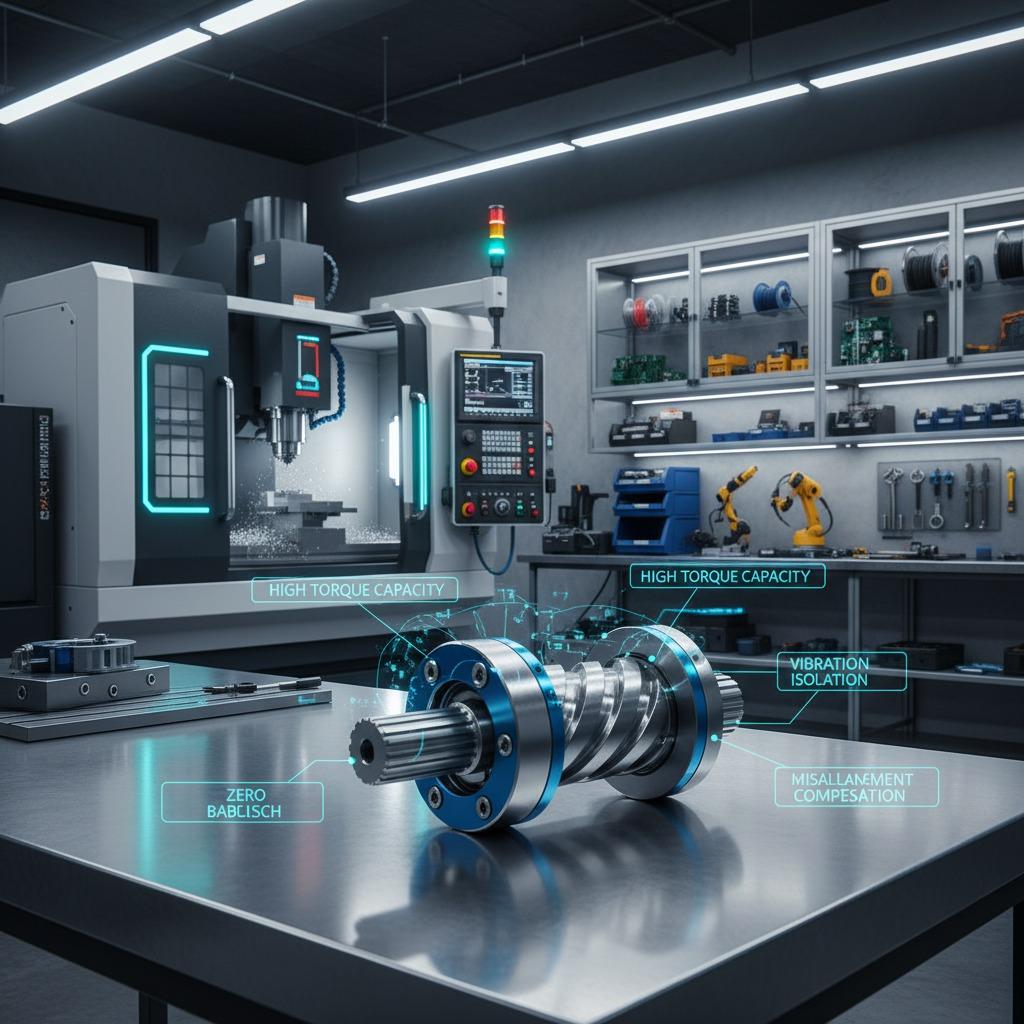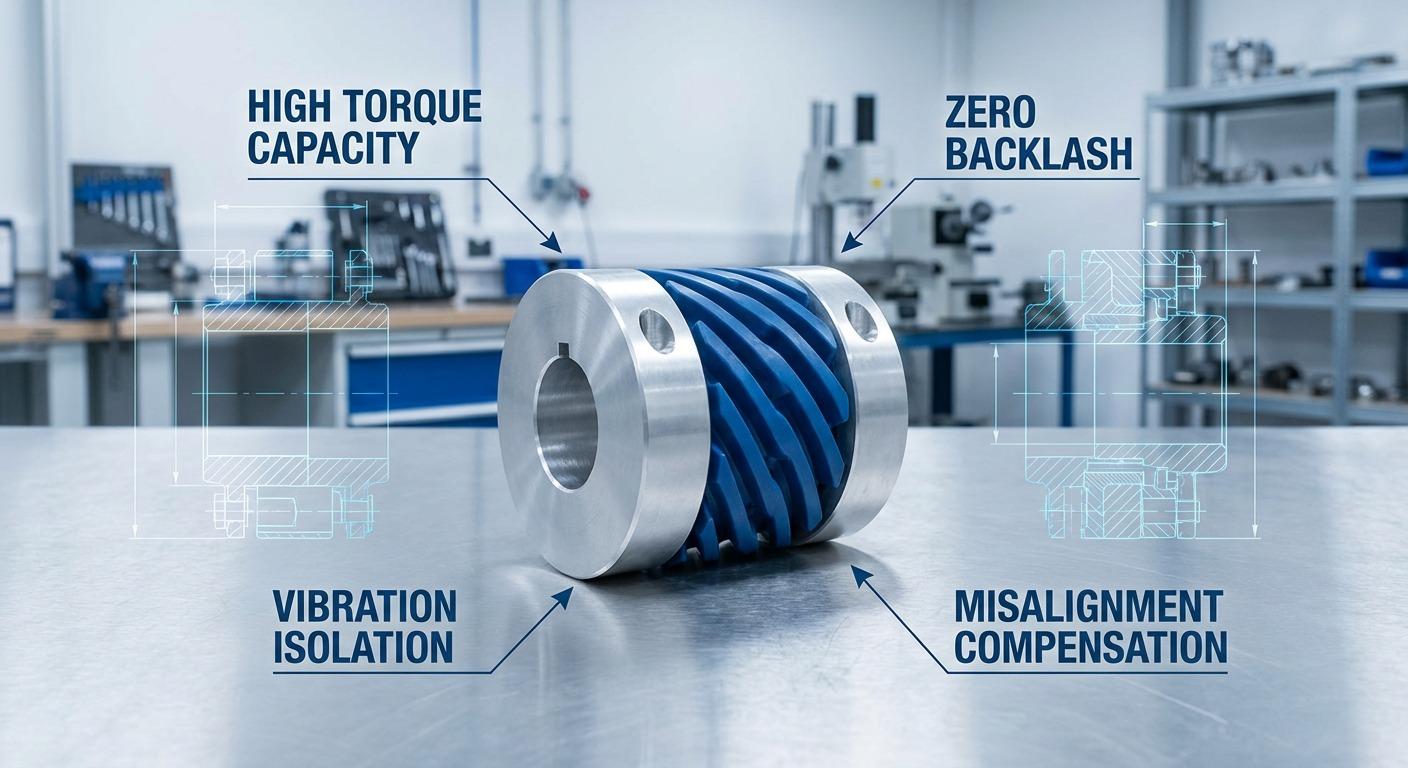

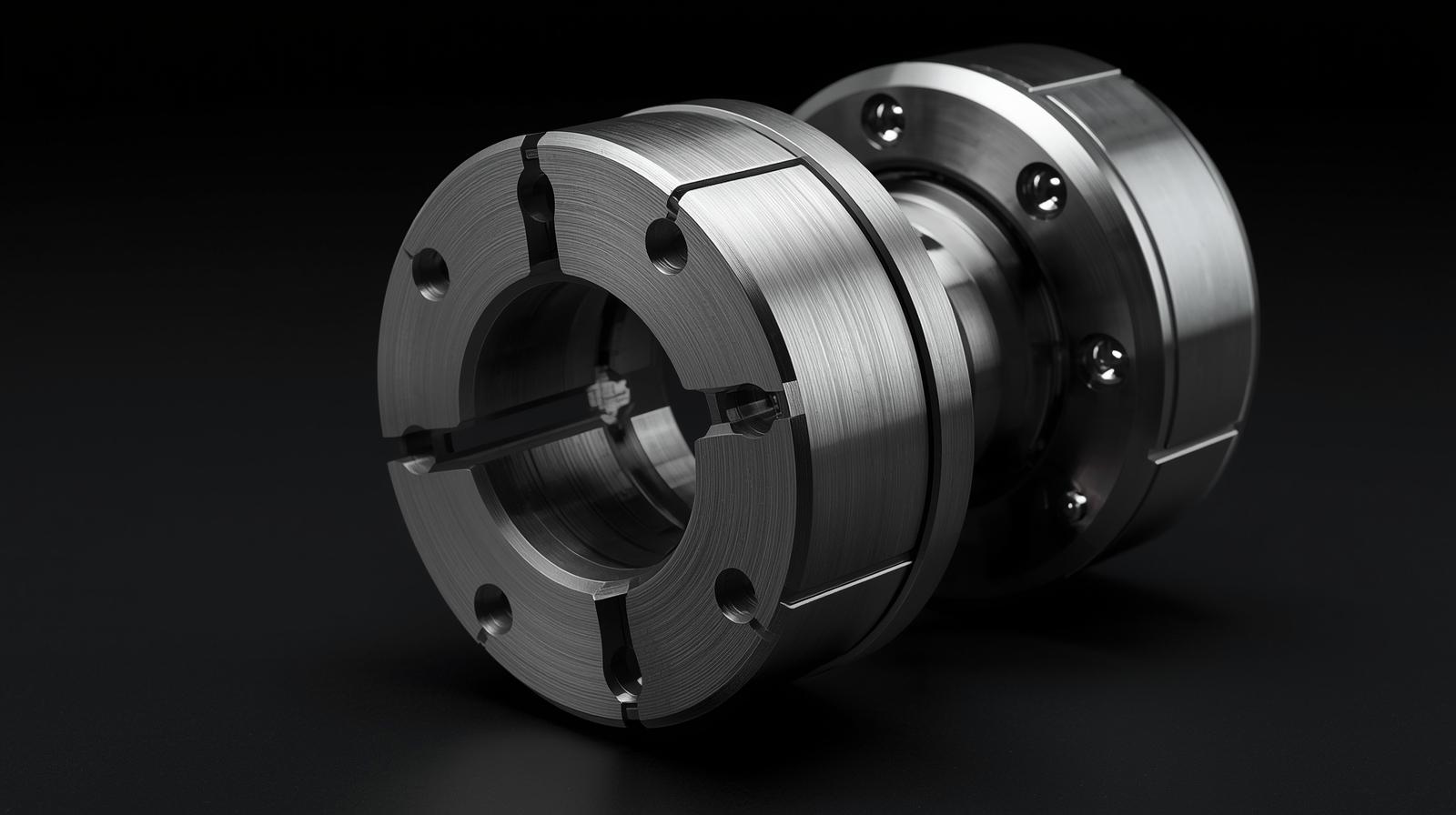
Split Hub Rigid Coupling Supplier: Precision Alignment Meets Easy Maintenance
In industrial machinery, precision and accessibility often pull in opposite directions. The more rigid a coupling is, the harder it is to install and service.
That’s why split hub rigid couplings have become the preferred choice for engineers who need both strength and practicality.
As a trusted supplier of split hub rigid couplings, Dingjian develops designs that preserve absolute torque alignment while minimizing downtime during assembly or replacement.
The Engineering Logic Behind Split Hub Coupling Design
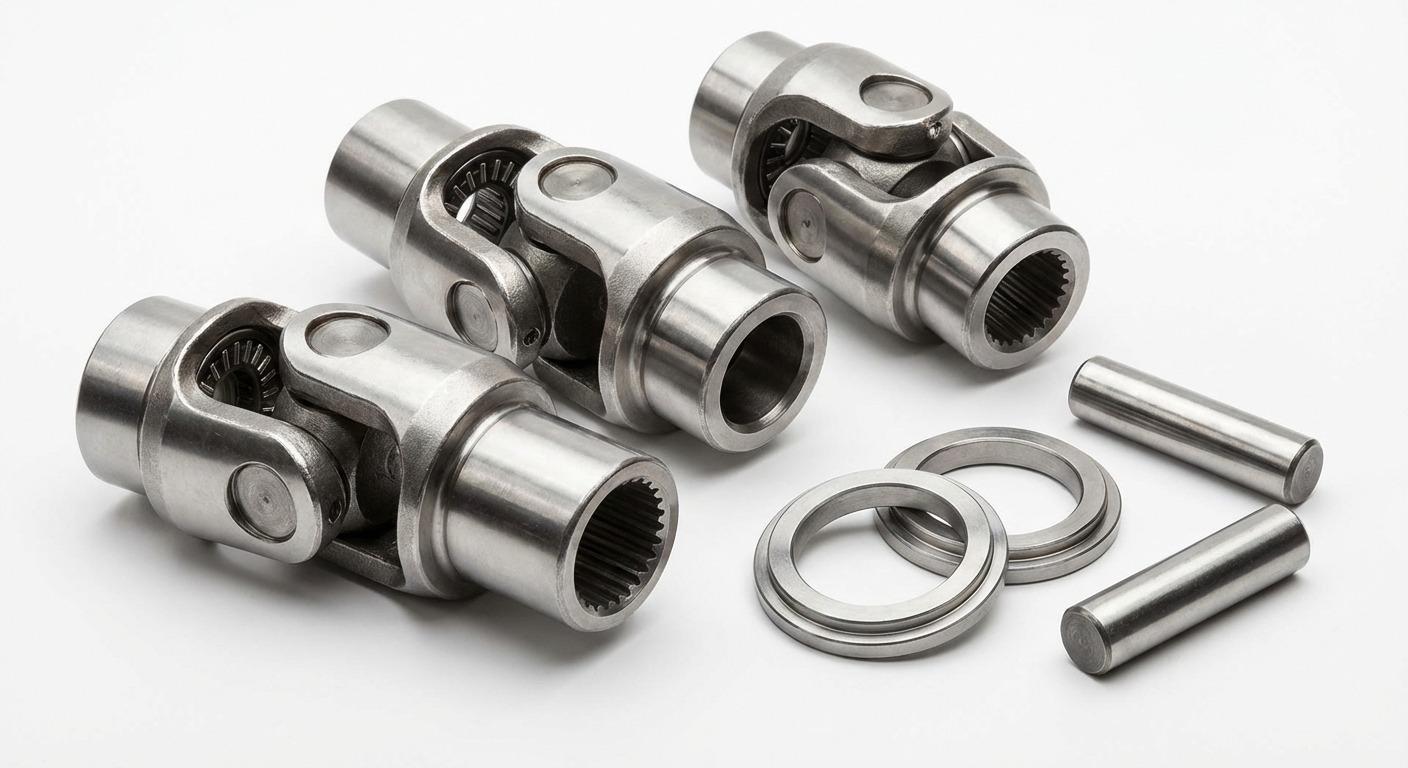
The split hub concept is simple but effective: two identical halves enclose the shaft and are clamped together with precision bolts.
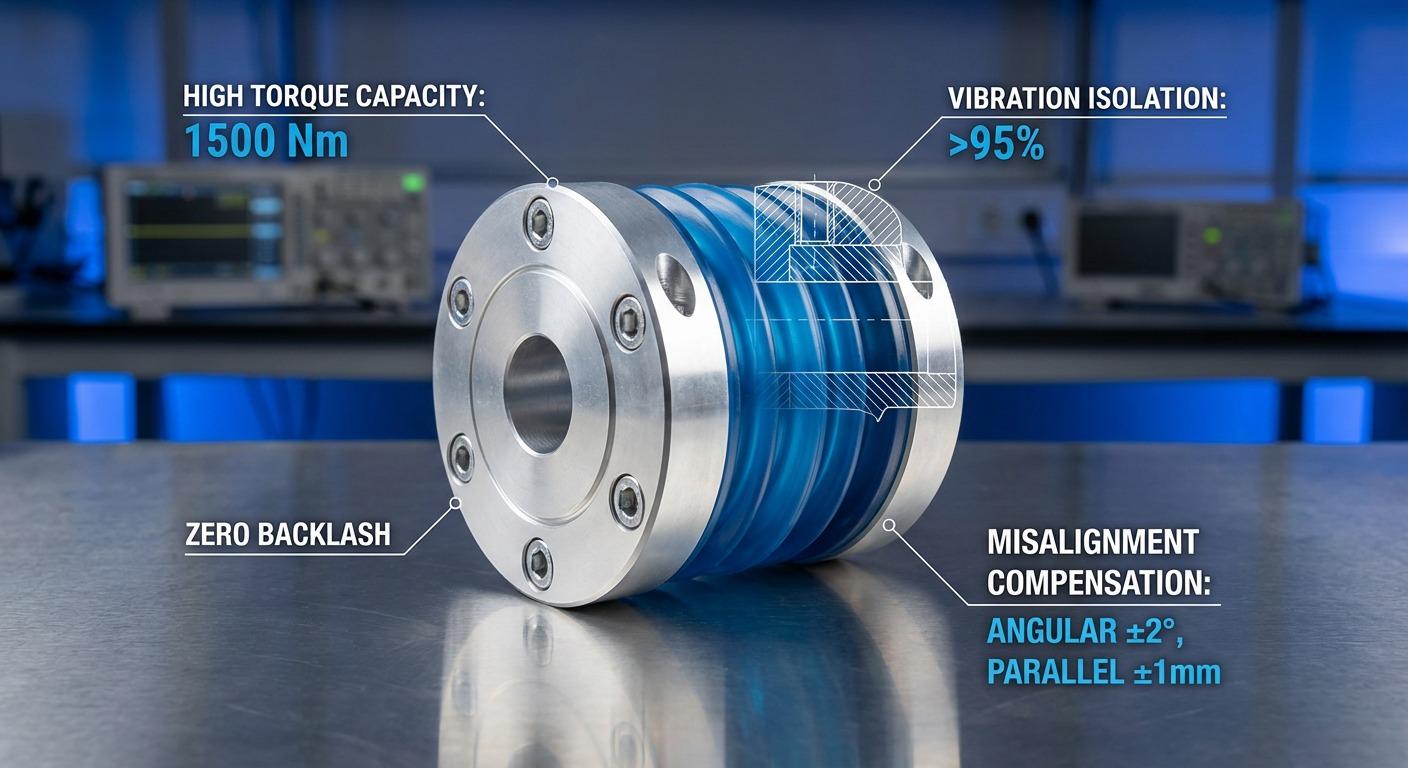
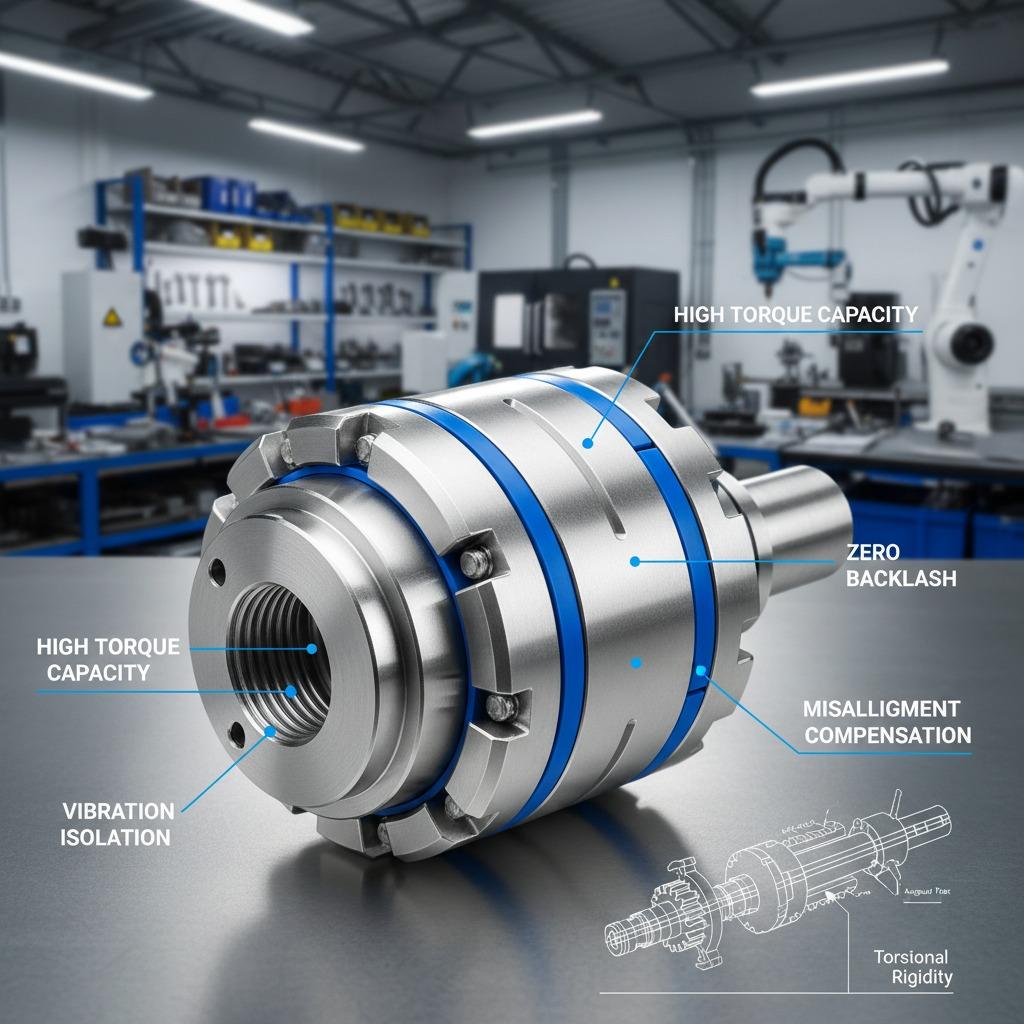
This geometry distributes pressure evenly, locking the shaft in position without backlash or slippage.
Core performance mechanisms include:
-
Balanced torque transmission through full 360° shaft contact
-
Rigid axial restraint under dynamic load
-
Reusable assembly—easy removal without disturbing adjacent components
-
Reduced downtime for large machinery maintenance
It’s a structural evolution that transforms rigid couplings from “permanent fixtures” into serviceable torque interfaces.
Advanced Structural Design: Built for Precision Under Load
Dingjian’s engineers design split hub couplings with both torsional stiffness and maintenance efficiency in mind.
Finite element modeling (FEM) is applied to simulate stress flow through the bolt pattern and hub wall, ensuring no micro-deformation even at high torque levels.
Key structural elements:
-
Dual-clamp system with equal radial force for perfect balance
-
H7/h6 bore tolerance for secure shaft fit
-
Optimized hub wall thickness to avoid radial expansion under bolt load
-
Surface hardening and coating for long-term durability in humid or oily environments
The result is a coupling that maintains zero movement between shafts, ensuring accuracy even in high-speed or cyclic torque conditions.
Manufacturing Precision: From Raw Alloy to Calibrated Assembly
Each Dingjian coupling is produced through a tightly controlled workflow where machining precision defines performance.
-
Forging & Rough Machining: Grain-refined alloy billets (42CrMo or 7075-T6) provide a strong starting base.
-
CNC Finishing: Concentricity tolerance ≤0.015 mm; flange faces milled in a single setup to maintain parallelism.
-
Keyway & Bore Processing: Precision broaching ensures smooth torque transmission.
-
Dynamic Balancing: Tested up to 10,000 RPM for vibration control.
-
Surface Protection: Anodizing or black oxide finishing enhances corrosion resistance.
Each coupling undergoes torque verification testing, replicating the rated load plus a 25% margin—ensuring real-world reliability.
Where Access Meets Accuracy
| Sector | Equipment Type | Engineering Focus |
|---|---|---|
| Automation & Robotics | Linear actuators, drive modules | Precise alignment, minimal inertia |
| Machine Tools | CNC spindles, rotary stages | Zero backlash for micron-level precision |
| Pumps & Compressors | High-torque drives | Quick service, vibration control |
| Textile & Packaging Lines | Multi-axis conveyors | Fast shaft removal for maintenance |
| Testing Benches | Calibration rigs | Repeatable alignment under cyclic load |
Every environment that demands precision alignment with periodic maintenance benefits from the split hub’s modular simplicity.
Engineering Criteria for the Right Coupling
Choosing the correct coupling is not only about torque values—it’s a balance of installation conditions, load type, and operational frequency.
| Requirement | Recommended Material | Preferred Hub Type | Design Consideration |
|---|---|---|---|
| High Torque / Heavy Load | 42CrMo Alloy Steel | Reinforced Split Hub | Larger bolt circle for even stress |
| High-Speed Precision Equipment | 7075-T6 Aluminum | Lightweight Design | Dynamic balance to reduce inertia |
| Frequent Disassembly | Carbon Steel | Quick-Release Clamp | Repeatable torque preload |
| Outdoor / Corrosive Use | Stainless Steel | Solid Wall | Surface coating to resist oxidation |
| Tight Installation Space | Custom Compact Hub | Single-Bolt Access | Shorter overall length |
Engineering Tip:
When specifying, consider not just the torque rating but also:
-
Shaft hardness and fit tolerance (avoid excessive interference)
-
Expected vibration amplitude (select balanced hub if >8,000 RPM)
-
Maintenance cycles (choose fast-clamp design for frequent disassembly)
-
Alignment accuracy (<0.02 mm radial offset for CNC or servo drives)
Dingjian engineers often assist OEM partners in modeling torsional resonance and bolt preload curves, ensuring the coupling remains rigid yet serviceable across thousands of duty cycles.
Common Technical Questions
Q1: Can split hub couplings fully replace traditional rigid types?
Yes. When correctly installed, torque capacity and stiffness are equivalent while offering easier maintenance.
Q2: Are these suitable for automated production lines?
Absolutely. The quick-release structure minimizes machine downtime during component replacement.
Q3: What’s the ideal surface coating for high-humidity plants?
Black oxide or nickel plating is recommended for steel versions; anodizing for aluminum.
Q4: How should bolts be torqued during installation?
Bolts should be tightened gradually in a crisscross sequence to ensure uniform pressure.
Built for Engineers Who Value Both Accuracy and Time
A split hub rigid coupling is more than a connector — it’s a reflection of smart engineering that prioritizes service efficiency without sacrificing performance.
With precise machining, balanced torque transmission, and maintenance-ready design, Dingjian helps industries achieve both uptime and reliability in every rotation.
Explore more mechanical solutions on our official homepage or reach out via the contact page for custom configurations and OEM support.