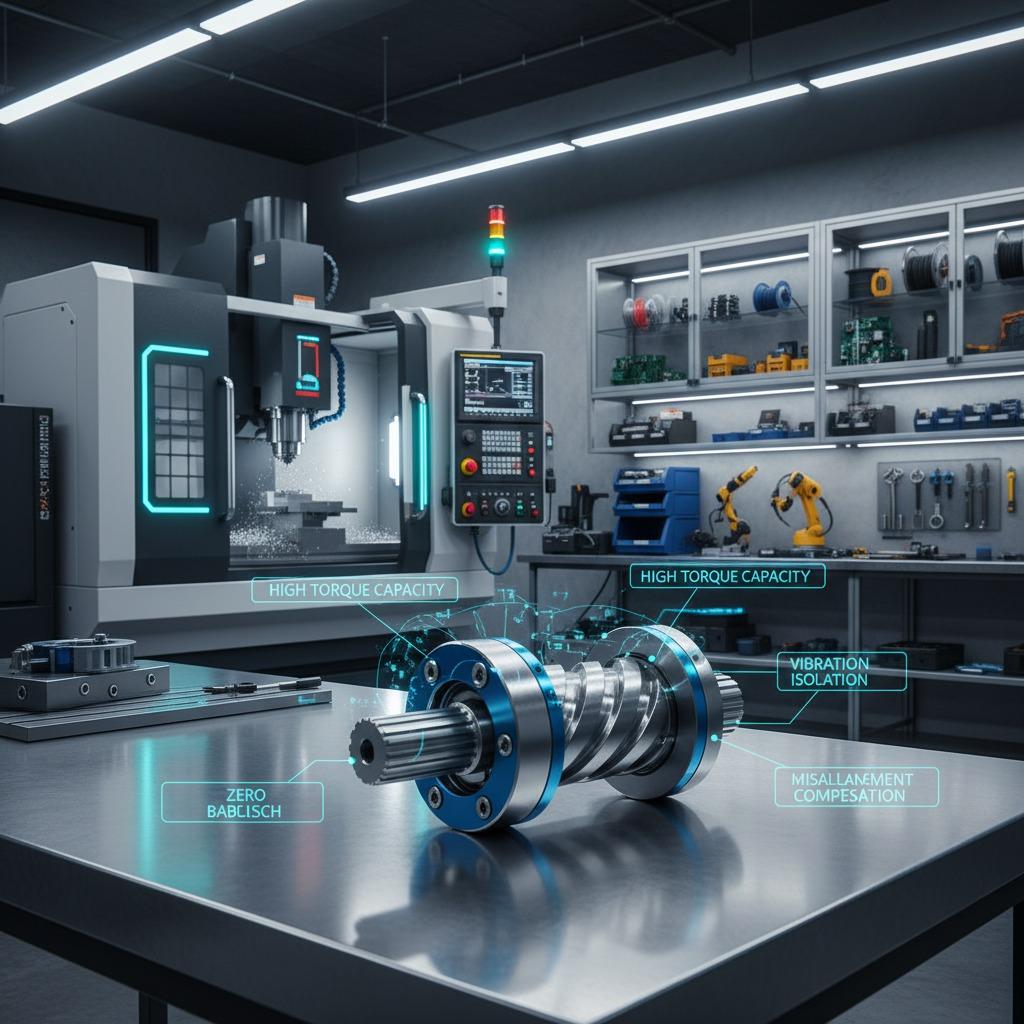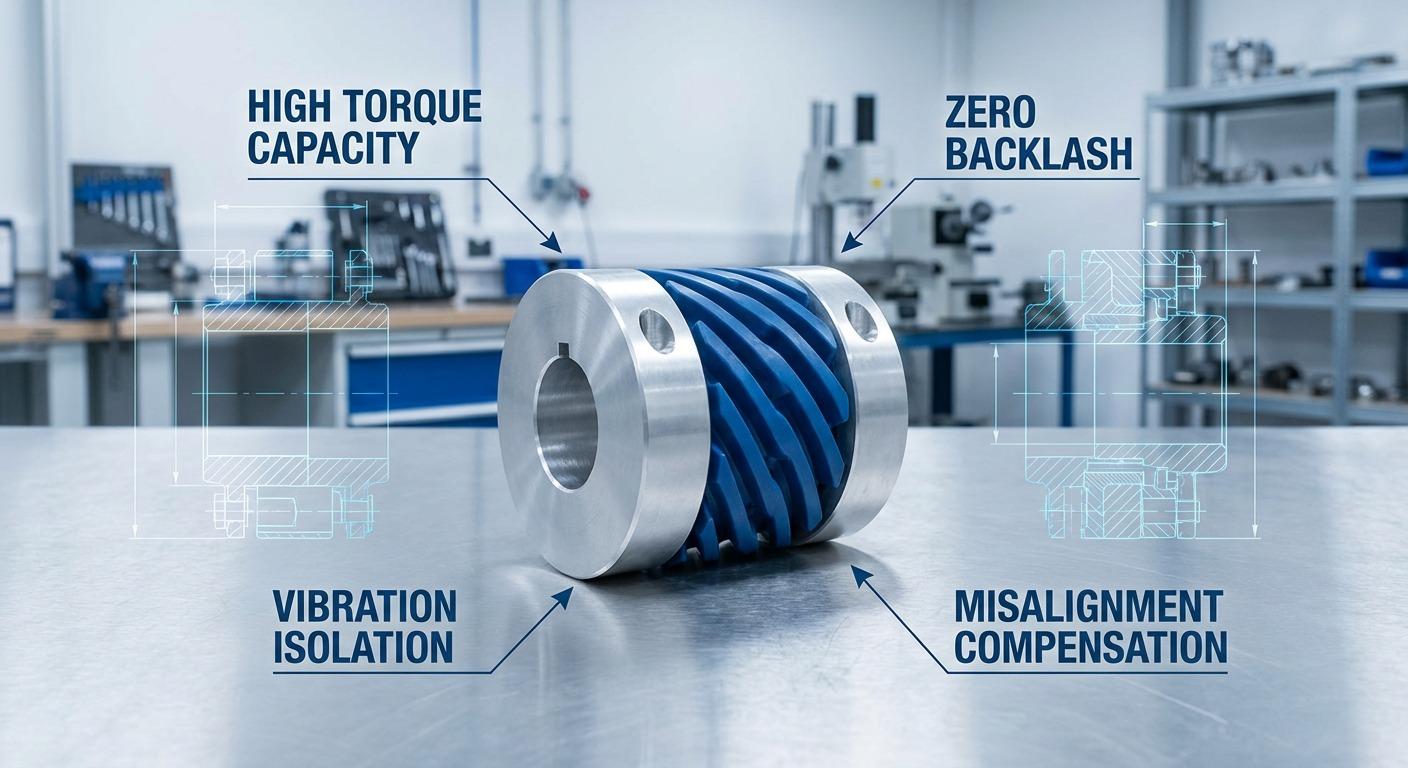

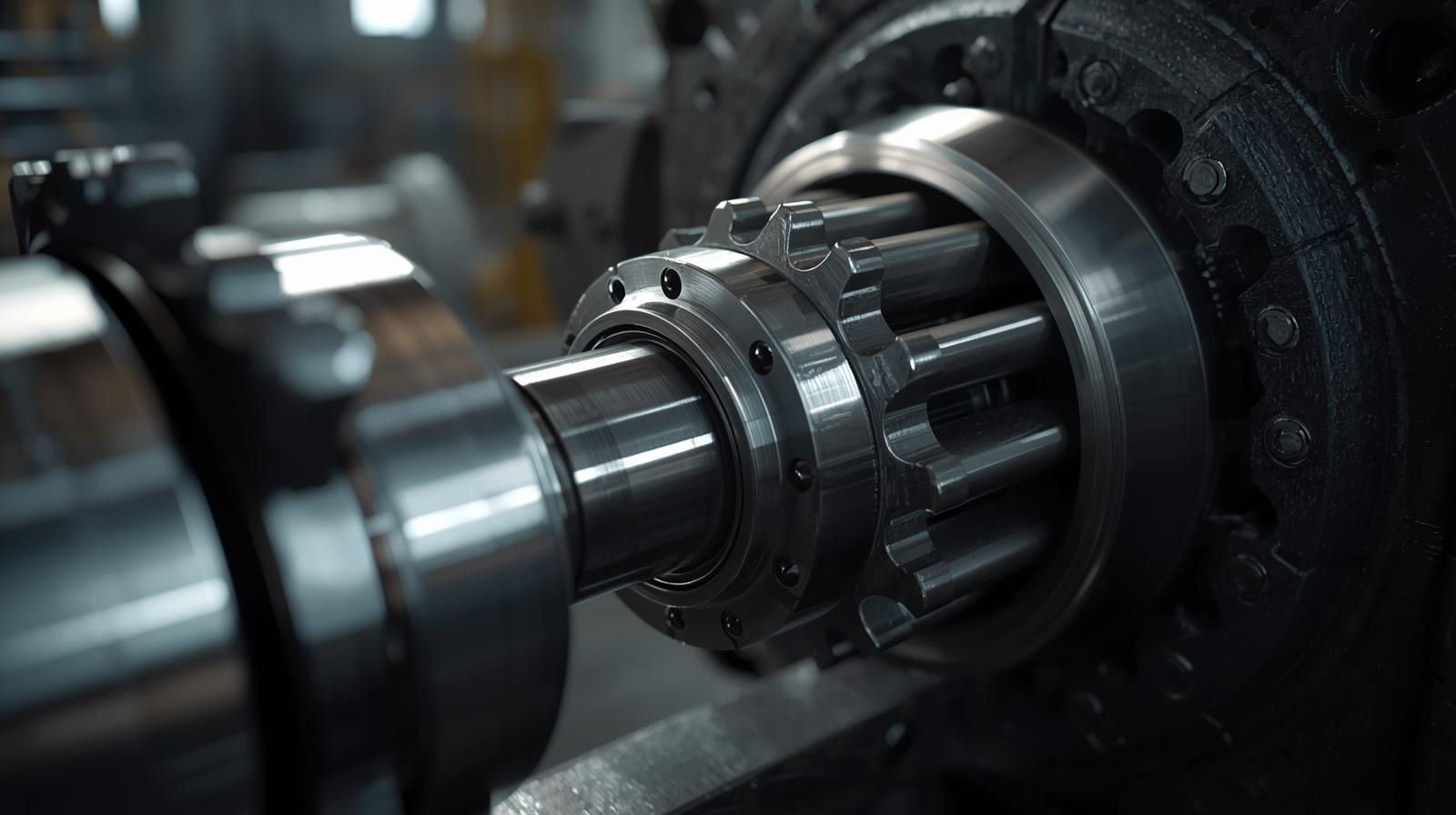
Engineering Precision: Inside the Rigid Coupling Technology Powering Modern Machinery
When it comes to mechanical accuracy, few components play a role as quietly crucial as the rigid coupling.
It’s a simple concept—two shafts connected end to end—but in practice, it determines whether your CNC spindle runs true, your servo axis repeats perfectly, or your robotic joint maintains alignment after thousands of cycles.
As an experienced rigid coupling manufacturer, Dingjian designs and tests each coupling to ensure zero backlash, high torsional stiffness, and long-term structural integrity.
Understanding the Mechanical Principle
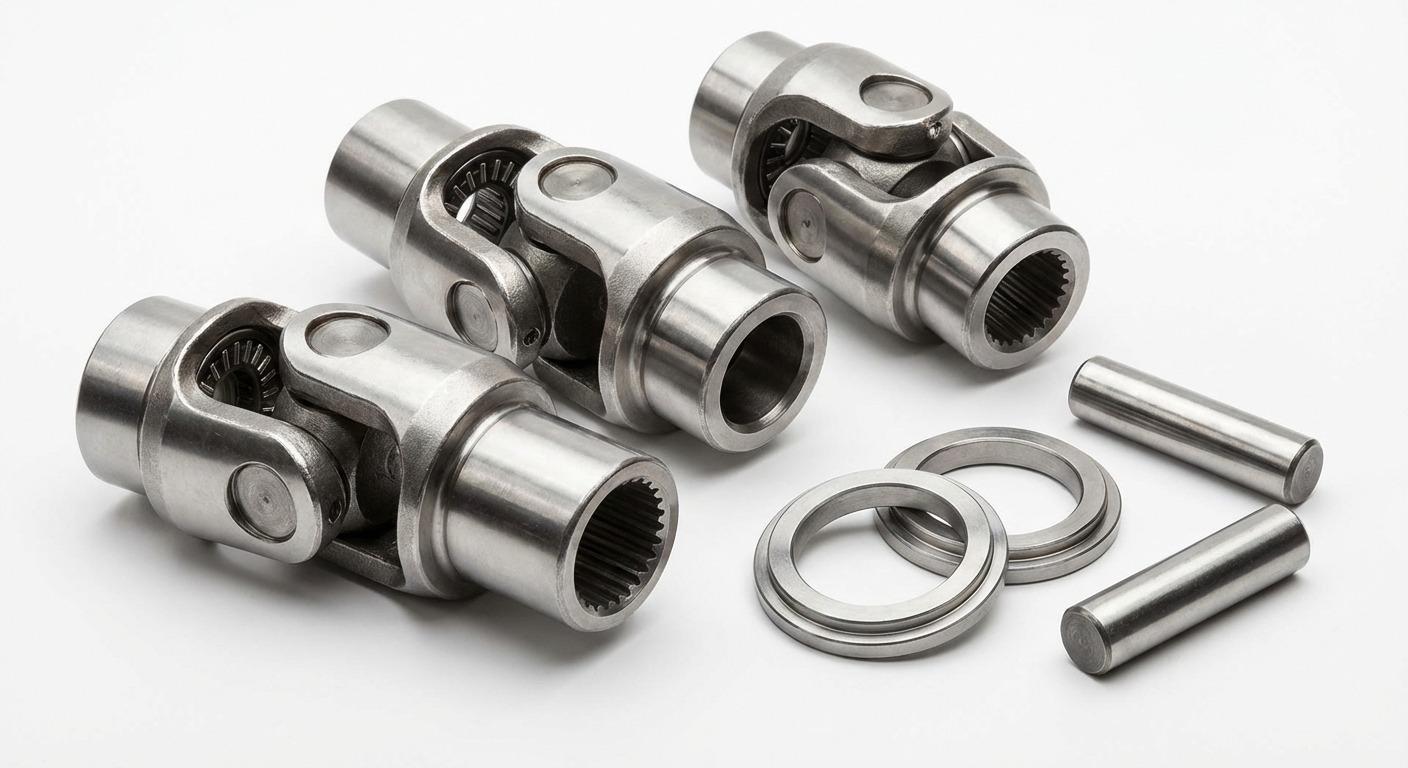
A rigid coupling transfers torque without any flexibility or damping—it behaves as if two shafts are one continuous unit.
This direct transmission means any misalignment will immediately translate into vibration or bearing load, so precision machining and installation are essential.
Technical Highlights:
-
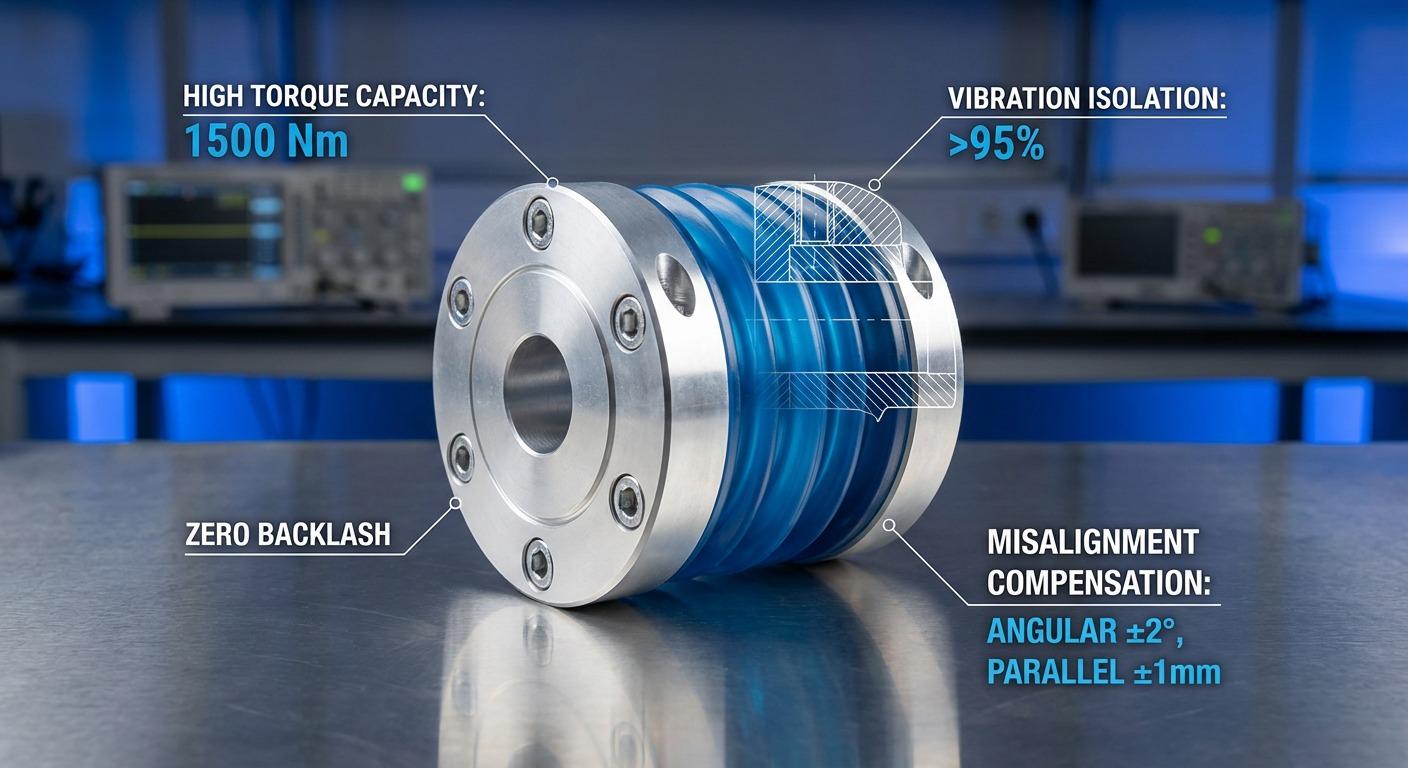
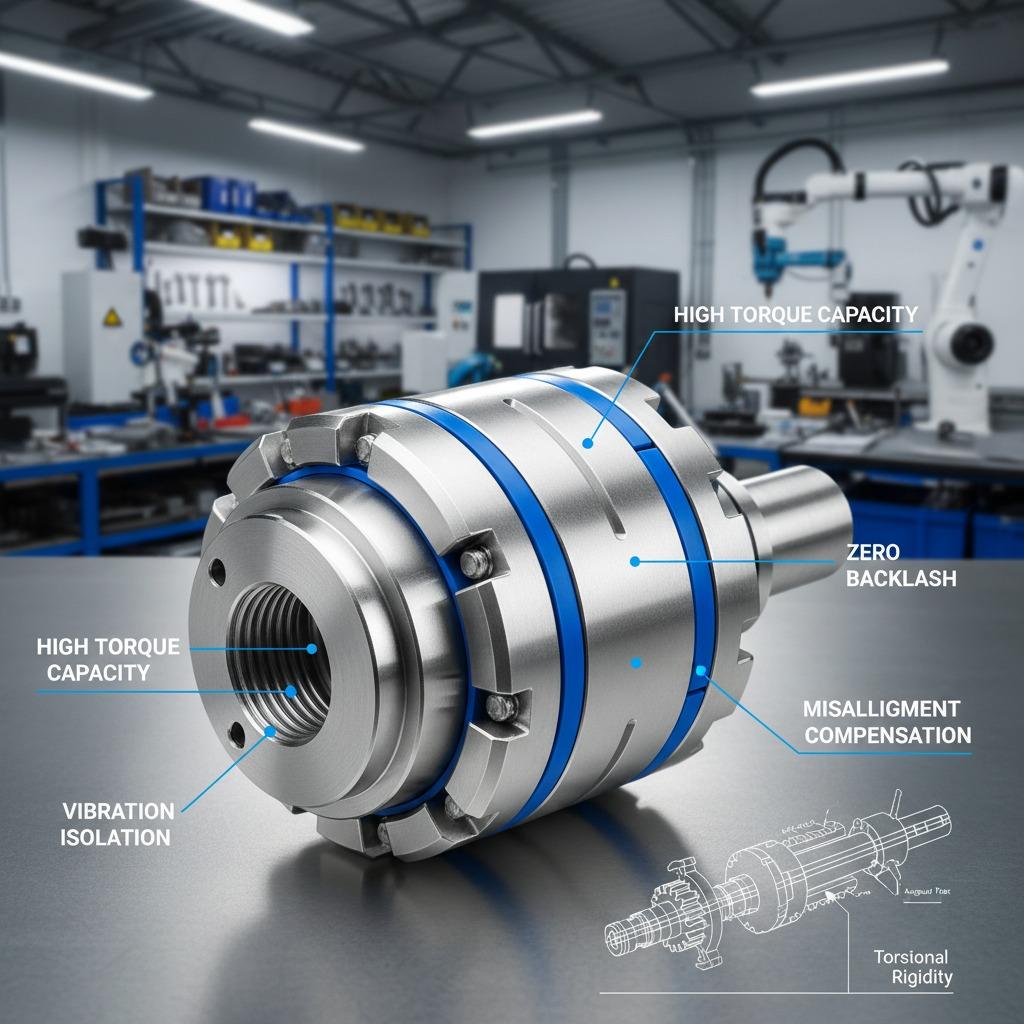
Direct torque transfer: No elastic element or energy loss; 100% mechanical linkage.
-
High torsional stiffness: Maintains angular precision between shafts.
-
Zero backlash: Ideal for servo, metrology, and synchronized drives.
-
Precise concentricity: Ensures smooth rotation and minimal bearing stress.
Because there’s no allowance for angular or parallel deviation, rigid couplings demand micron-level alignment—but they reward precision with perfect motion consistency.
Rigid vs. Flexible Couplings
| Parameter | Flexible Coupling | Rigid Coupling |
|---|---|---|
| Torque Transmission | Elastic, slight energy loss | Direct, 100% mechanical |
| Backlash | Small but present | None |
| Alignment Tolerance | ±1° angular / 0.5 mm parallel | Must be exact (≤0.02 mm) |
| Vibration Damping | Built-in | Requires external balancing |
| Application | Pumps, conveyors | Robotics, CNC, automation |
Rigid couplings are therefore not “better” than flexible ones—they are different tools for different requirements.
If precision, timing, and zero angular lag matter more than shock absorption, a rigid coupling is the right engineering choice.
Inside Dingjian’s Manufacturing Process
Producing a truly precise rigid coupling isn’t just about machining—it’s about controlling every step of geometry, material, and surface integrity.
1. Material Selection
Dingjian uses high-strength alloy steel (40Cr, 42CrMo) or aerospace-grade aluminum (7075-T6) depending on torque and inertia needs.
These materials provide excellent tensile strength (≥ 900 MPa) and dimensional stability after heat treatment.
2. Machining Accuracy
Each coupling is CNC-machined to achieve:
-
Concentricity ≤ 0.01 mm
-
Surface roughness ≤ Ra 0.8 μm
-
Keyway tolerance H7/h6 fit
This ensures perfect shaft engagement without play or eccentricity.
3. Dynamic Balancing & Assembly
After machining, each coupling undergoes dynamic balancing at speeds up to 10,000 RPM to prevent vibration amplification during high-speed operation.
4. Surface Protection
A zinc-phosphate anti-corrosion coating or black oxide finish enhances wear resistance and reduces the risk of fretting corrosion on repeated tightening cycles.
Real-World Engineering: Why Precision Matters
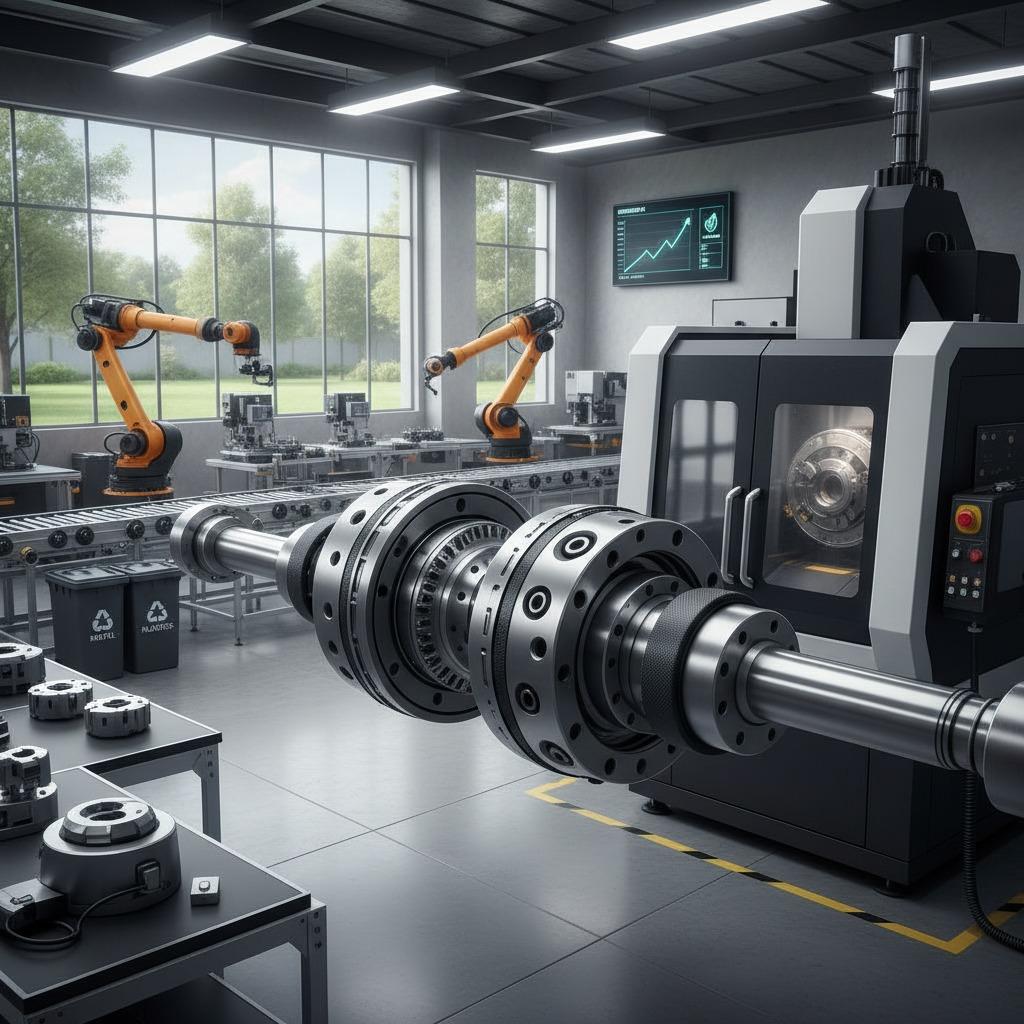
Let’s take a typical CNC spindle example.
When a motor delivers 3,000 RPM through a coupling, even a 0.05 mm axial misalignment can generate excessive bearing load and harmonic vibration.
Over time, that leads to tool chatter, dimensional inaccuracy, and energy inefficiency.
Rigid couplings eliminate this variable. Their zero-lag torque path ensures that what the motor outputs is exactly what the spindle receives—no energy loss, no oscillation delay.
In robotics, this precision directly translates to repeatable motion, while in automation conveyors it means flawless synchronization between drives.
Application Scenarios
| Industry | Typical System | Performance Advantage |
|---|---|---|
| CNC & Machining | Spindle and feed drive | Consistent torque and concentric rotation |
| Robotics | Servo axes and joints | Zero backlash for repeatable movement |
| Aerospace Components | Actuation and calibration drives | High rigidity under dynamic torque |
| Optical & Measurement Systems | Encoder shafts, calibration rigs | Maintains micrometer alignment accuracy |
| Packaging & Printing Lines | Synchronized rollers | Continuous torque transfer without delay |
Rigid couplings are particularly valuable in systems that rely on accuracy over flexibility—where each rotation must be mirrored exactly on both shafts.
Choosing the Right Rigid Coupling
| Application | Recommended Type | Technical Focus |
|---|---|---|
| Compact Assemblies | One-piece clamp type | Easy installation and consistent torque |
| High-Speed Drives | Flanged rigid coupling | Dynamic balance and axial stability |
| Heavy Torque Loads | Solid sleeve coupling | High mechanical endurance |
| Corrosive Environments | Stainless steel version | Long-term resistance to oxidation |
When selecting a coupling, engineers should first calculate torque requirements, rotational speed, and permissible misalignment—then match those with the coupling’s rated stiffness and bore fit tolerance.
Dingjian provides detailed torque charts and 3D models to help customers make precise selections.
Frequently Asked Questions
Q1: What makes rigid couplings ideal for precision drives?
A1: Their one-piece or flanged construction offers absolute torque control and zero backlash, which is critical for synchronized systems like CNC or servo drives.
Q2: How precise must the shaft alignment be?
A2: Within 0.02 mm concentricity and less than 0.1° angular misalignment to avoid bearing stress.
Q3: Are Dingjian couplings balanced for high-speed operation?
A3: Yes, every unit is dynamically balanced and tested under simulated load conditions.
Q4: Can rigid couplings be customized for OEM needs?
A4: Absolutely—Dingjian offers custom bore sizes, keyways, and coatings based on client specifications.
Q5: How does material choice affect performance?
A5: Steel provides higher torque resistance and rigidity; aluminum reduces weight for dynamic systems like robotic arms.
Precision Built for Motion That Never Falters
In mechanical engineering, perfection isn’t about complexity—it’s about consistency.
A well-machined rigid coupling doesn’t flex, it doesn’t drift, it doesn’t fail quietly; it keeps your machinery aligned and your process repeatable.
That’s the precision philosophy behind Dingjian’s rigid coupling manufacturing—turning tolerance control into mechanical trust.
For technical specifications or OEM cooperation, visit the official homepage or reach the engineering team via the contact page.