
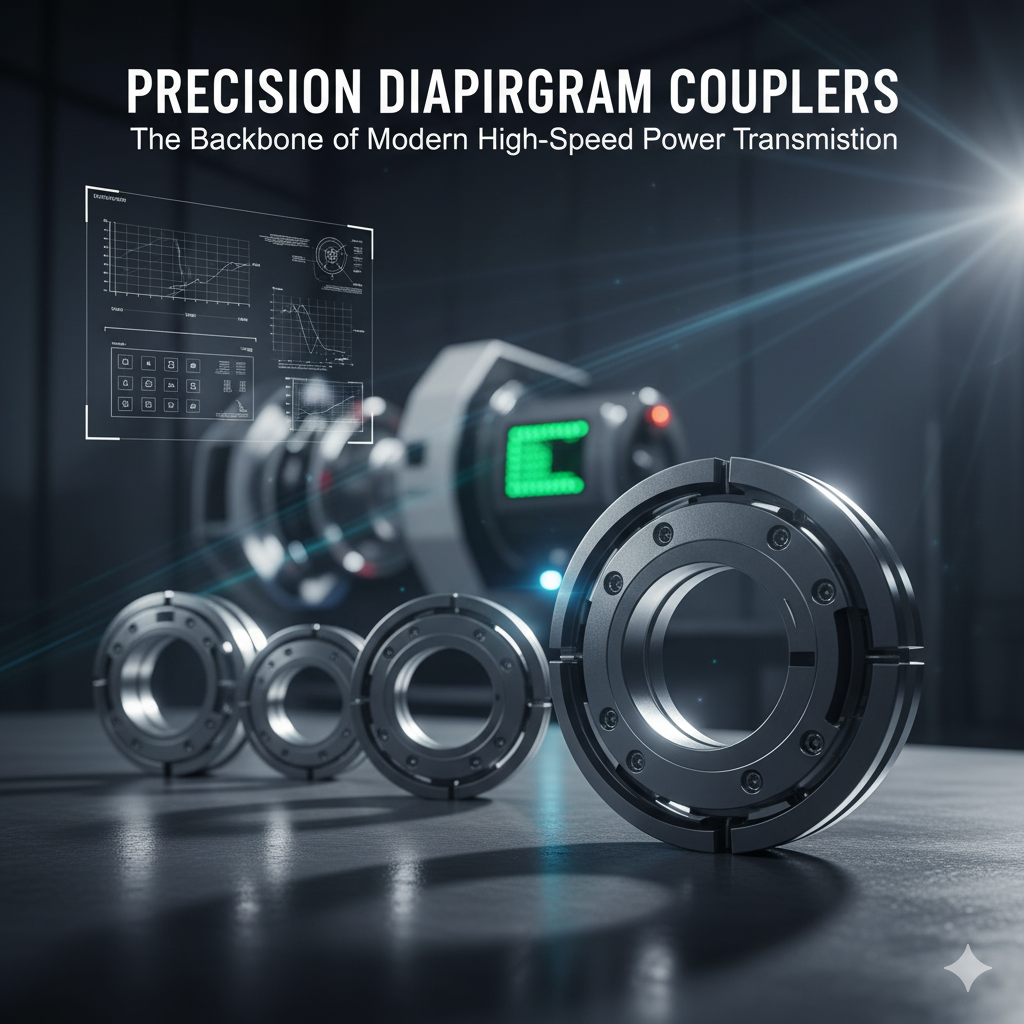
Precision Diaphragm Couplers: The Backbone of Modern High-Speed Power Transmission
Every industrial motion system seeks a balance between torque accuracy and mechanical flexibility.
In servo-driven machinery, even a small vibration ripple or torsional error can lead to loss of synchronization, reduced precision, and premature fatigue.
That’s why the precision diaphragm coupler has become a critical component of today’s automation and CNC systems — it enables torque transmission that is both perfectly aligned and dynamically responsive.
For over a decade, Dingjian has specialized in the production of high-accuracy diaphragm couplers, engineered for zero-backlash operation and repeatable torque control across long duty cycles.
How Precision Diaphragm Couplers Work
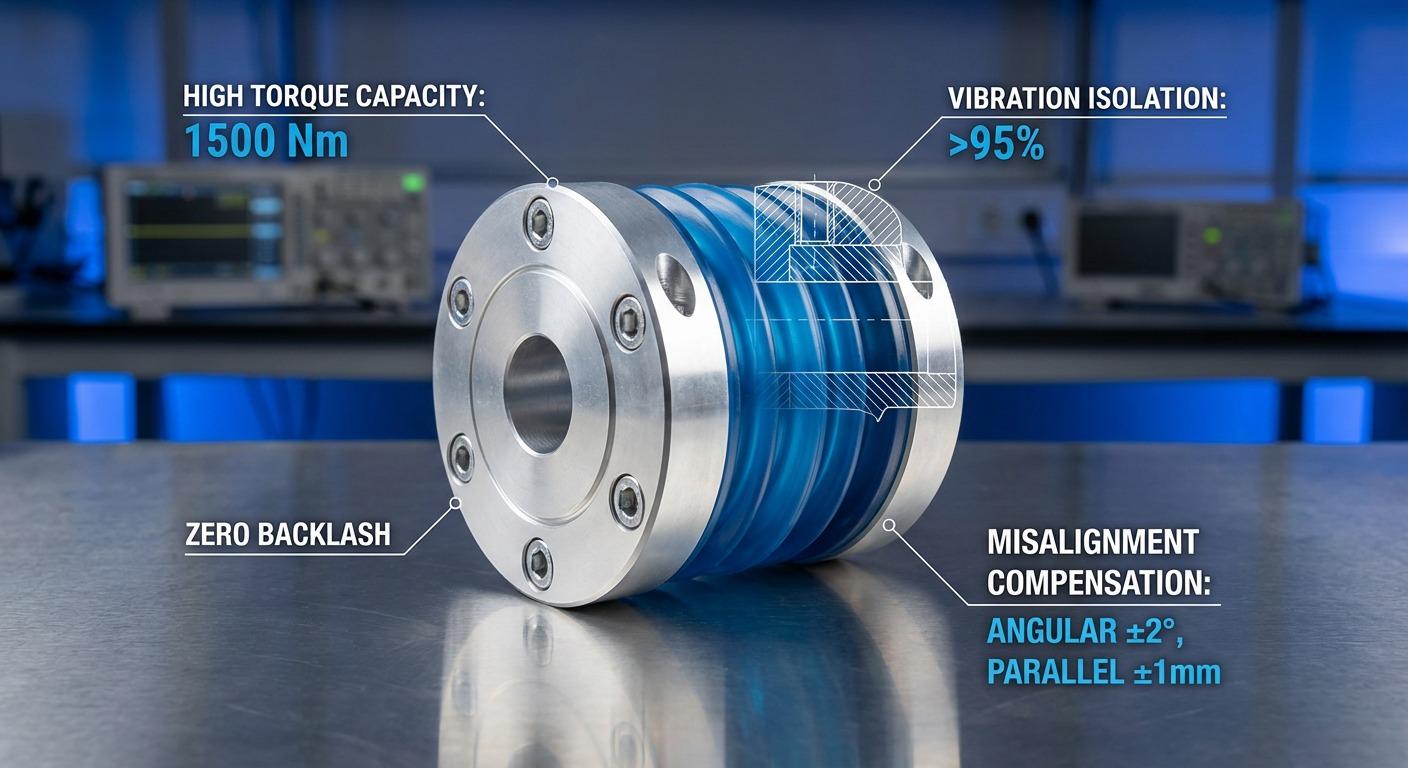
A diaphragm coupler transfers torque using one or more thin metal discs, or diaphragms, that flex under small shaft misalignments.
This allows rotation to remain synchronous without mechanical play.
At high speeds, precision becomes crucial:
-
Even 0.02 mm misalignment can cause resonance and fatigue failure.
-
Uneven diaphragm thickness leads to torsional asymmetry.
-
Temperature fluctuations alter torque uniformity.
To eliminate these risks, Dingjian designs its couplers under ISO 14691:2016 and AGMA 9002-B04 standards, balancing stiffness, symmetry, and thermal stability.
Each coupling is laser-cut from high-grade stainless or alloy steel, ensuring equal radial stress paths and consistent flexural modulus.
Inside Dingjian’s Manufacturing Precision
Producing a true “precision coupler” requires more than tight tolerances — it requires predictive control of stress distribution during every machining and assembly step.
1. Micron-Level Hub Machining
Each hub is CNC-finished to <0.01 mm runout, ensuring uniform torque path alignment.
2. Laser-Calibrated Diaphragm Profiling
Laser cutting maintains consistent radial stiffness across the full 360° plane.
3. Symmetrical Bolt Patterning
Ensures equal torque transfer across fastening points, minimizing unbalanced loads.
4. G2.5 Dynamic Balancing Verification
According to ISO 21940-11, each coupling is tested for vibration energy below 2.5 gmm/kg.
5. Controlled Surface Finishing
Mirror polishing minimizes stress risers, while passivation extends fatigue life in humid or corrosive environments.
As a result, Dingjian’s precision diaphragm couplers achieve lifespans exceeding 30,000 hours under continuous load — double the industry average.
Performance Comparison: Precision vs. Standard Couplers
| Parameter | Standard Metal Coupling | Dingjian Precision Diaphragm Coupler |
|---|---|---|
| Torsional Stiffness | ±5% variance | ±0.5% variance |
| Dynamic Balance | Basic G6.3 | G2.5 certified |
| Backlash | Minimal | Zero |
| Misalignment Compensation | ±1° | ±1.2° with flex memory |
| Operating Speed | ≤5,000 RPM | ≤15,000 RPM |
| Service Life | 10,000–15,000 hrs | 30,000+ hrs |
According to a 2024 report by the Japan Precision Engineering Society (JPES), diaphragm-based couplers outperform gear or grid couplings by up to 40% in efficiency retention when operating under variable torque conditions — an insight directly reflected in Dingjian’s product design.
Applications: Where Precision Defines Performance
1. Servo Drives & Automation Lines
Zero-backlash operation keeps servo motion fully synchronized, improving response time by up to 15%.
2. CNC Machining Centers
Precision torque delivery minimizes tool vibration, enhancing surface finish accuracy.
3. Testing Equipment
Dynamic balance ensures reliable readings in vibration-sensitive test benches.
4. Semiconductor Equipment
Clean, lubrication-free design meets ISO Class 7 cleanroom requirements.
5. Energy Systems
Used in turbine auxiliary drives and micro-generator couplings, where thermal expansion control is critical.
Engineering Selection: How to Specify the Right Coupler
| Design Factor | Importance | Dingjian Recommendation |
|---|---|---|
| Torque Load | Rated +25% safety factor | 42CrMo + 316L hybrid diaphragm |
| Speed Range | Continuous vs. transient | Dynamic balancing certification |
| Temperature | Affects stiffness | Passivated stainless construction |
| Misalignment | Shaft offset tolerance | Single or double diaphragm types |
| Control Precision | Servo or feedback loop | Zero-backlash model |
💡 Practical Tip:
For high-frequency servo motion, Dingjian engineers recommend a single-diaphragm compact coupler to minimize inertia and enhance response.
Common Questions About Precision Diaphragm Couplers
Q1: What makes a diaphragm coupler “precision-grade”?
Tight manufacturing tolerances, perfect balance, and symmetrical stress distribution make it suitable for zero-backlash operation.
Q2: Can these couplers handle torque spikes?
Yes. The elastic diaphragm absorbs transient loads, preventing transmission shock to bearings.
Q3: How are they tested for performance?
Every Dingjian coupler undergoes torsional stiffness verification, balance certification, and 1,000-cycle fatigue testing.
Q4: Are they maintenance-free?
Completely. No lubrication, no periodic adjustment required.
Q5: Do they comply with international standards?
Yes, Dingjian designs comply with ISO 14691, AGMA 9002, and DIN 740 standards.
Precision Is More Than a Metric — It’s a Philosophy
In a world where machinery grows faster and smarter, precision is not optional — it’s essential.
Dingjian’s diaphragm couplers are engineered to deliver absolute control, smooth torque, and unmatched balance.
Every component is tested, balanced, and verified to transform rotational motion into measurable performance.
To request engineering drawings or discuss custom torque systems, visit the official homepage or reach out through the contact page.