
Mechanical Couplings: Reliable Power Transmission Solutions for Modern Industry
As we moved from plum flexible couplings to higher-torque designs, it becomes clear that at the foundation of every efficient drive system lies one unassuming yet critical component — the mechanical coupling.
Whether transferring torque, aligning rotating shafts, or absorbing misalignment, couplings are the unsung connectors that define system stability and machine lifespan.
In today’s world of automated production lines, the demand for reliable, precision-engineered mechanical couplings has never been higher. Dingjian continues to serve as a trusted supplier, combining metallurgical expertise with modern CNC design to meet complex motion requirements across diverse industries.
The Function and Working Logic of Mechanical Couplings
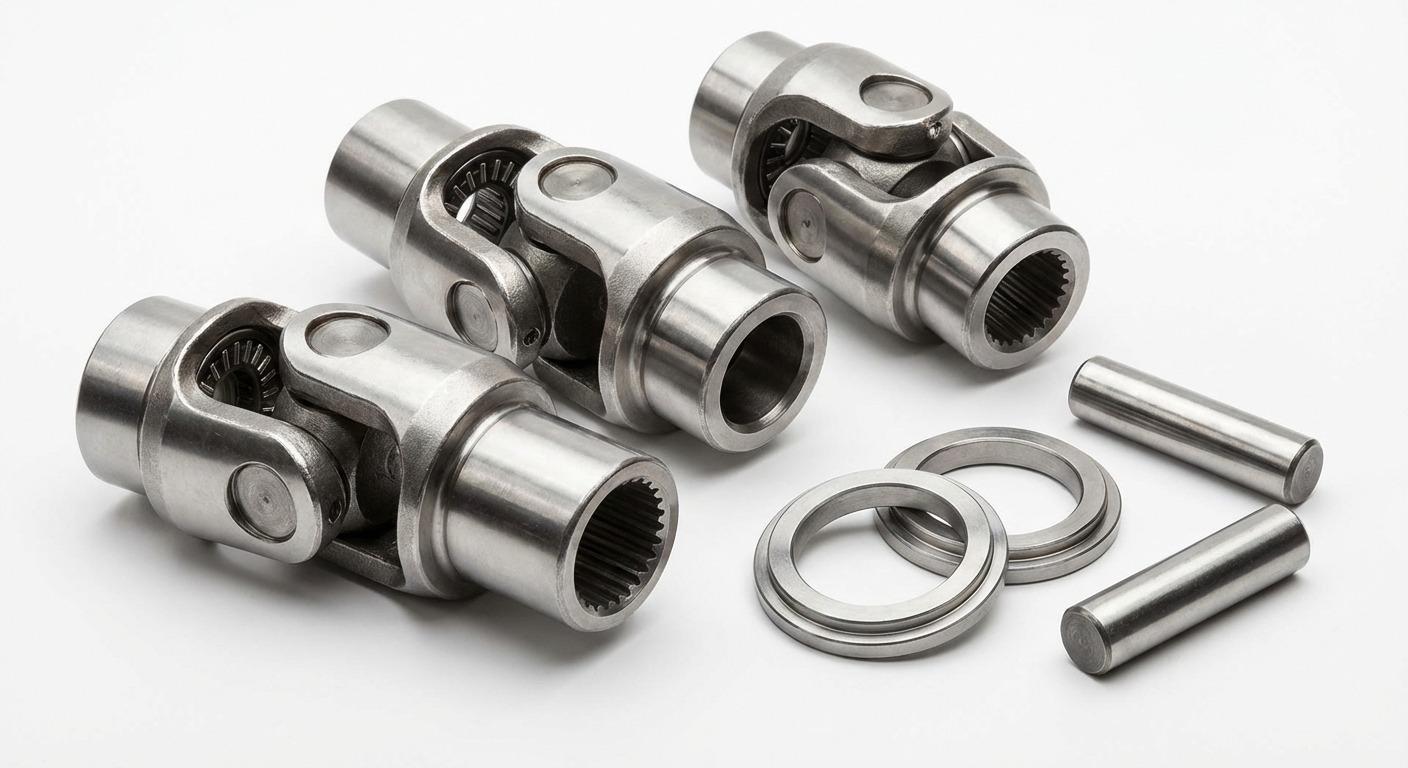
A mechanical coupling connects two shafts to transmit torque, power, or motion while accommodating small misalignments between them. Depending on the application, couplings can be designed to be rigid, flexible, or hybrid in nature.
Key Functional Roles:
-
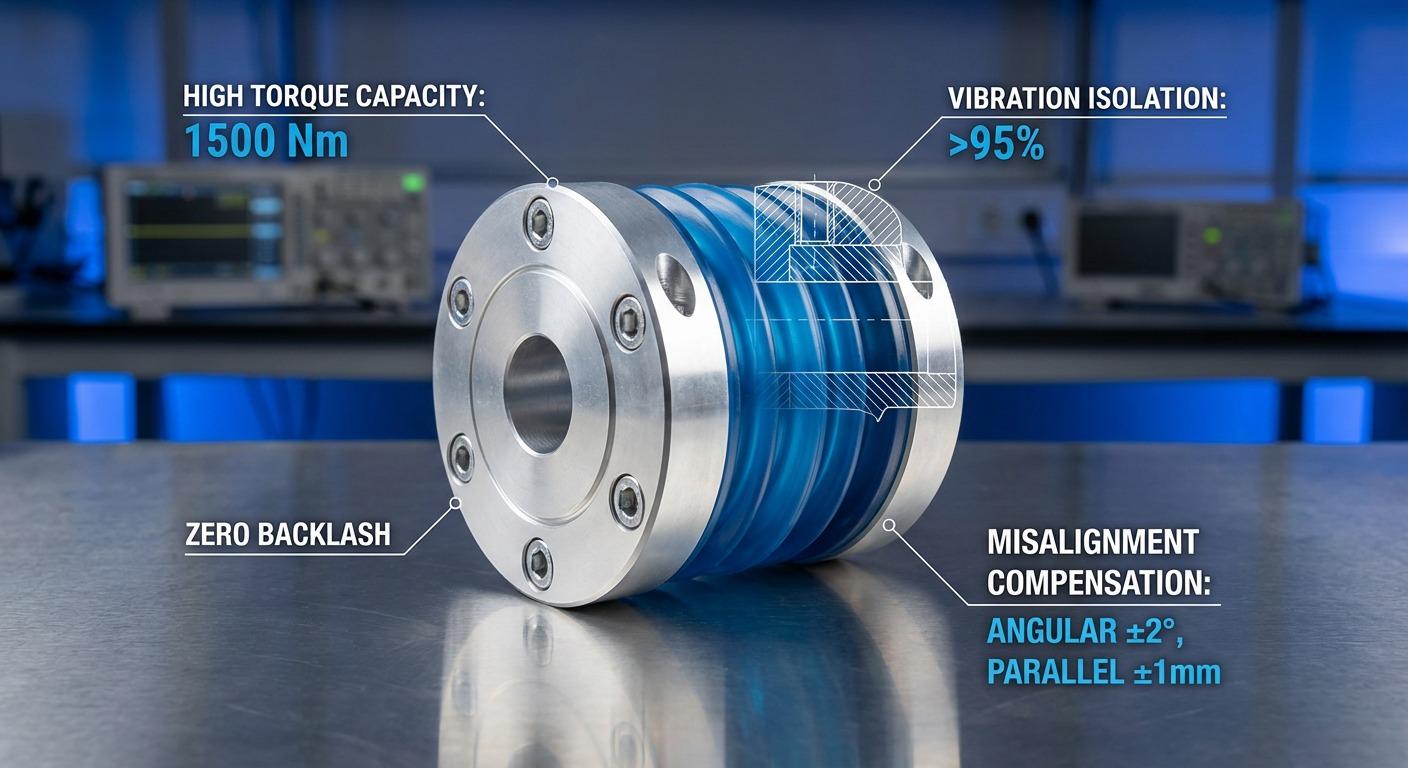
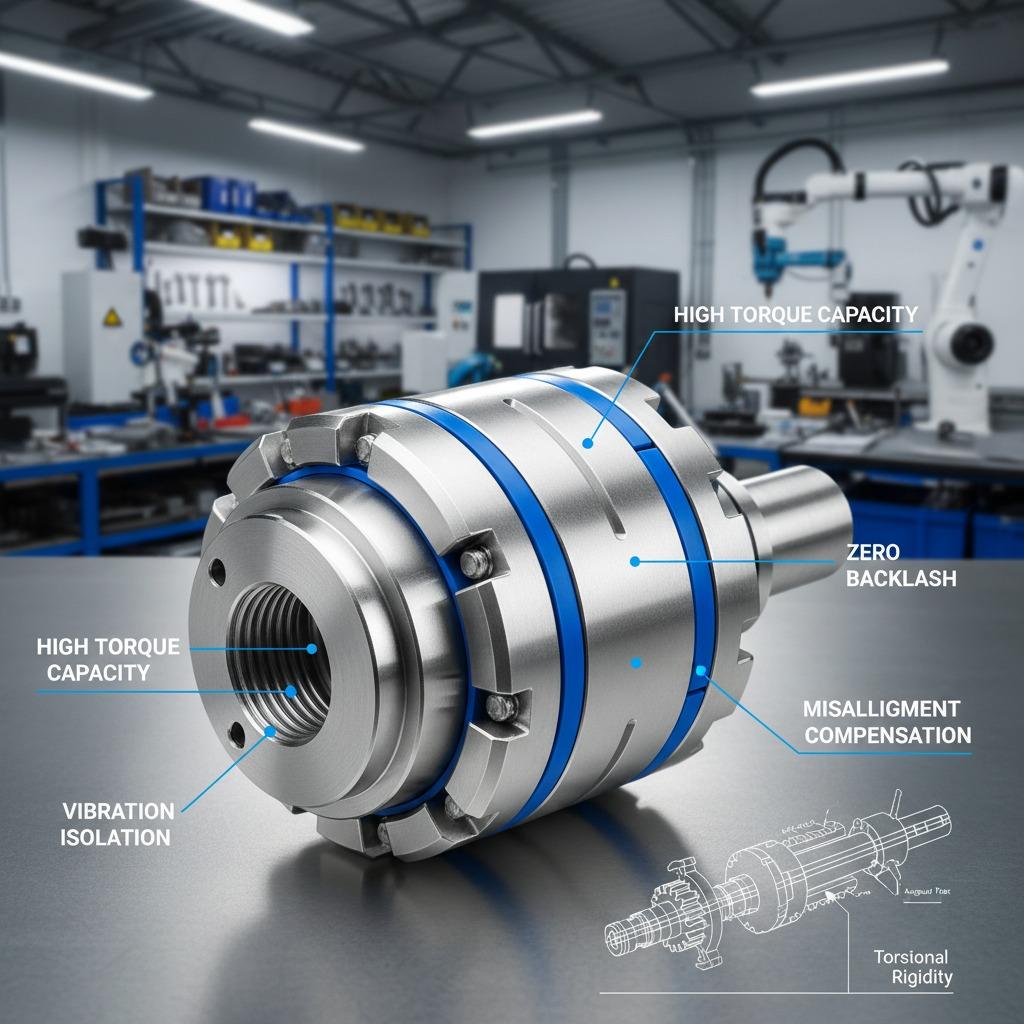
Torque Transmission: Transfers rotational power without loss.
-
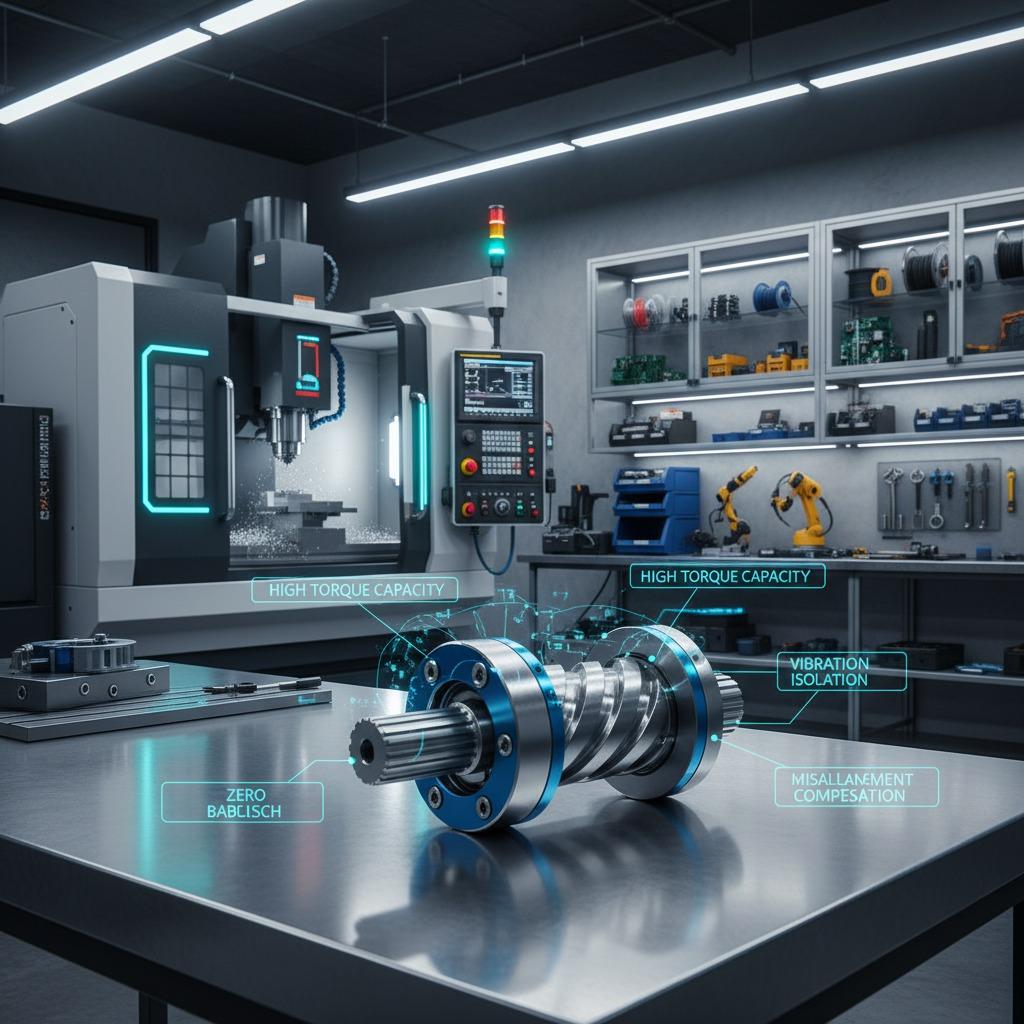
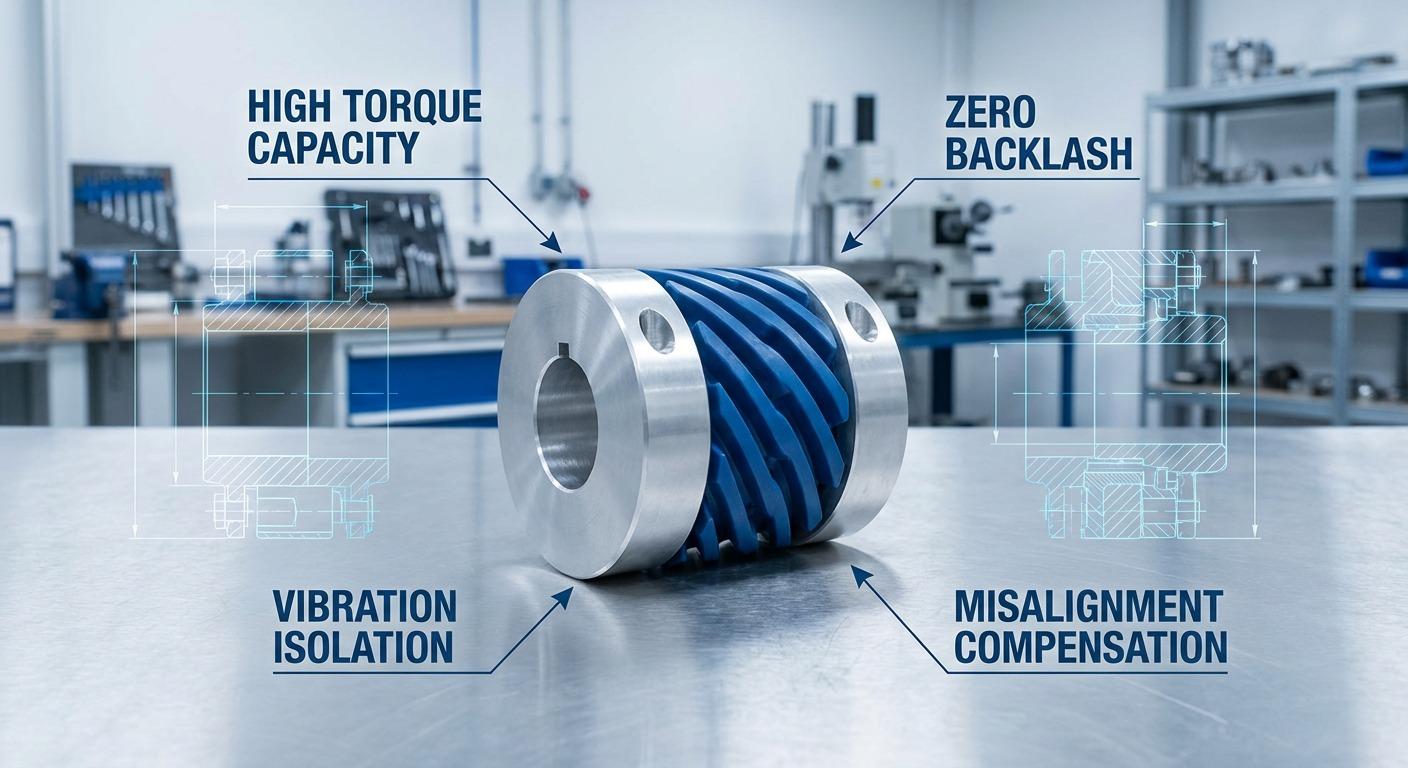
Misalignment Compensation: Handles angular, parallel, or axial deviations.
-
Vibration Damping: Reduces resonance and oscillation during operation.
-
Safety Protection: Prevents overload through fail-safe deformation or breakaway mechanisms.
This simple yet essential mechanism ensures that motors, pumps, compressors, and conveyors operate in synchrony — sustaining the heartbeat of modern industry.
Comparison of Major Coupling Categories
| Type | Core Feature | Advantages | Ideal Applications |
|---|---|---|---|
| Rigid Coupling | Direct torque link | Zero backlash, high accuracy | CNC machines, motor shafts |
| Flexible Coupling | Elastic element for damping | Vibration reduction, alignment tolerance | Pumps, conveyors, HVAC |
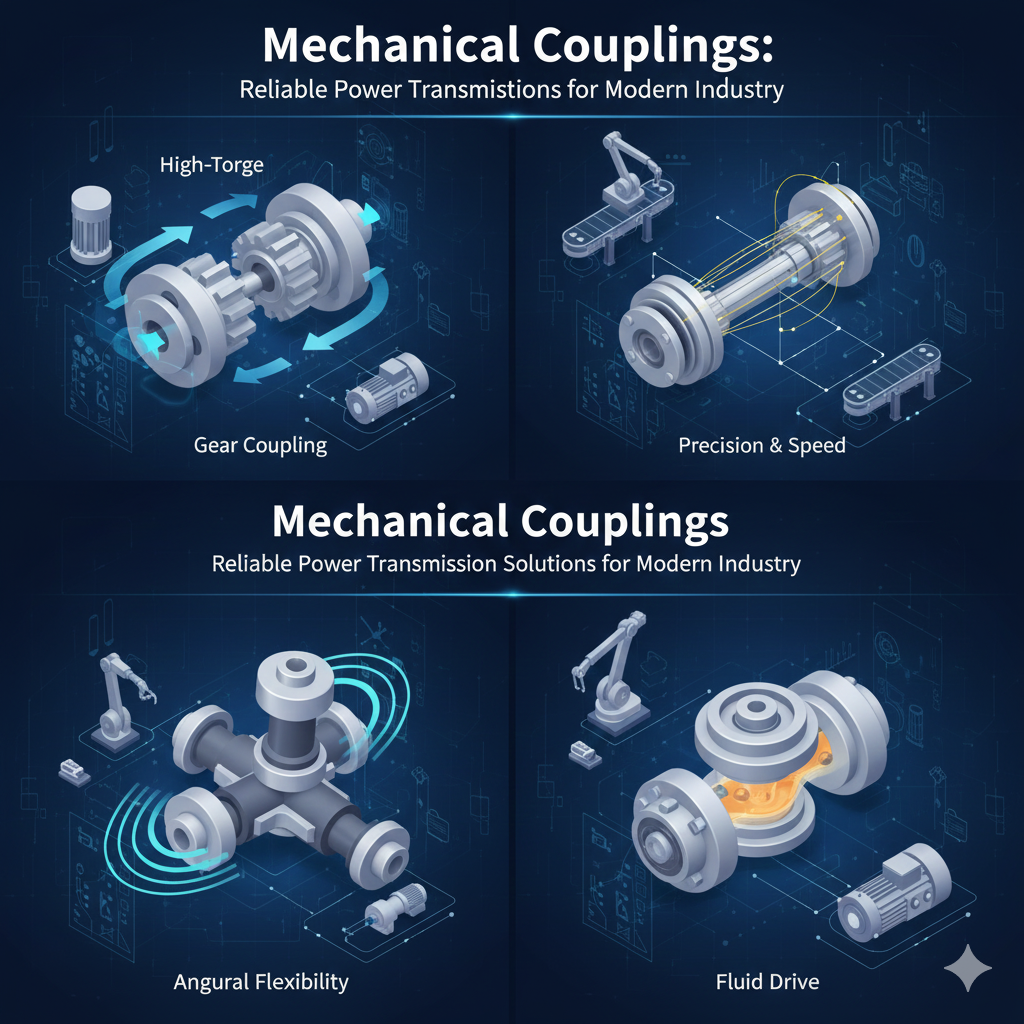
| Gear Coupling | Interlocked teeth interface | High torque, compact size | Steel, mining, heavy drives |
| Diaphragm Coupling | Thin metal disc flexibility | Precision, zero lubrication | Servo systems, turbines |
| Grid Coupling | Spring steel element | Shock absorption, heavy-duty use | Crushers, mixers, conveyors |
This spectrum of designs allows engineers to balance stiffness and flexibility, choosing the right mechanical coupling for torque accuracy or resilience, depending on project needs.
Dingjian’s Manufacturing Standards and Engineering Process
At Dingjian, mechanical couplings are not just assembled — they are precision-built systems engineered for real-world conditions.
-
High-Grade Material Selection
-
Alloy steels and heat-treated aluminum ensure structural strength and fatigue resistance.
-
-
CNC Machining Precision
-
Hubs are machined within ±0.01 mm tolerance, maintaining concentric accuracy during rotation.
-
-
Surface Hardening & Anti-Corrosion Coating
-
Provides long-term endurance under moisture, dust, and temperature fluctuations.
-
-
Dynamic Balancing & Endurance Testing
-
Each unit passes rotational balance and torsional load simulation before shipment.
-
This manufacturing discipline allows Dingjian’s couplings to deliver consistent torque reliability, even in continuous 24/7 operational environments.
Industrial Applications: Where Coupling Design Defines Performance
-
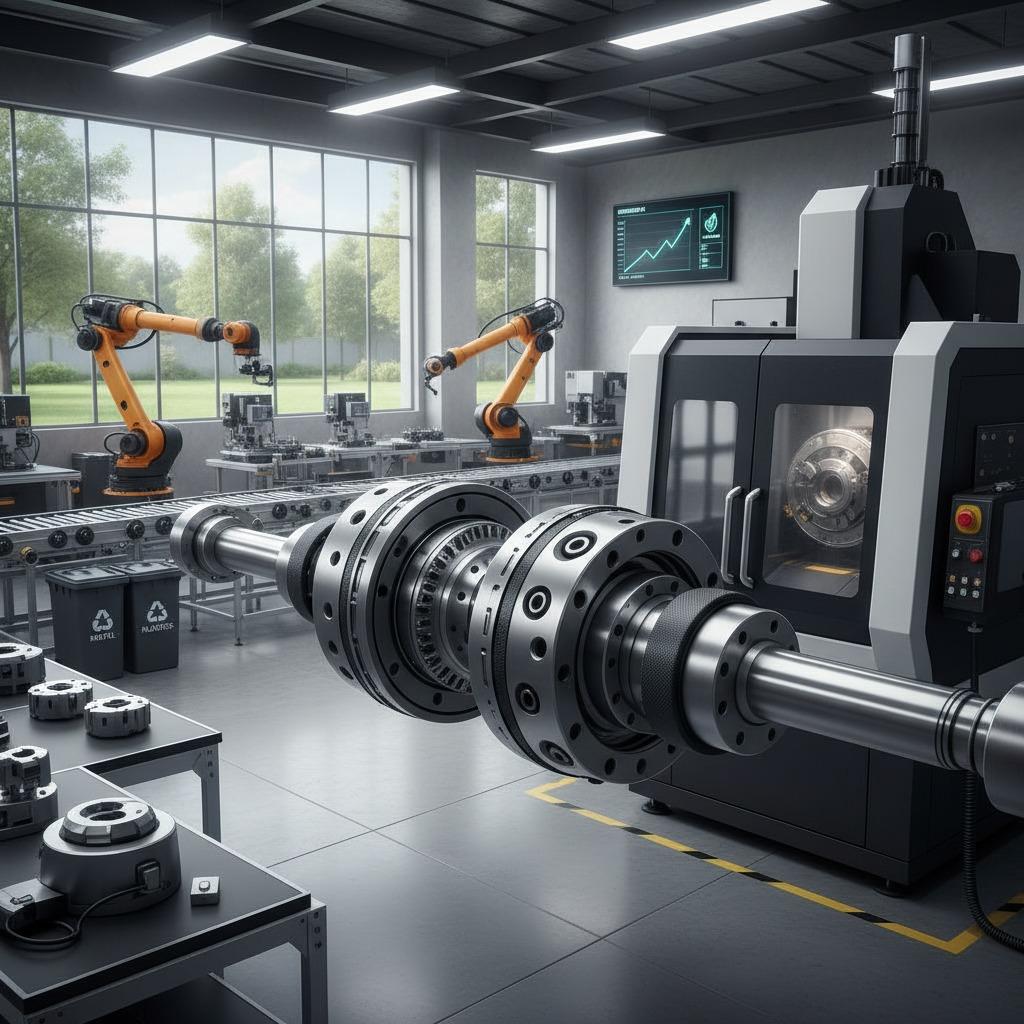
Pumps & Compressors: Ensures torque stability and reduces pressure fluctuations.
-
Conveyors & Mixers: Handles misalignment caused by structural expansion or vibration.
-
Machine Tools: Provides precise rotational accuracy between spindle and motor.
-
Steel & Mining Equipment: Withstands high torque and frequent load shocks.
-
Automation Systems: Compact design suitable for multi-axis synchronization.
Every application reinforces one simple fact: the quality of a coupling determines the reliability of the entire power transmission chain.
Solution Design: Selecting the Right Coupling Configuration
| Design Consideration | Effect on System | Dingjian Recommendation |
|---|---|---|
| Torque & Speed | Defines structural type | Grid or gear for high torque; flexible for medium torque |
| Alignment Error | Impacts vibration and wear | Flexible or diaphragm types |
| Operating Environment | Affects material durability | Stainless or coated steel for humid areas |
| Space Limitation | Determines hub geometry | Compact jaw or plum type |
| Maintenance Demand | Influences cost and uptime | Non-lubricated flexible types preferred |
💡 Expert Tip:
Dingjian engineers emphasize choosing couplings based on operational dynamics rather than nominal torque alone — a key step to prevent premature shaft wear and noise increase.
Frequently Asked Questions
Q1: How to choose between rigid and flexible mechanical couplings?
If precise alignment is possible, rigid types work best; otherwise, flexible types handle dynamic loads more effectively.
Q2: What is the average service life of a mechanical coupling?
Typically between 25,000–50,000 working hours, depending on operating conditions.
Q3: Can Dingjian provide OEM or customized designs?
Yes, custom bores, keyways, balancing grades, and elastomer inserts can be tailored per client requirements.
Q4: Do mechanical couplings require maintenance?
Flexible and diaphragm types are maintenance-free, while gear couplings may require periodic lubrication.
Q5: Which industries rely most on Dingjian’s coupling products?
Automation, mining, pump manufacturing, and precision machining sectors are primary users.
Advancing Industrial Motion with Precision and Reliability
Mechanical couplings are not mere connectors — they are the mechanical intelligence behind motion control.
From light-duty automation to heavy industry, Dingjian supplies coupling solutions that embody a commitment to durability, accuracy, and cost efficiency.
As industrial power systems evolve toward smarter, vibration-aware designs, Dingjian continues refining each model for improved damping, compactness, and lifespan.
To explore customized solutions or request a quotation, visit our homepage or reach out through our contact page.