
Industrial Flexible Coupling: Balancing Power, Precision, and Durability
As industrial machinery scales in size and complexity, the coupling between shafts becomes more than a connector — it becomes a guardian of system integrity.
While servo couplings focus on micro precision, industrial flexible couplings tackle a different challenge: transmitting high torque while managing heat, vibration, and misalignment under relentless operation.
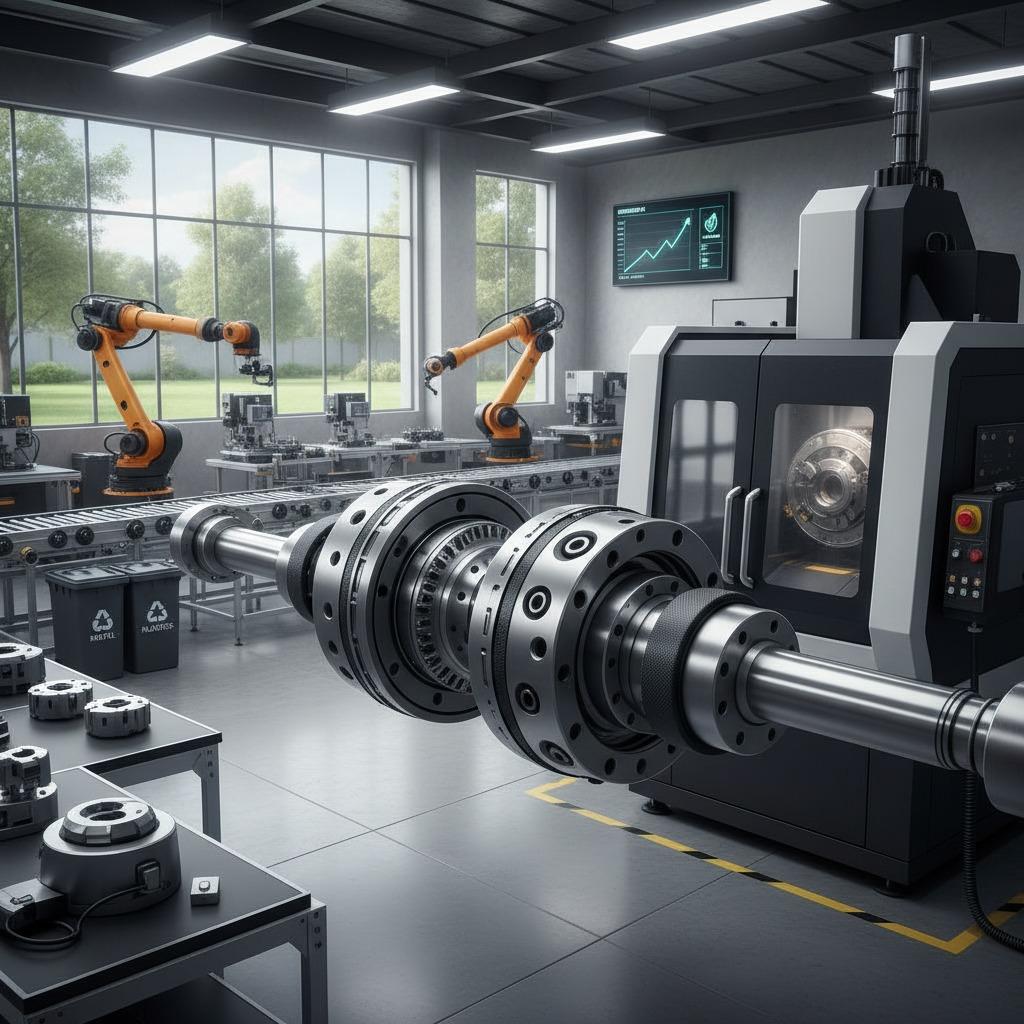
Dingjian’s coupling systems are built for the real world — factories, quarries, steel mills, and production lines where downtime is not an option.
How Industrial Flexible Couplings Maintain System Stability
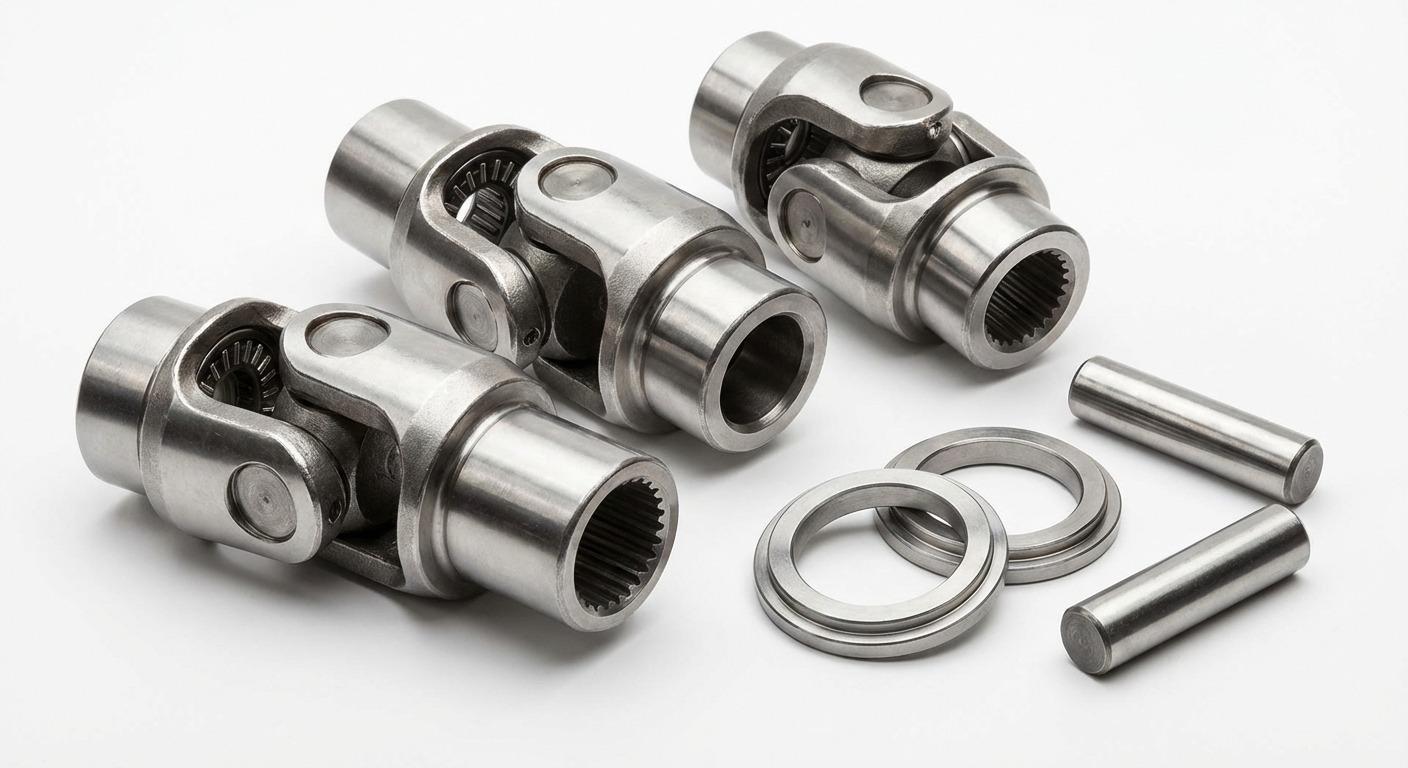
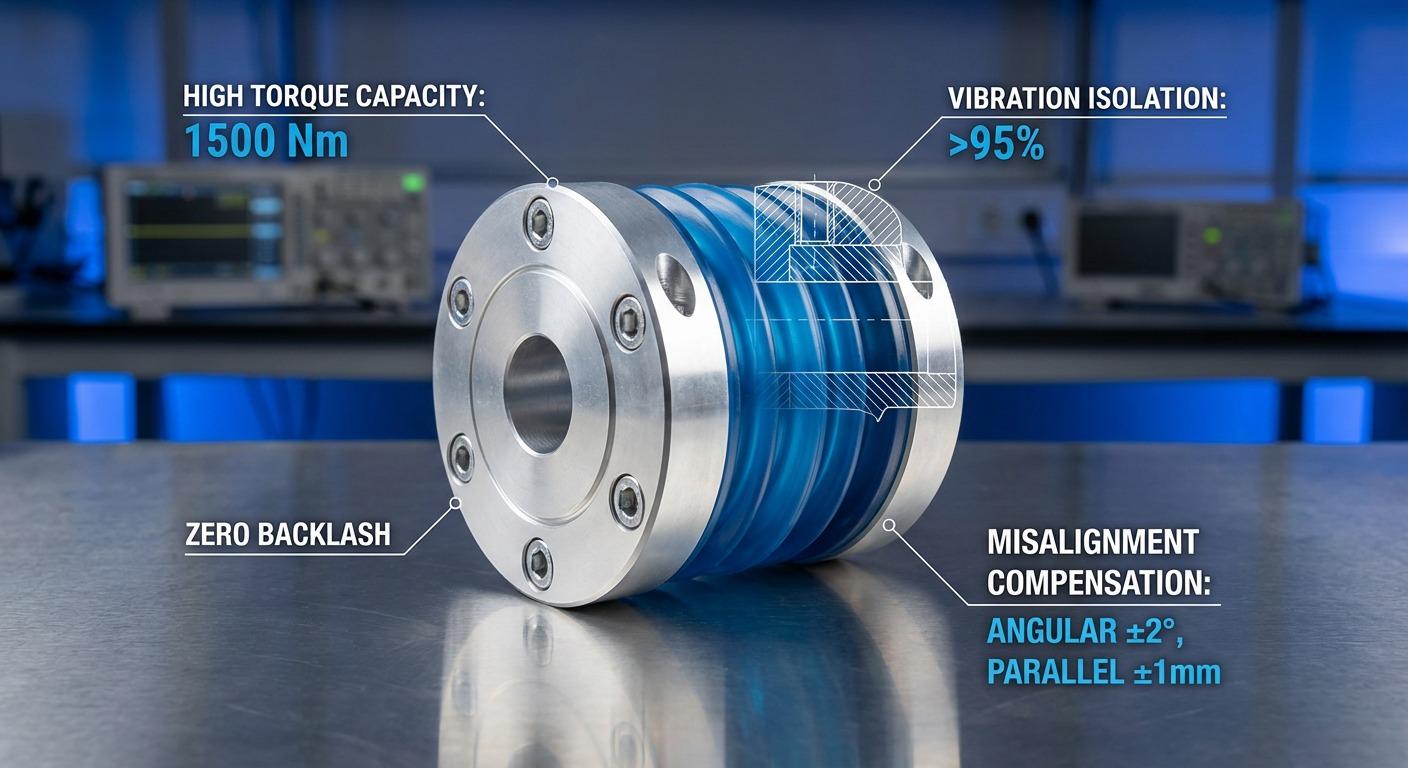
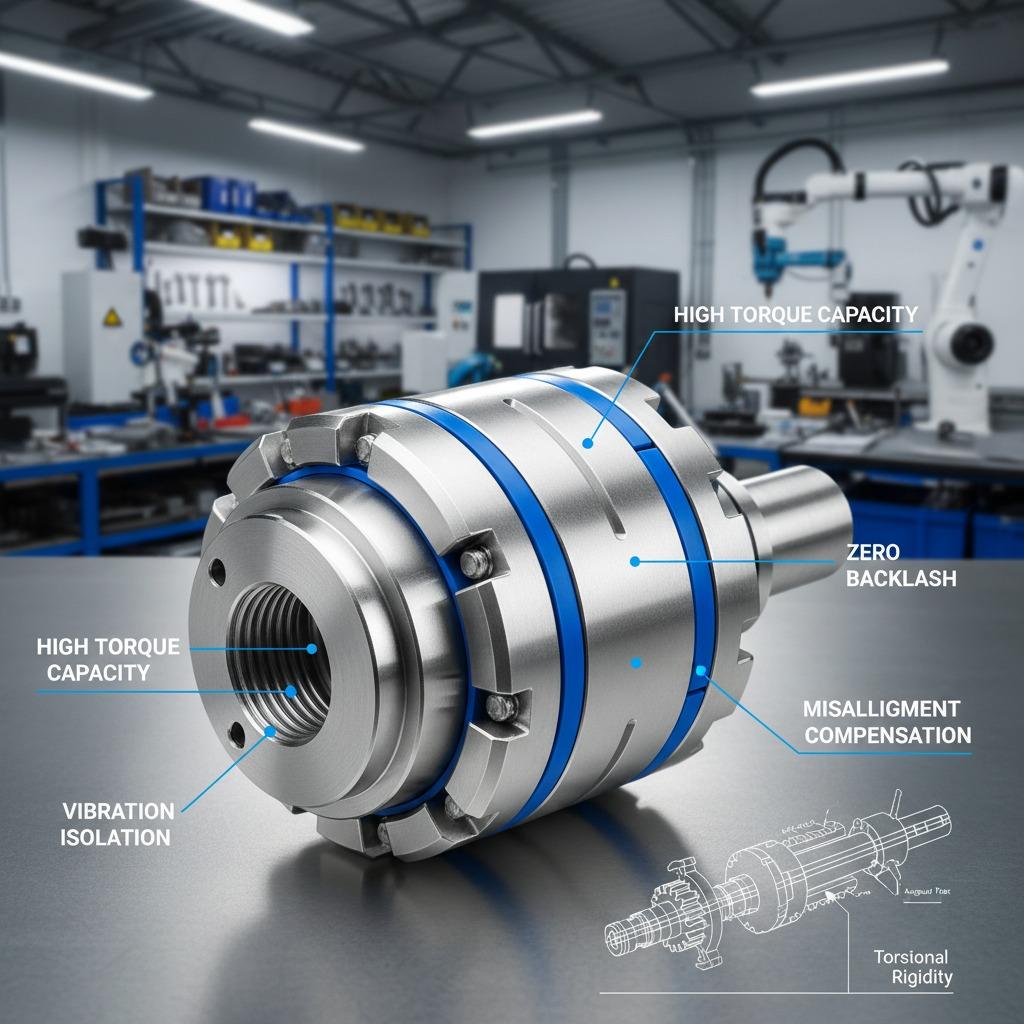
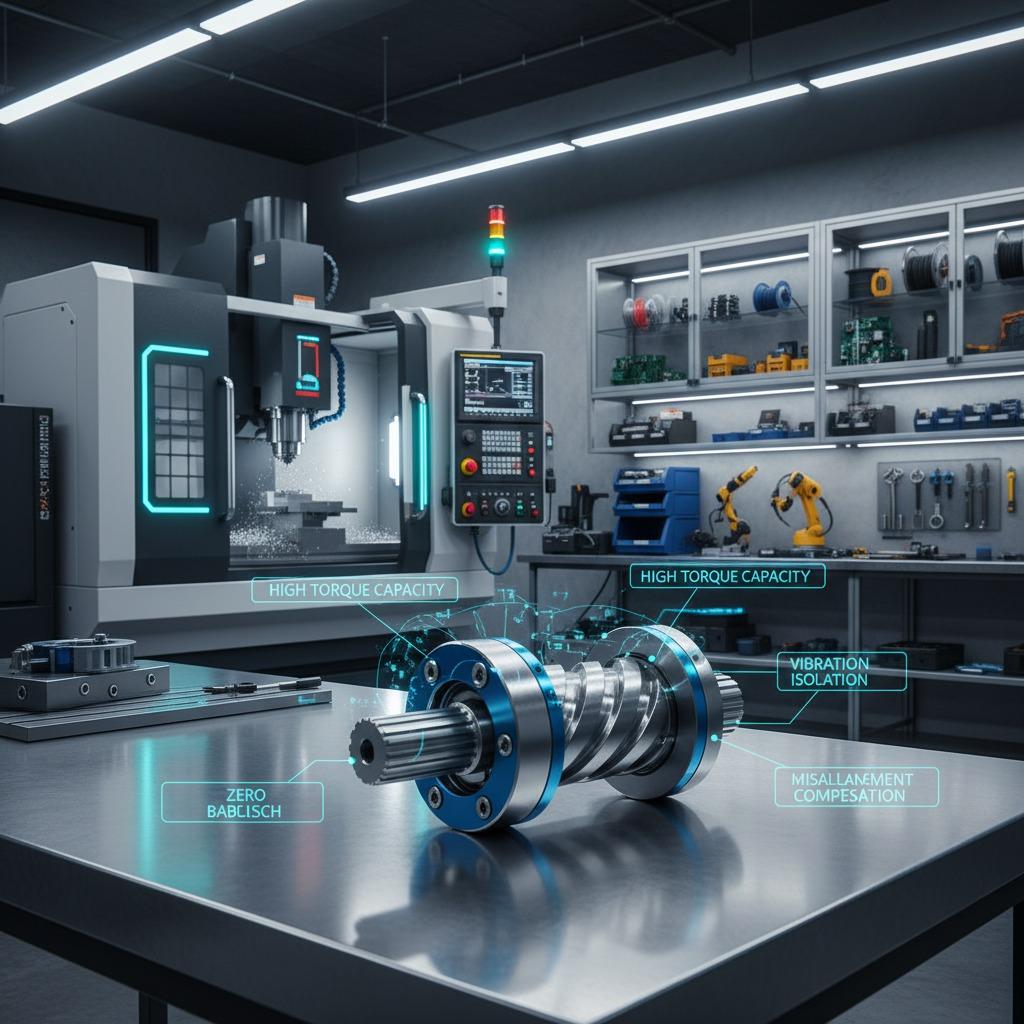
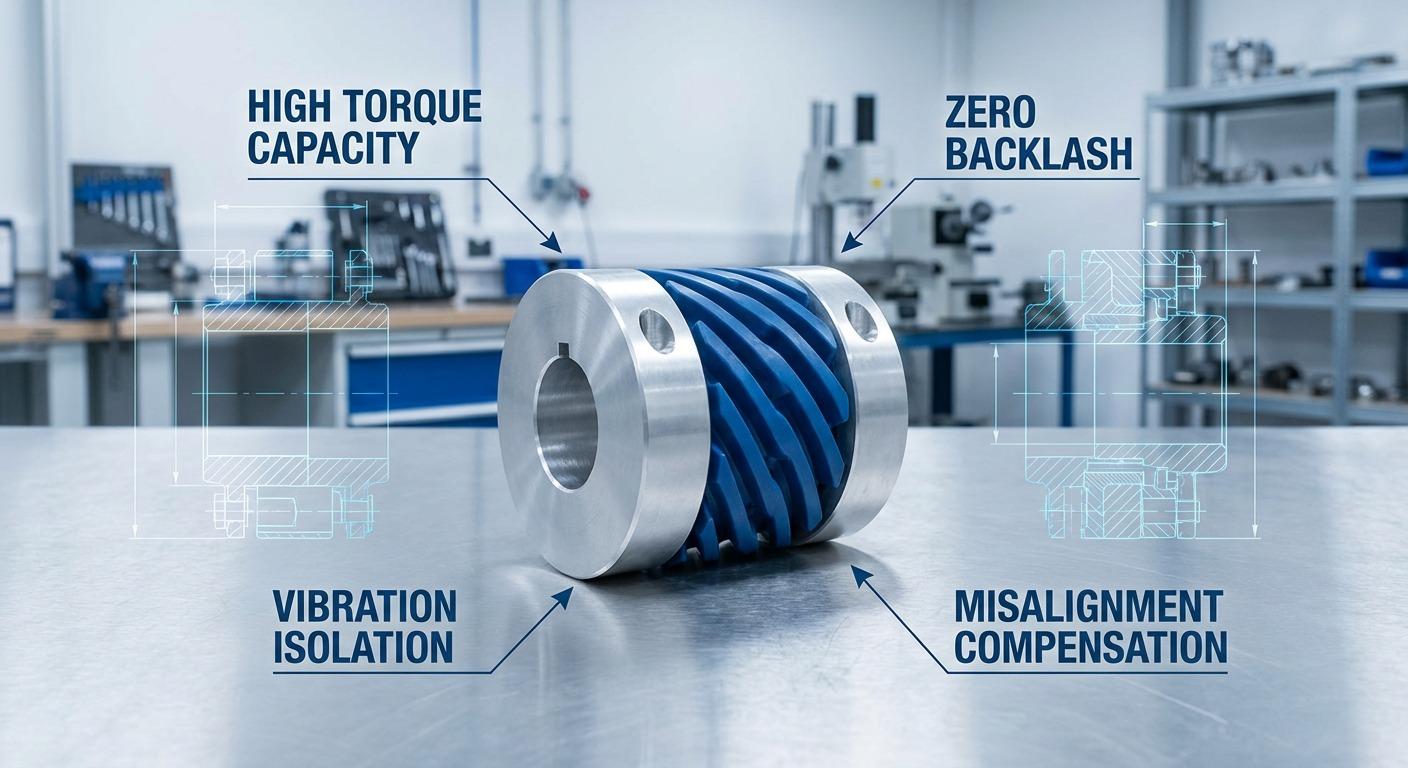
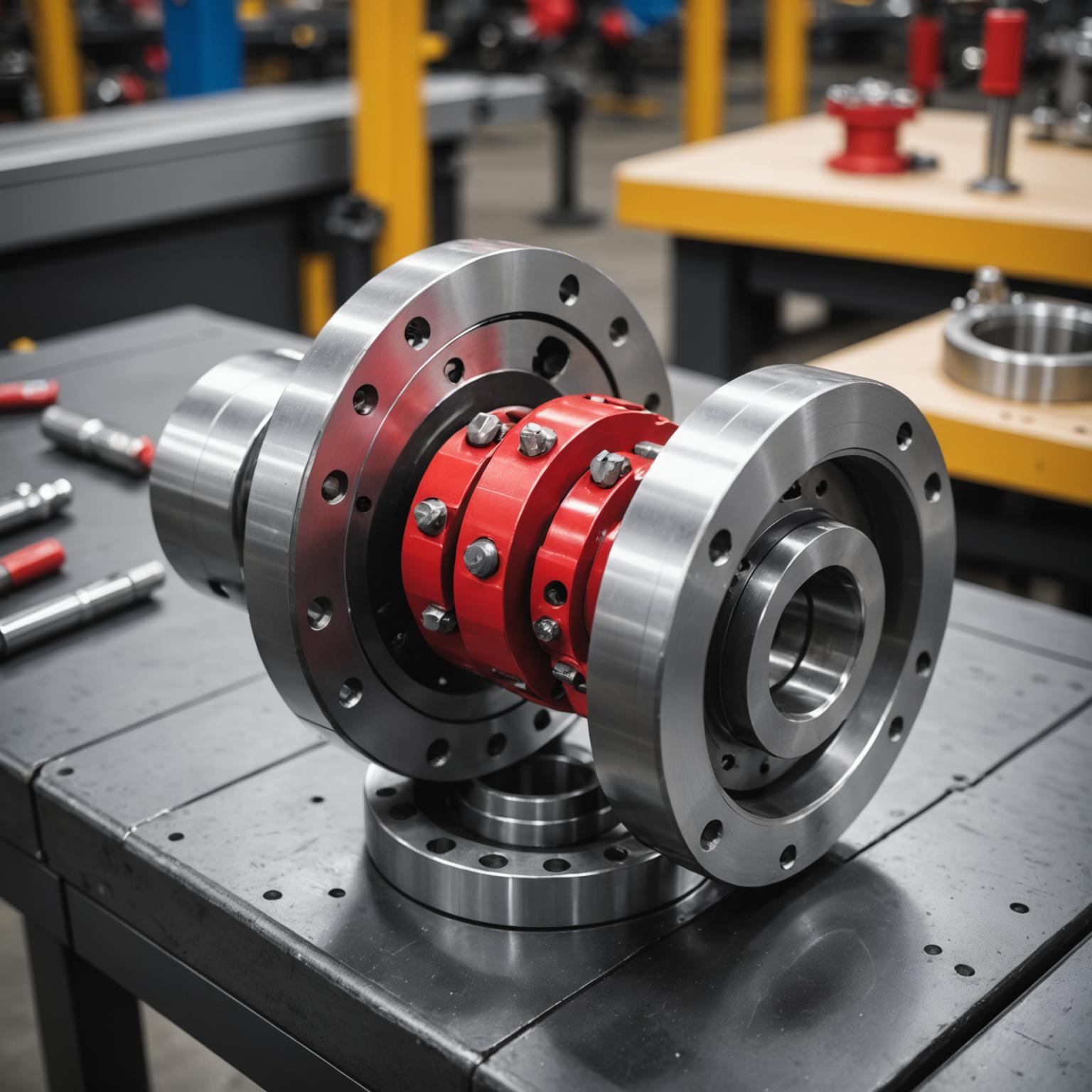
An industrial flexible coupling links two rotating shafts while compensating for alignment errors, absorbing shocks, and transmitting torque efficiently.
It’s designed to operate where vibration, load shifts, and mechanical stress are constant realities.
Key Mechanical Functions:
-
Torque Transmission: Transfers power efficiently between shafts.
-
Misalignment Compensation: Handles angular, radial, and axial offsets.
-
Vibration Absorption: Reduces resonance in large rotating assemblies.
-
Shock Protection: Cushions against sudden load reversals or startups.
-
Noise Reduction: Damps oscillations, extending bearing and gear life.
Unlike rigid couplings, industrial flexible types provide both mechanical adaptability and operational endurance, making them indispensable in heavy-duty systems.
Engineering Comparison: Industrial vs. Light-Duty Flexible Couplings
| Parameter | Light-Duty Flexible Coupling | Industrial Flexible Coupling |
|---|---|---|
| Torque Capacity | <200 Nm | Up to 20000 Nm |
| Operating Temperature | 0–60°C | –40°C to +200°C |
| Misalignment Tolerance | ±0.5° | ±1.5° |
| Construction Material | Aluminum Alloy | Alloy Steel / Cast Iron |
| Maintenance | Minimal | Periodic inspection |
| Typical Application | Automation, small drives | Crushers, pumps, conveyors |
Industrial models are not just “scaled-up” versions — they require different metallurgy, dynamic balance, and fatigue strength design principles.
Dingjian’s Manufacturing Standards: Precision at Industrial Scale
As a leading industrial flexible coupling manufacturer, Dingjian adheres to international standards such as ISO 14691 and AGMA 9002, ensuring every product achieves both durability and accuracy.
1. High-Strength Alloy Materials
-
Forged steel or ductile iron, heat-treated for fatigue resistance and torque consistency.
2. Finite Element Simulation (FEA)
-
Predicts stress distribution and thermal expansion under long-term load.
3. Dynamic Balancing & Runout Control
-
Each unit balanced to ISO G6.3, minimizing vibration at high speeds.
4. Surface Hardening & Coating
-
Anti-corrosion plating for outdoor, marine, and dust-heavy conditions.
5. Modular Design for OEM Customization
-
Supports bore, keyway, hub length, and elastomer insert customization for large OEM clients.
Every coupling leaving Dingjian’s plant is tested under real torque cycles, simulating years of industrial service before deployment.
Application Fields: Where Power and Flexibility Intersect
-
Steel & Metallurgy Plants: Withstands torque shocks from rolling equipment.
-
Mining & Crushing Machinery: Handles vibration and dust under heavy impact.
-
Pump & Compressor Systems: Ensures smooth rotation and pressure stability.
-
Conveyor & Material Handling: Reduces load fluctuations across long drives.
-
Wind Turbine & Energy Systems: Manages variable torque under fluctuating wind conditions.
Each deployment showcases Dingjian’s focus on balance — between strength, flexibility, and operational continuity.
Design Selection Guide: Choosing the Right Coupling Type
| Design Factor | Effect on Operation | Dingjian Recommendation |
|---|---|---|
| Torque Load | Determines hub strength | Gear or grid coupling for heavy torque systems |
| Alignment Error | Influences bearing wear | Flexible element or diaphragm type |
| Shock Frequency | Affects fatigue lifespan | Elastomer insert type for variable loads |
| Environmental Exposure | Impacts corrosion and heat | Coated alloy steel for outdoor setups |
| Service Continuity | Determines maintenance interval | Split hub design for quick assembly |
💡 Expert Insight:
For conveyor or crusher drives, choose a torsionally flexible grid coupling — its spring element can store and release torque smoothly, preventing overload on gearboxes.
Common Questions About Industrial Flexible Couplings
Q1: How often should industrial couplings be inspected?
Typically every 6–12 months depending on load, alignment, and environment.
Q2: Are Dingjian couplings suitable for vertical shaft installations?
Yes, custom hub locking and anti-slip keyways are available for vertical drive systems.
Q3: What’s the operational temperature range?
From –40°C to +200°C depending on elastomer compound.
Q4: Can Dingjian design couplings for extreme torque applications?
Yes, Dingjian provides OEM solutions rated up to 20,000 Nm.
Q5: What industries most commonly use Dingjian couplings?
Metallurgy, mining, energy, and material handling sectors are key application areas.
Redefining Industrial Motion Reliability
Industrial power transmission depends on components that quietly endure constant stress.
Dingjian’s flexible couplings are the result of decades of experience in mechanical resilience, precision machining, and system integration.
They not only transmit torque — they sustain productivity.
For detailed OEM specifications or to request a technical consultation, please visit our homepage or reach out through the contact page.