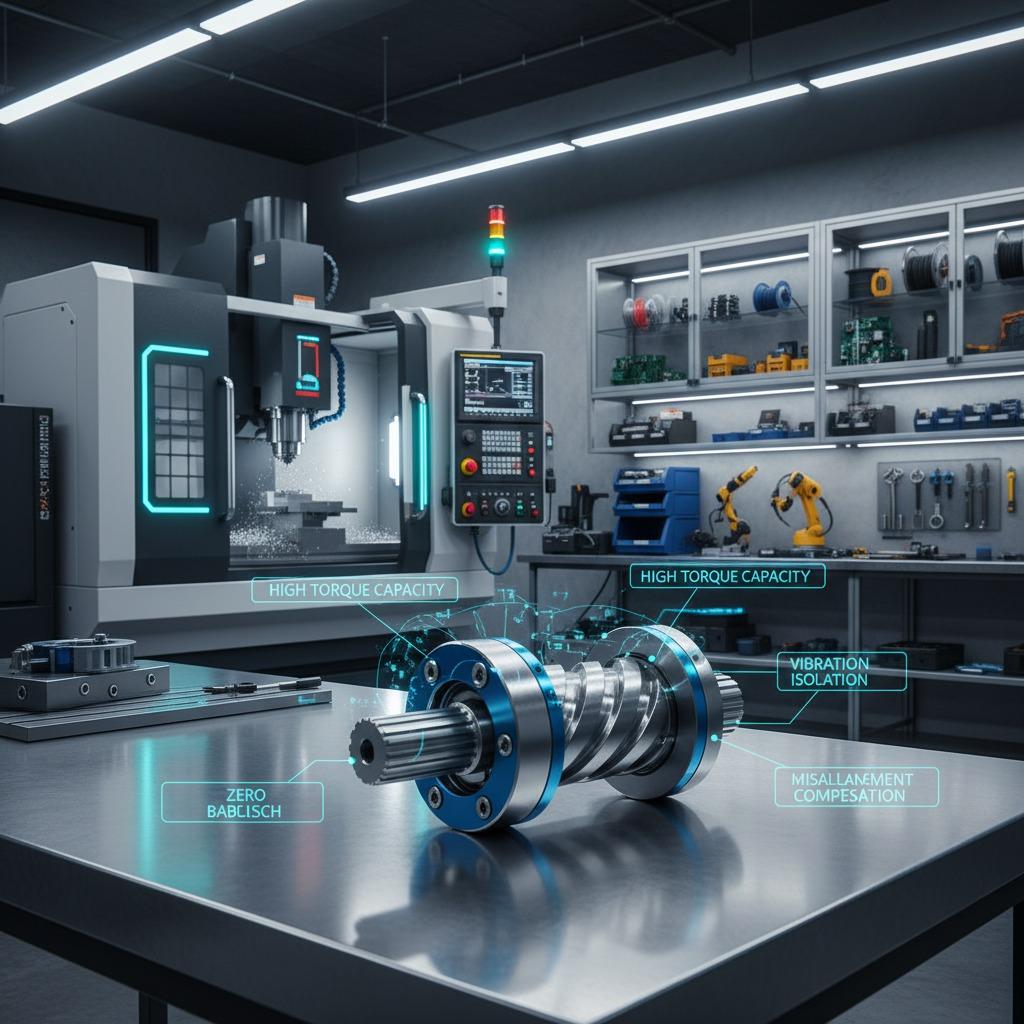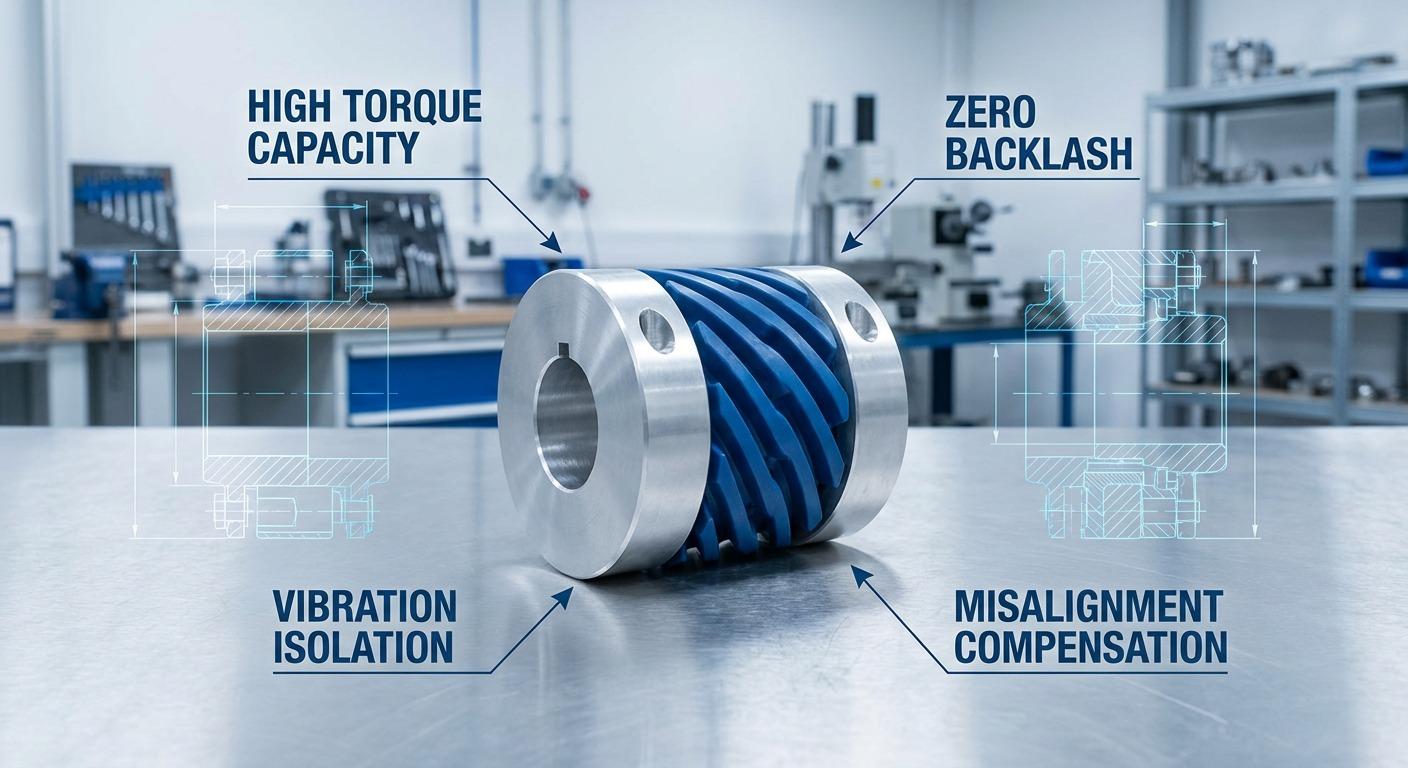

High Torque Diaphragm Coupling: Precision Under Extreme Load
In heavy-duty industries — from metallurgical rolling lines to marine propulsion — torque isn’t steady.
It surges, reverses, and tests the limits of mechanical design.
A standard flexible coupling bends under such strain; a poorly balanced one fails entirely.
High torque diaphragm couplings, however, rewrite the rules.
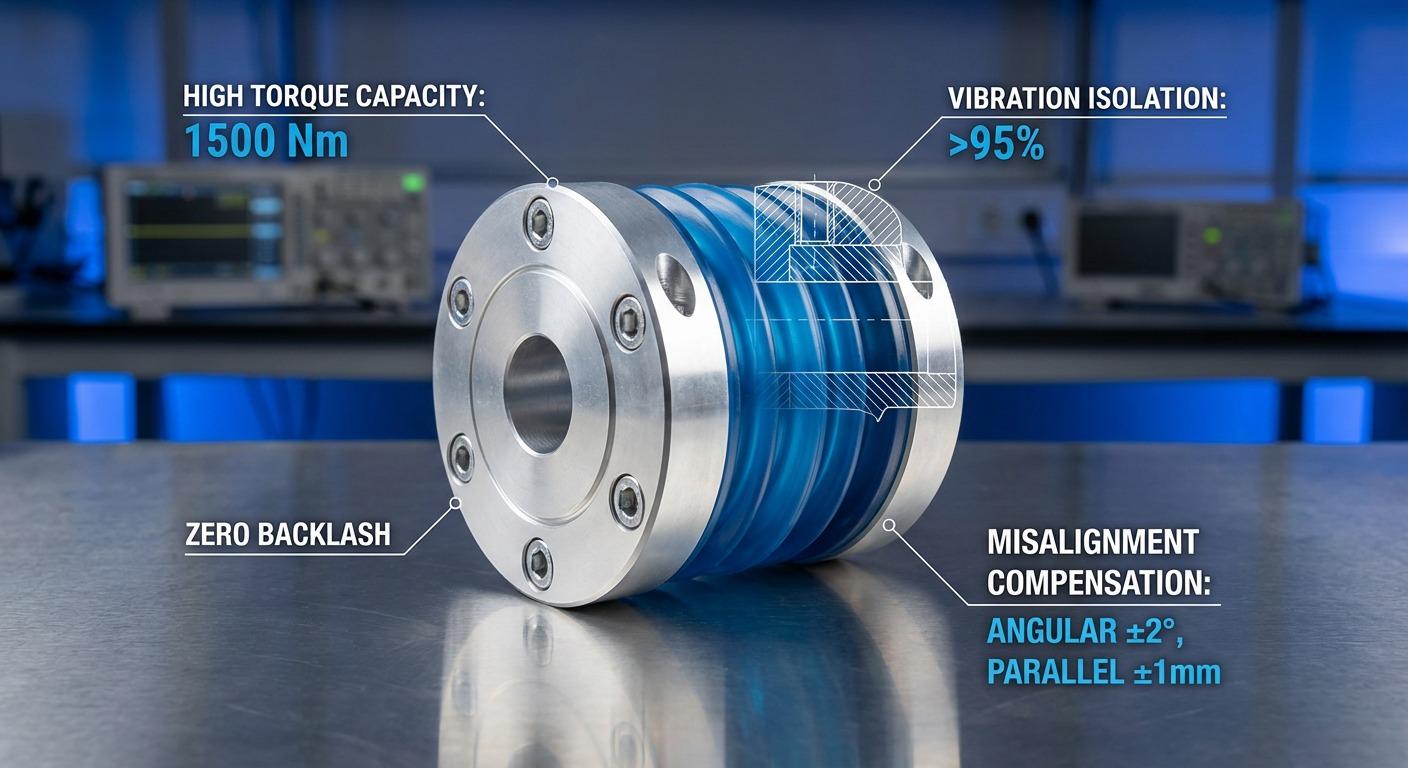
Built to transmit immense rotational energy without backlash or distortion, they form the backbone of industrial reliability.
At Dingjian, each coupling is more than a part — it’s a controlled energy transfer system engineered to endure dynamic torque fluctuations that destroy conventional designs.
Understanding Torque Stress in High-Power Applications
When torque increases beyond nominal levels, traditional couplings face a series of mechanical failures:
surface fretting, bolt fatigue, and even membrane cracking.
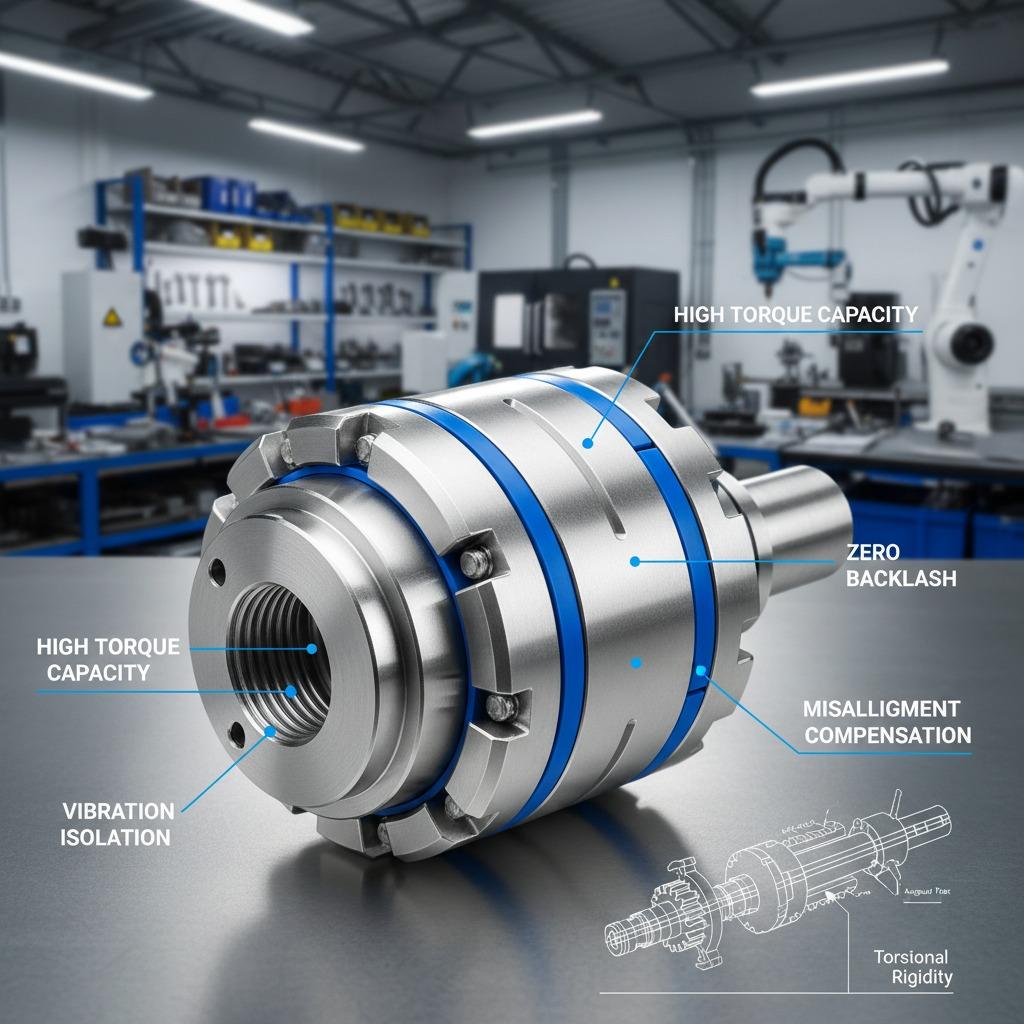
A diaphragm coupling must therefore not only transmit torque, but also absorb torsional vibration and distribute load symmetrically across its discs.
In high-torque systems:
-
The coupling experiences combined bending and shear stress;
-
Misalignment multiplies fatigue rate;
-
Heat expansion alters load paths and axial tension.
Dingjian’s design mitigates all three through balanced geometry and optimized membrane thickness, ensuring long-term dimensional stability.
How Dingjian Reinforces High Torque Diaphragm Structures
To handle torque densities above 80,000 N·m, Dingjian employs a blend of advanced materials and multi-disc architecture.
Key Reinforcement Methods:
-
Dual-Membrane Design – Two symmetrical diaphragms divide torque transmission, reducing single-disc deflection.
-
High-Strength Bolting System – Grade 12.9 fasteners with anti-loosening surface treatment prevent torque drift.
-
Hub Fillet Optimization – Smooth transition radius eliminates stress concentration near shaft joints.
-
Thermal Expansion Compensation Slot – Maintains balance across varying temperatures.
-
Dynamic Balancing (ISO G2.5) – Ensures minimal vibration even at high rotational speeds.
These combined refinements enable precise torque transfer without sacrificing flexibility or alignment tolerance.
Design Comparison: Standard vs. High Torque Diaphragm Couplings
| Design Parameter | Standard Diaphragm | Dingjian High-Torque Diaphragm |
|---|---|---|
| Torque Range | ≤ 40,000 N·m | Up to 120,000 N·m |
| Fatigue Life | 10⁴ cycles | 10⁶+ cycles |
| Material | 304 Stainless | 42CrMo + 316L Hybrid |
| Misalignment Tolerance | ±1° | ±1.5° |
| Temperature Resistance | ≤180°C | ≤300°C |
| Typical Application | Pumps, conveyors | Rolling mills, marine drives |
The high-torque variant isn’t just stronger — it’s smarter in load response, designed to flex predictably under stress and maintain balance without added vibration.
Application Scenarios: Where Torque Meets Precision
1. Steel and Metal Rolling Lines
Torque reversal during rolling and uncoiling demands elastic control and axial stiffness.
Dingjian couplings prevent shock spikes that commonly damage bearings.
2. Ship Propulsion Systems
Underwater torque pulsation and mechanical resonance threaten stability.
The diaphragm structure absorbs vibration while maintaining alignment at varying load levels.
3. Heavy Compressors & Blowers
Continuous operation under shifting torque requires long fatigue life and minimal thermal distortion — both achieved by Dingjian’s hybrid steel design.
4. Mining & Lifting Machinery
Sudden start-stop torque is distributed evenly across the diaphragm’s radial profile, extending system reliability.
Selection Insights: Matching Torque Demands to Coupling Geometry
Selecting the right high-torque diaphragm coupling is not about size alone — it’s about torsional stiffness balance.
| Parameter | Engineering Insight | Dingjian Recommendation |
|---|---|---|
| Rated Torque | Choose 1.2× above max torque | HD series dual-disc design |
| Speed Range | Check resonance frequency | Use dynamically balanced model |
| Temperature Environment | Evaluate expansion stress | Hybrid 316L/42CrMo diaphragm |
| Misalignment | High torsional stiffness tolerates less | Double flex design preferred |
| Maintenance Interval | High torque = high inspection demand | Choose lubrication-free diaphragm |
A common mistake in selection is prioritizing size over stiffness. Dingjian’s engineering team calibrates each coupling for your specific torque-to-stiffness ratio, ensuring no wasted energy or excess vibration.
Common Questions About High Torque Diaphragm Couplings
Q1: Can diaphragm couplings handle torque shock loads?
Yes. Dingjian designs include variable-thickness diaphragms to dissipate energy across flex zones.
Q2: How are these couplings balanced at high speeds?
Through G2.5 dynamic balancing and dual-plane correction to eliminate torsional ripple.
Q3: What materials are used for torque-heavy systems?
High-grade 42CrMo hubs combined with stainless or Inconel diaphragms for heat and fatigue control.
Q4: Do they require regular lubrication or inspection?
No lubrication needed; Dingjian designs are sealed and maintenance-free up to 30,000 hours.
From Torque Management to Total System Reliability
Power transmission efficiency depends not only on horsepower but on how precisely torque is controlled.
With Dingjian’s high torque diaphragm couplings, industries gain both — the endurance of steel and the intelligence of structural balance.
Every coupling shipped carries the same engineering DNA: tested, balanced, and certified for the world’s toughest environments.
To learn more about custom torque systems or request a specification quote, visit our homepage or contact our technical experts via the contact page.