
Flange Coupling Factory: Engineering High-Torque Connections for Industrial Power Systems
In the world of heavy machinery, where torque loads are high and alignment precision is critical, flange couplings serve as the unsung heroes of reliable motion.
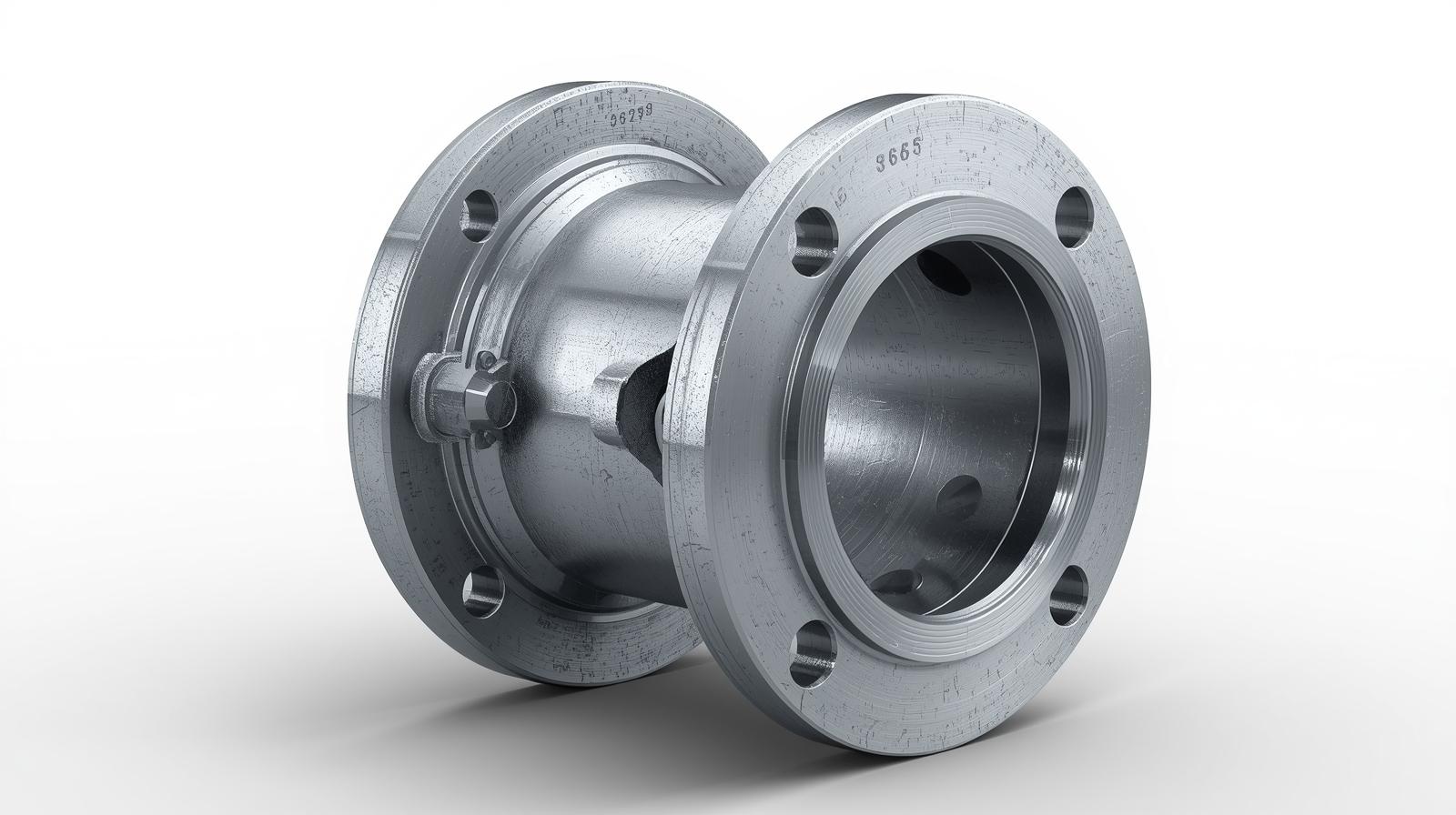
They form rigid, bolted connections that transfer torque between rotating shafts with stability and strength.
As a professional flange coupling factory, Dingjian integrates precision machining, controlled assembly, and material innovation to build mechanical connections capable of operating under extreme industrial conditions.
Structural Mechanics Behind a Flanged Connection
Unlike flexible couplings, flange couplings rely on bolt tension and hub fit to transmit torque.
Two flanges are mounted on shaft ends and bolted together with a precise torque preload, creating a unified, vibration-resistant mechanical joint.
Key Functional Mechanisms:
-
Axial stability: bolts lock the hubs, eliminating relative movement.
-
Torque rigidity: no energy loss between input and output shafts.
-
High load capacity: ideal for large motors, turbines, and conveyors.
-
Balanced alignment: ensures uniform torque distribution across bolts.
Flange couplings are not just connectors — they are precision-engineered interfaces that determine how power flows through an entire system.
The Geometry of Strength: How Design Defines Durability
In flange coupling engineering, performance depends on hub geometry, bolt layout, and surface precision.
Even minor design variations can dramatically affect torsional stiffness and fatigue resistance.
Dingjian’s Design Focus Includes:
-
Bolt Circle Optimization: calculating exact bolt spacing to minimize stress concentration.
-
Fit Tolerance Control: precision H7/h6 machining for shaft-hub interference fits.
-
Flange Thickness Ratio: ensuring optimal strength-to-weight balance.
-
Dynamic Load Simulation: predicting how torque waves affect flange deformation.
By combining simulation analysis and empirical testing, Dingjian guarantees each coupling can withstand cyclic torque and shock loads found in high-inertia machinery.
From Forging to Finish: Inside Dingjian’s Manufacturing Process
Producing a reliable flange coupling involves more than cutting metal — it’s about metallurgy, machining sequence, and verification accuracy.
Step 1 — Material Preparation
-
High-strength alloy steels (42CrMo, 40Cr) are forged to refine grain structure.
-
Heat treatment achieves hardness between HRC 28–35 for wear and fatigue resistance.
Step 2 — Precision Machining
-
CNC turning centers produce coaxial tolerances ≤0.02 mm.
-
Keyway and bore dimensions follow ISO standard fits for shaft interfaces.
Step 3 — Dynamic Balancing & Surface Treatment
-
Each unit is balanced to ISO G6.3 or better.
-
Black oxide or zinc-phosphate coating prevents corrosion under oil and humidity.
Step 4 — Final Torque Testing
-
Bolted assembly undergoes simulated load cycles to confirm deformation resistance.
Dingjian’s process control ensures repeatable precision and structural integrity at every production stage.
Industrial Use Cases: Where Flange Couplings Thrive
| Industry | Equipment | Performance Focus |
|---|---|---|
| Power Generation | Turbines, compressors | Sustains high torque under constant rotation |
| Metallurgy & Mining | Rolling mills, crushers | Resists cyclic stress and shock loads |
| Marine & Offshore | Propulsion drives | Handles high humidity and variable torque |
| Cement & Building Materials | Mixers, kilns | Maintains torque balance under vibration |
| Heavy Transportation Systems | Conveyors, hoists | Provides secure, low-maintenance connection |
Across these industries, flange couplings enable continuous torque flow with minimal maintenance, even under heavy axial thrust or fluctuating load conditions.
Selecting the Right Flange Coupling for Your Equipment
| Working Condition | Recommended Type | Technical Benefit |
|---|---|---|
| High-Torque Drives | Rigid steel flange coupling | Maximum torsional stiffness |
| Dynamic Load Machinery | Flexible-flange hybrid | Absorbs vibration without losing alignment |
| Outdoor or Marine Environments | Stainless-steel flange version | Corrosion protection and fatigue strength |
| Tight-Space Assemblies | Compact forged design | Easy installation and alignment |
When choosing a flange coupling, engineers should evaluate torque range, bolt preload, rotational speed, and alignment precision.
Dingjian provides torque charts and 3D models to help clients configure the optimal solution.
Common Engineering Questions
Q1: How do flange couplings compare with sleeve or grid types?
A1: Flange couplings provide the highest torque transmission but require precise shaft alignment and higher installation accuracy.
Q2: Can Dingjian produce customized flange couplings for OEM use?
A2: Yes, flange diameter, bolt pattern, and surface treatment can be adapted for OEM drive systems.
Q3: What’s the typical service life of a flange coupling?
A3: With proper lubrication and bolt maintenance, service life can exceed 20,000 operational hours.
Q4: How are flanges tested before delivery?
A4: Each unit is dynamically balanced and torque-tested at rated load conditions to ensure dimensional and mechanical stability.
The Engineering Value of Precision Manufacturing
In mechanical drive systems, reliability starts at the connection point.
A perfectly machined flange coupling doesn’t just hold parts together — it maintains torque integrity, protects bearings, and prevents energy loss through vibration.
That’s why Dingjian combines advanced machining, simulation, and quality inspection to produce couplings trusted by global OEMs.
To learn more about Dingjian’s flange coupling solutions or request technical specifications, visit the official homepage or contact the engineering team via the contact page.