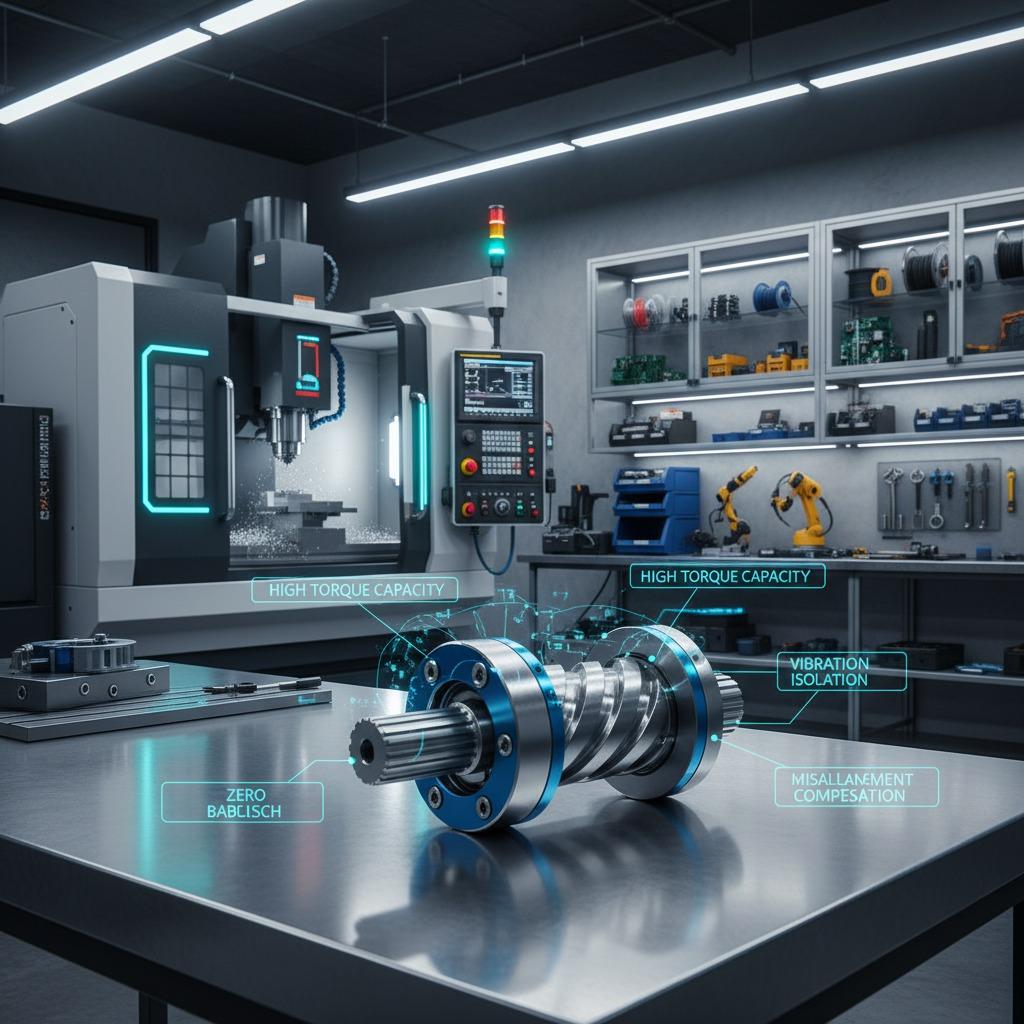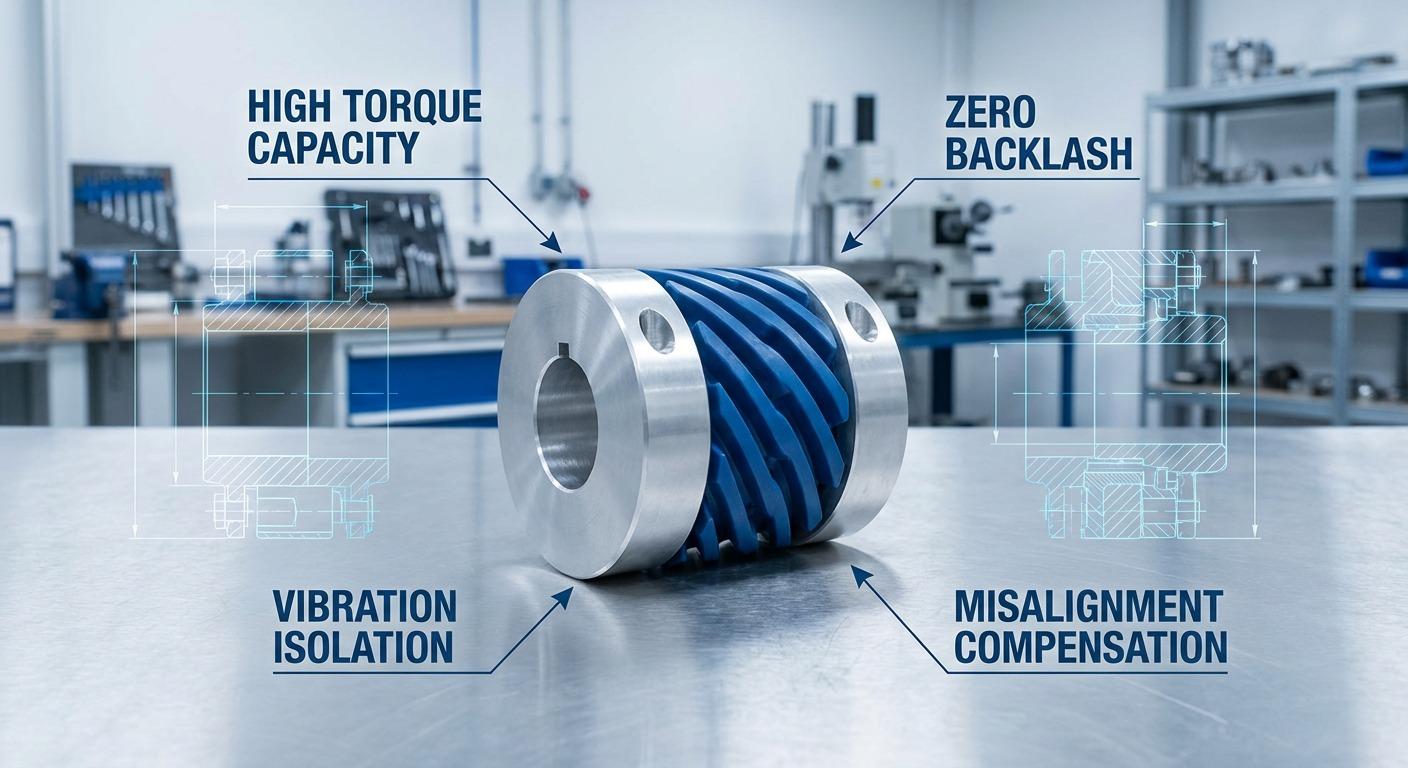

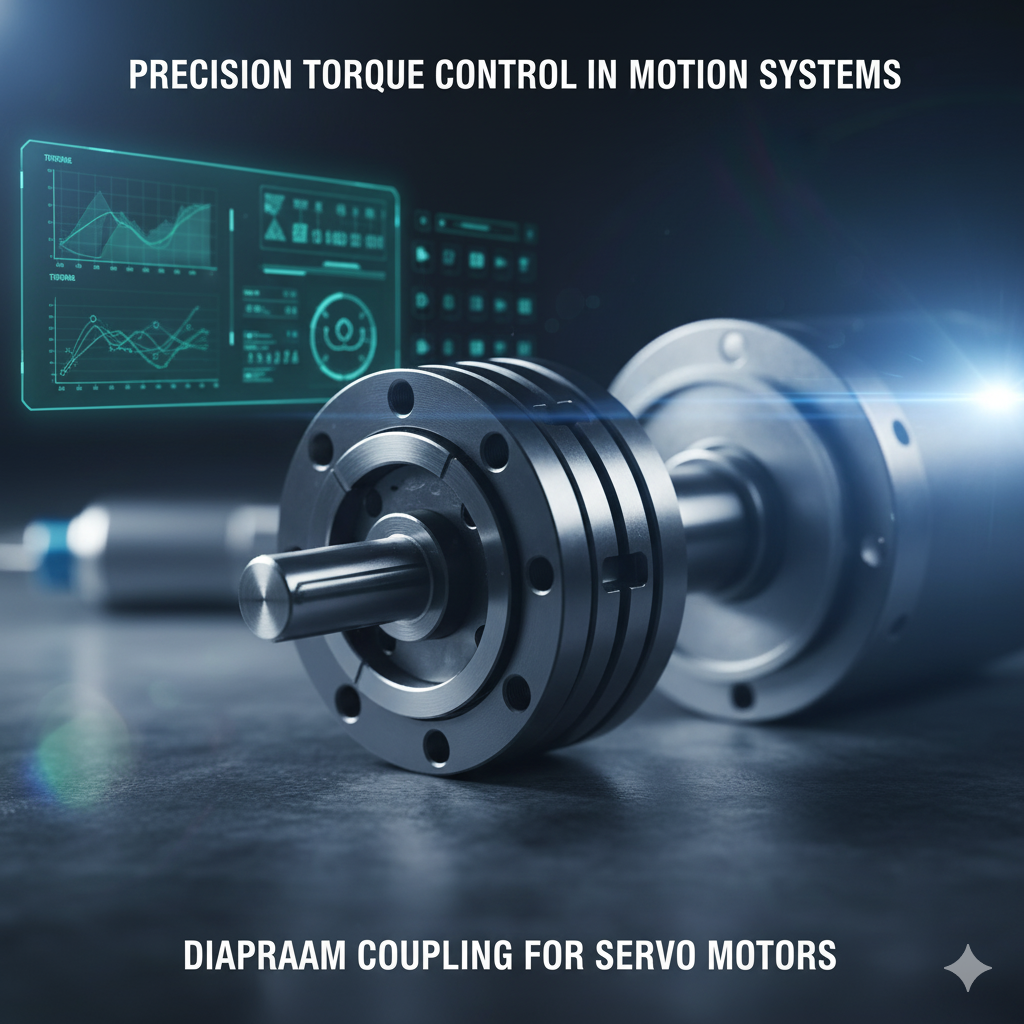
Diaphragm Coupling for Servo Motors: Precision Torque Control in Motion Systems
In the world of servo-driven automation, where motion precision is measured in microns and timing in milliseconds,
the coupling that links motor and load often determines whether a system performs flawlessly — or fails silently.
Traditional couplings, like gear or jaw types, introduce backlash and compliance issues, leading to positioning errors.
But the diaphragm coupling, with its metal flexure structure and zero-clearance torque path,
has become the gold standard for servo motor integration in CNC, robotics, and semiconductor motion platforms.
Dingjian, as a specialized diaphragm coupling manufacturer, delivers custom-engineered couplers that merge
stiffness, flexibility, and dynamic balance — ensuring perfect servo synchronization in high-speed environments.
How Diaphragm Couplings Optimize Servo Performance
A diaphragm coupling transmits torque through a flexible metallic disc, which bends slightly under angular or axial misalignment while keeping both shafts rotationally synchronized.
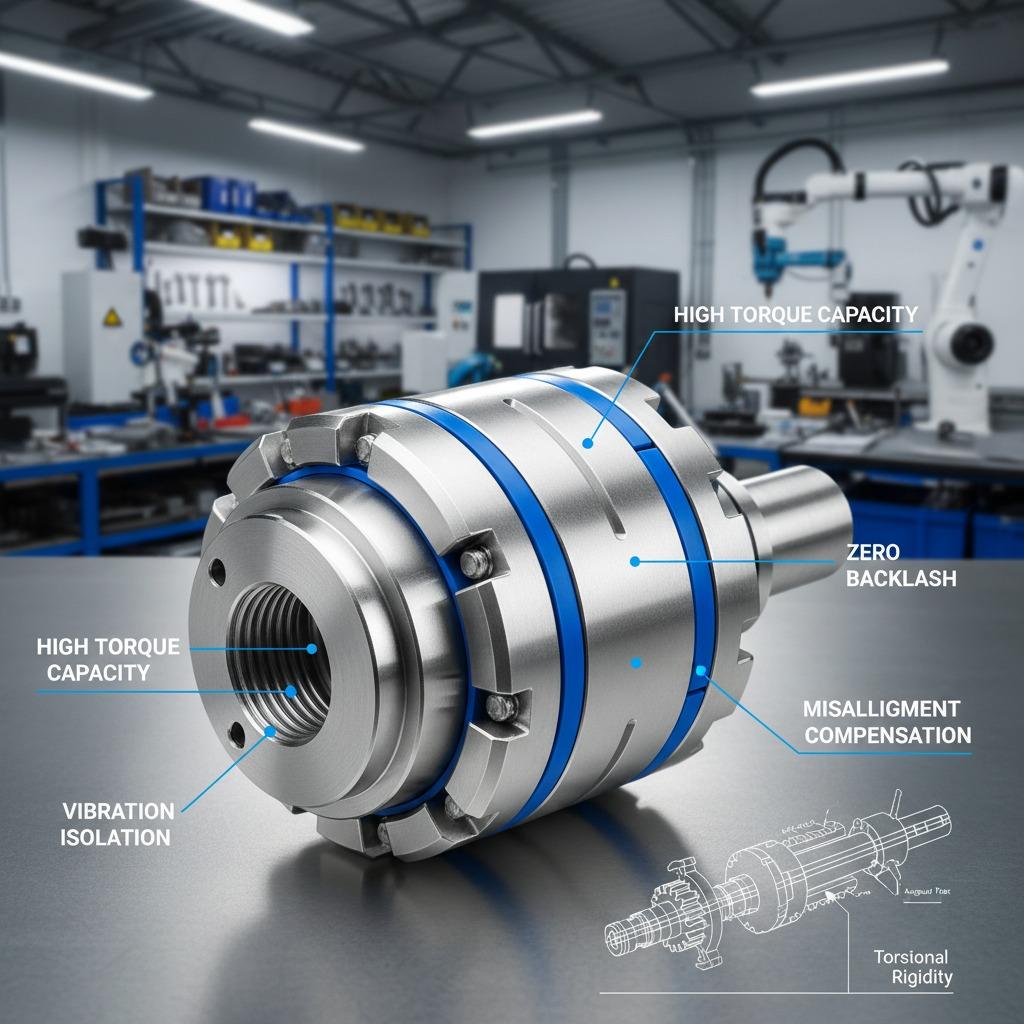
In servo systems, three physical parameters define performance stability:
-
Torsional Stiffness – Determines positioning repeatability and dynamic response.
-
Backlash Elimination – Ensures seamless torque transfer during acceleration or reversal.
-
Vibration Damping – Prevents resonance that can cause servo oscillation.
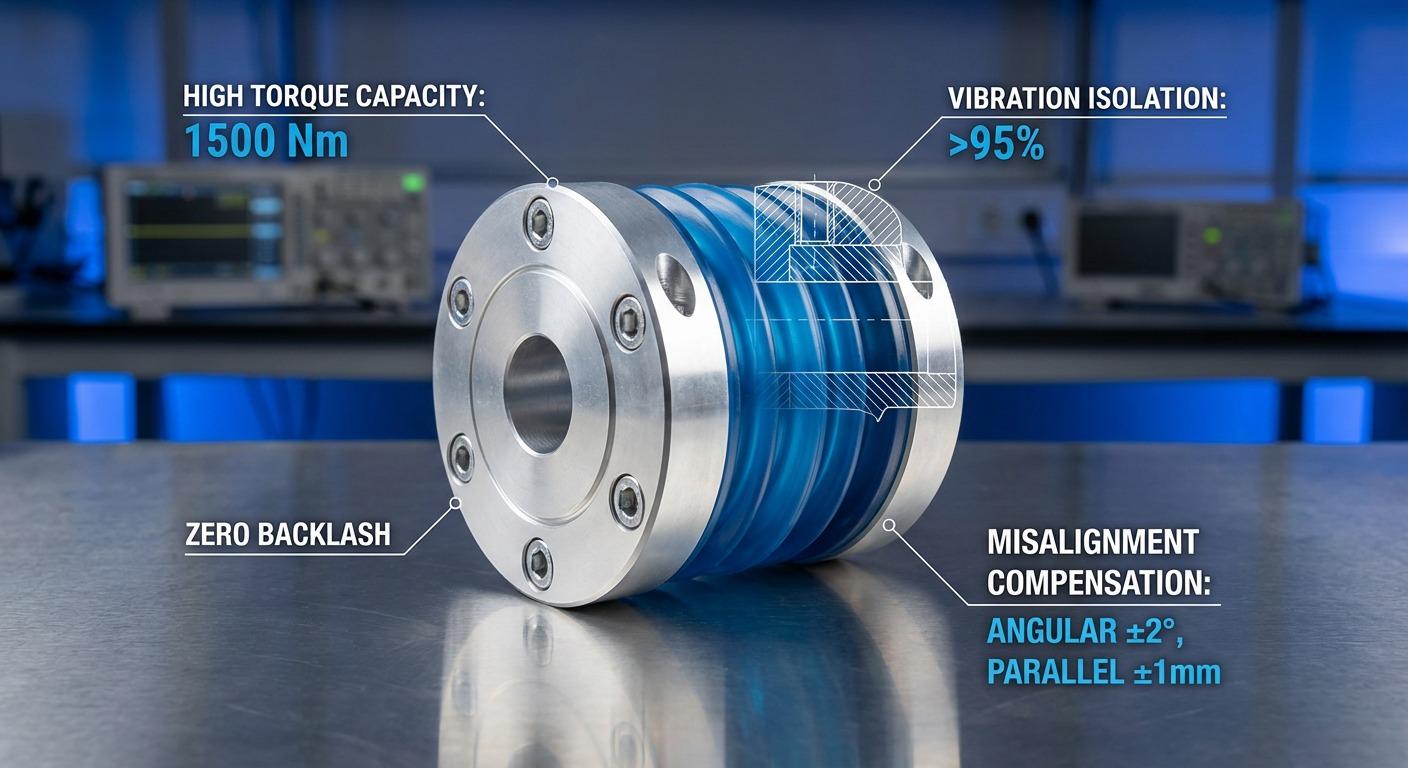
Dingjian’s precision couplings are engineered to maintain zero backlash, while offering enough elasticity to absorb micro-misalignment without energy loss — an essential balance for high-precision drives.
Engineering Design for Servo Motor Compatibility
To achieve reliable servo motion, Dingjian’s diaphragm couplings integrate advanced mechanical and material innovations:
1. Dual-Symmetry Diaphragm Geometry
Distributes torque evenly across the disc plane, reducing angular error to below 0.05°.
2. Ultra-Thin Stainless Diaphragm (≤0.2 mm)
Minimizes rotational inertia, allowing rapid servo acceleration and deceleration.
3. ISO G2.5 Dynamic Balancing
Eliminates vibration across the full speed range — crucial for precision servo feedback loops.
4. Mirror Polishing & Surface Passivation
Enhances fatigue resistance and corrosion protection, ensuring durability in high-duty cycles.
5. Compact Axial Length
Supports tight-space motor assemblies without compromising torque stiffness.
Each coupling undergoes 3D finite element simulation (FEA) to verify load distribution and elastic behavior before production.
Technical Comparison: Diaphragm Couplings vs. Conventional Servo Connectors
| Feature | Flexible Jaw Coupling | Diaphragm Coupling (Dingjian) |
|---|---|---|
| Backlash | 0.05–0.1° | 0° (Zero-backlash) |
| Torsional Stiffness | Moderate | High, linear response |
| Vibration Damping | Moderate | Excellent at high speed |
| Inertia | Medium | Low |
| Maintenance | Requires inspection | Maintenance-free |
| Typical Life Cycle | 10,000 hrs | 30,000+ hrs |
A recent IEEE Robotics Systems study (2024) concluded that diaphragm couplings reduce servo overshoot by up to 35% compared with flexible jaw types,
due to superior stiffness-to-weight ratio and balanced torque transmission.
Application Scenarios: From Precision Robotics to CNC Systems
1. Robotic Joint Drives
High-frequency motion cycles demand torque transfer with no lag — diaphragm couplings ensure synchronous movement.
2. CNC Machining Centers
Improved stiffness enhances cutting accuracy and surface smoothness.
3. Packaging & Automation Lines
Compact couplings reduce footprint and noise, ideal for continuous operation.
4. Semiconductor Equipment
Non-lubricated design eliminates contamination risk in cleanroom environments.
5. Servo-Controlled Compressors
Handles variable load torque without backlash or torsional fatigue.
Design Selection Guide: Choosing the Right Servo Coupling
| Design Factor | Impact on Performance | Dingjian Recommendation |
|---|---|---|
| Torque Requirement | Defines diaphragm thickness | Thin single-disc ≤0.2 mm |
| Speed Range | Determines balance need | G2.5-certified model |
| Environment | Humidity & dust exposure | Stainless 316L with seal bolts |
| Space Limitation | Motor–load gap constraint | Compact single-disc series |
| Control Precision | Directly affects response time | High-stiffness flexible series |
Tip:
For servo systems with frequent direction reversal, use Dingjian’s dual-diaphragm servo series to absorb torsional oscillation and protect encoder stability.
Common Technical Questions
Q1: Why are diaphragm couplings preferred in servo motors?
They eliminate backlash and maintain linear torque response, critical for precision positioning.
Q2: Can they handle thermal expansion or misalignment?
Yes. The diaphragm flexes axially and angularly while maintaining concentric rotation.
Q3: Are Dingjian couplings compatible with all servo brands?
They support standard motor shafts (Siemens, Mitsubishi, Yaskawa, etc.) with custom bore sizing.
Q4: What testing standards apply?
All units comply with ISO 14691, DIN 740, and AGMA 9002 mechanical standards.
Precision in Motion, Confidence in Control
Every servo system is only as accurate as its weakest mechanical link.
By integrating Dingjian diaphragm couplings, manufacturers gain not just torque stability — but system harmony.
From robotic assembly lines to ultra-precise CNC machines, Dingjian continues to redefine servo performance through mechanical balance and precision engineering.
To request 3D drawings or custom torque data, visit our homepage or reach out through the contact page.