
Spider Jaw Coupling: Flexible Power Transmission for Dynamic Machinery
In our previous discussion on diaphragm couplings, we examined precision-driven systems where zero-backlash control is essential.
Yet, most industrial applications demand a different balance — one between flexibility, vibration absorption, and cost-efficiency.
That’s where the spider jaw coupling excels.
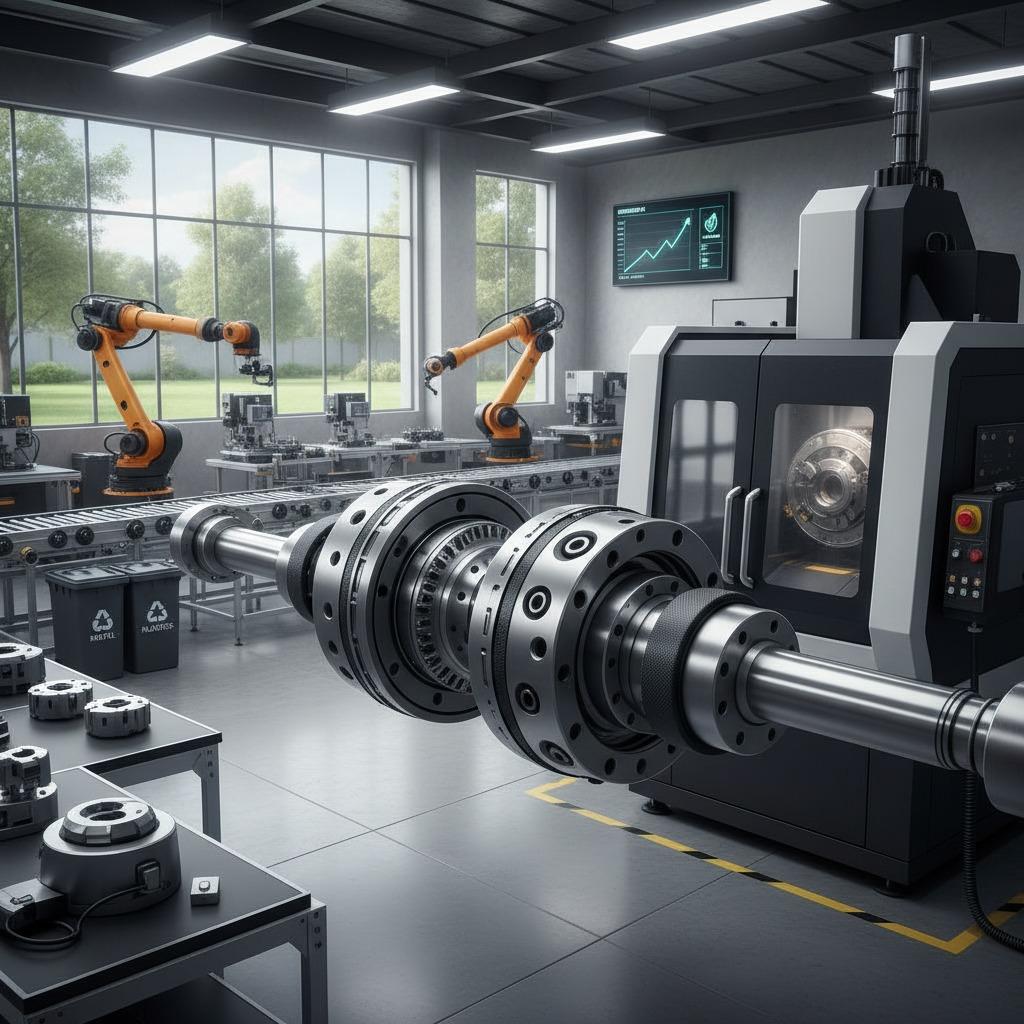
Designed to manage torque fluctuations, misalignment, and mechanical shocks, it delivers stable performance for pumps, compressors, and conveyor systems — the heart of daily industrial motion.
The Working Principle: How Elastic Elements Absorb Motion Stress
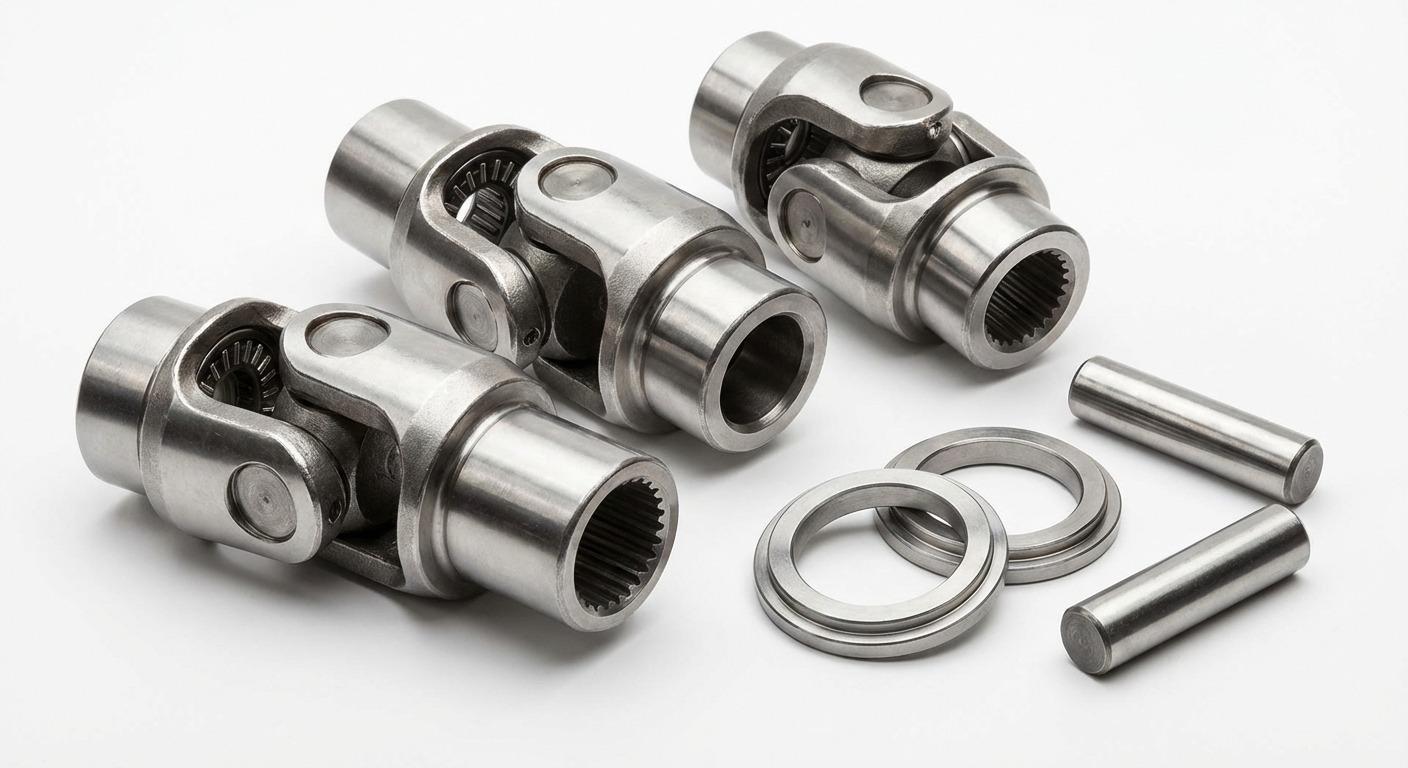
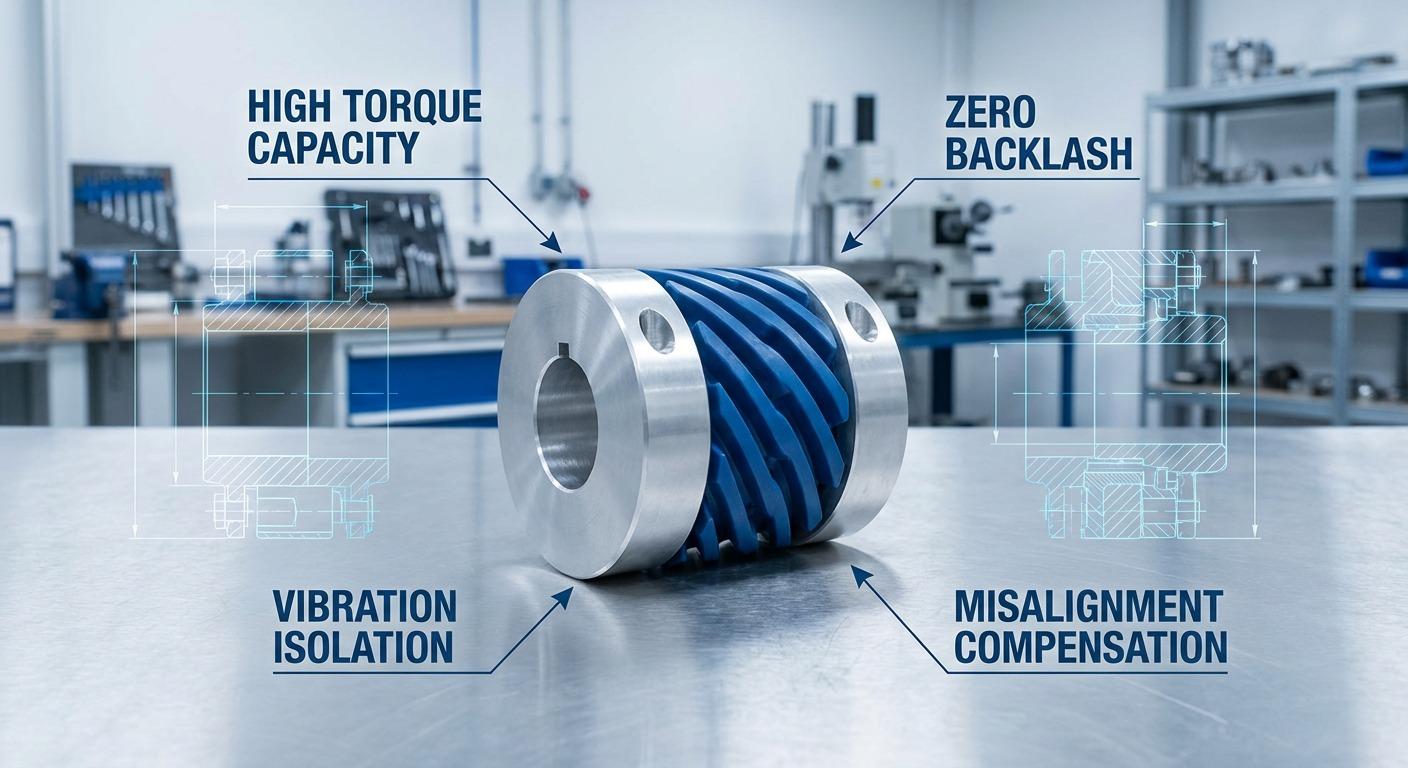
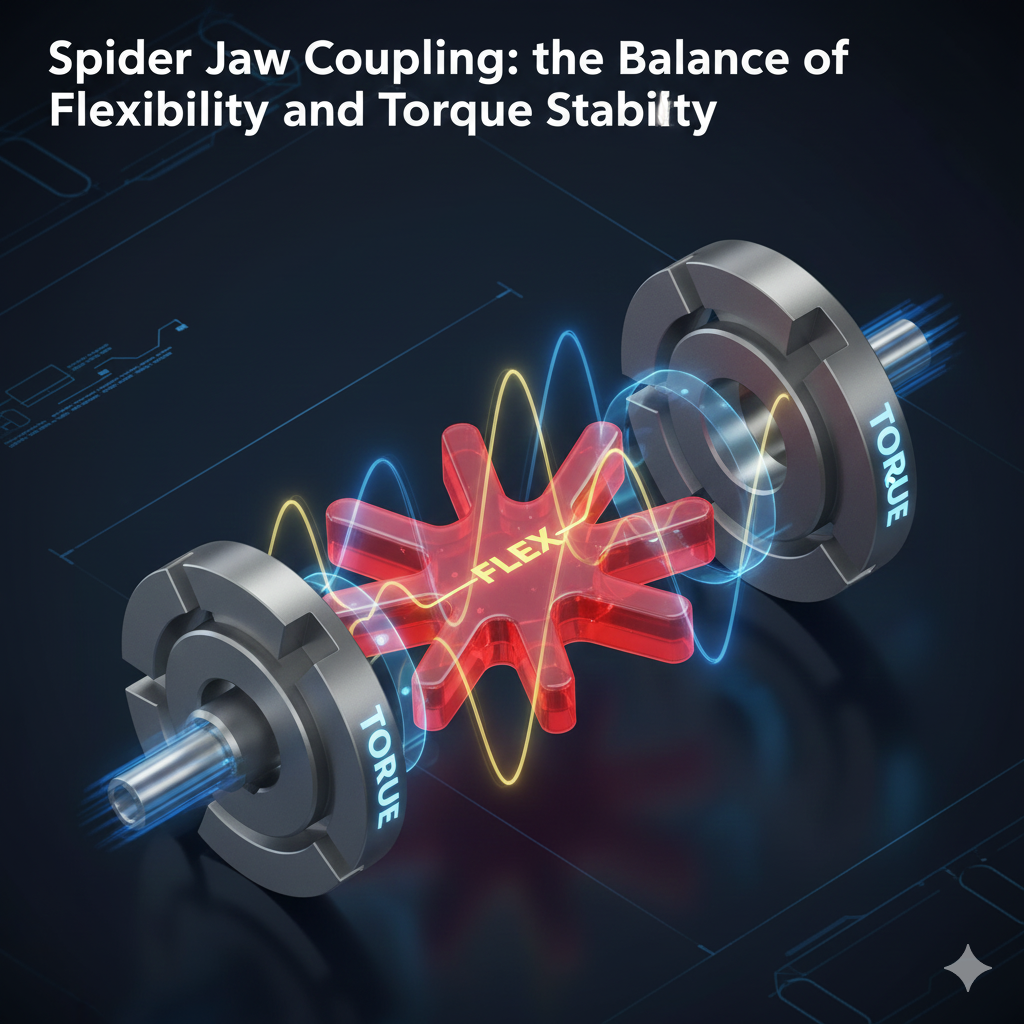
A spider jaw coupling is made of two interlocking metal hubs and a central elastomer insert shaped like a spider.
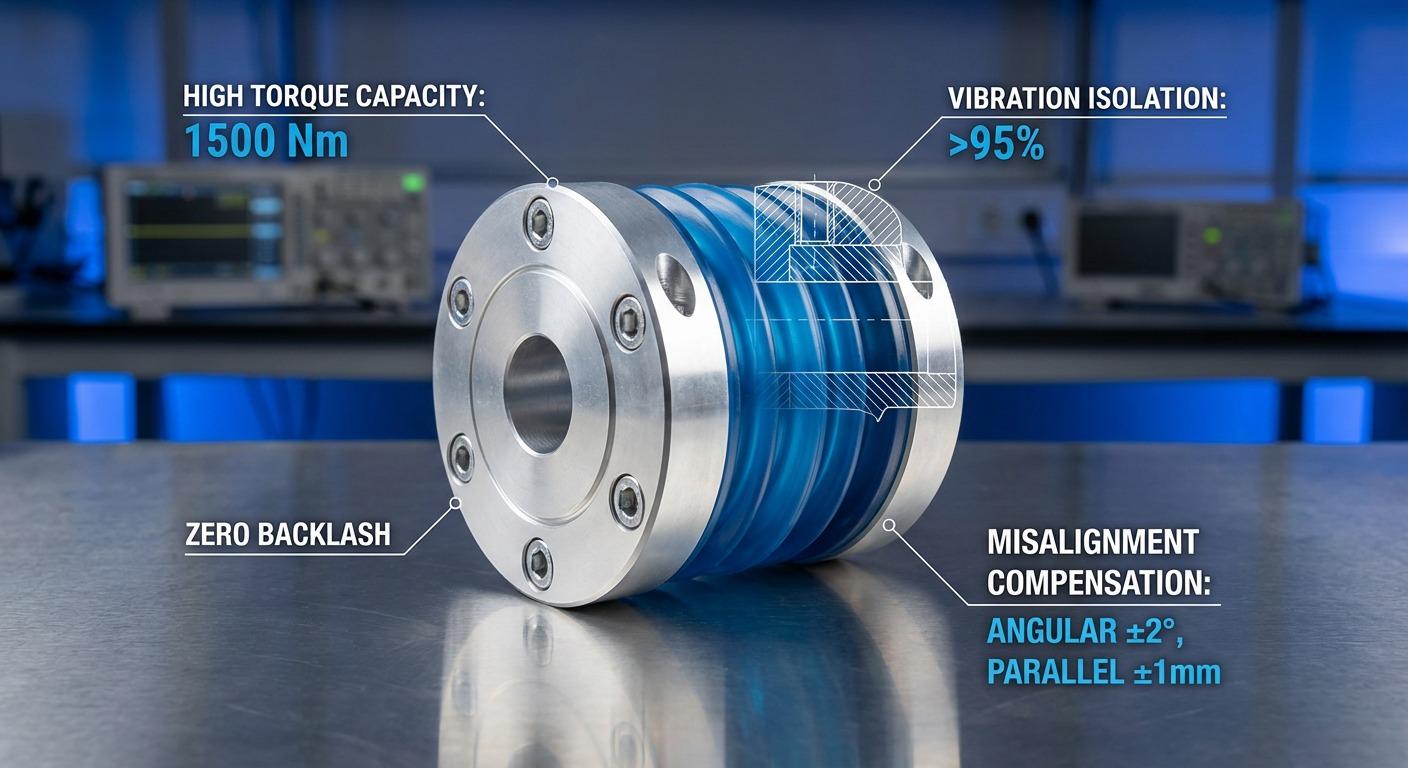
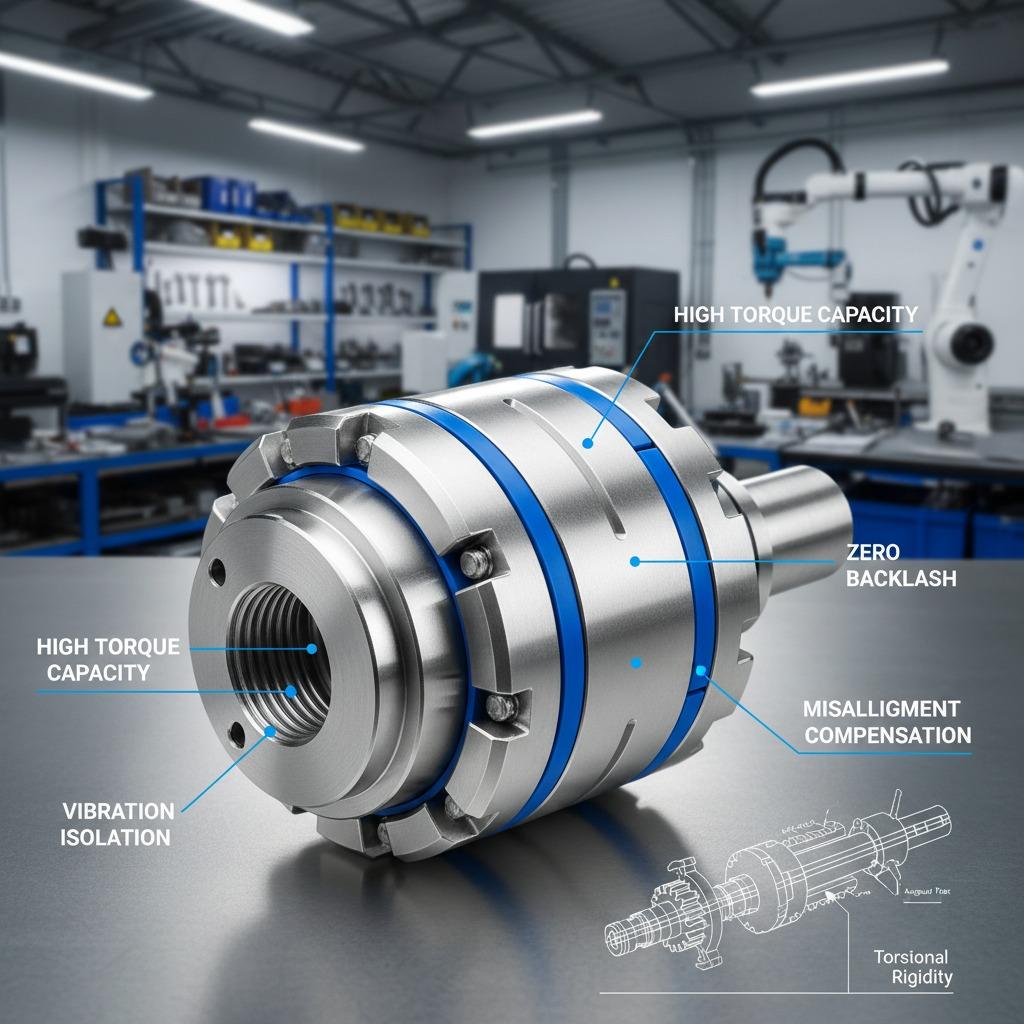
When torque is transmitted, the elastomer deforms slightly, absorbing vibration and compensating for angular or axial misalignment.
This structural simplicity brings multiple operational advantages:
-
Shock Resistance: Cushions torque peaks during startup or sudden load changes.
-
Alignment Flexibility: Corrects up to ±1° angular misalignment.
-
Noise Reduction: Prevents metal-to-metal contact through elastomer compression.
-
Low Maintenance: No lubrication required, ensuring long-term reliability.
Compared to rigid or diaphragm couplings, the spider jaw type offers smoother load transition — ideal for machinery where torque rhythm matters more than absolute stiffness.
Dingjian’s Engineering Approach: Built for Real-World Conditions
Each Dingjian spider jaw coupling is developed through precision manufacturing and elastomer optimization to withstand harsh operational cycles.
1. Precision CNC Machining
Every hub achieves concentric accuracy ≤0.02 mm, ensuring rotational stability and minimal imbalance.
2. Advanced Elastomer Formulation
Polyurethane (TPU) or NBR inserts are fatigue-tested beyond 10⁶ torsional cycles, maintaining elasticity from –40°C to +120°C.
3. Dynamic Balance Verification
Couplings are balanced to ISO G6.3 standards, suppressing high-speed vibration in rotating assemblies.
4. Surface Finishing & Hardening
Protects the hub from corrosion and mechanical wear, even in humid or abrasive environments.
These details reflect Dingjian’s core philosophy: mechanical precision is meaningful only when durability sustains it.
Comparing Spider Jaw Couplings to Other Flexible Designs
| Feature | Spider Jaw Coupling | Gear Coupling | Diaphragm Coupling |
|---|---|---|---|
| Shock Absorption | Excellent | Moderate | Low |
| Backlash | Minimal | Slight | Zero |
| Misalignment Tolerance | ±1° | ±0.5° | ±1.5° |
| Lubrication Need | None | Required | None |
| Cost Efficiency | High | Medium | High |
| Ideal Application | Pumps, conveyors | Heavy torque | Servo drives |
This balance of flexibility and efficiency makes spider jaw couplings a universal solution for mid-torque applications — bridging the gap between high-precision servo systems and heavy-duty gear couplings.
Practical Applications Across Industries
-
Pumps & Compressors: Dampens pressure surges, extending bearing and seal lifespan.
-
Conveyor Drives: Handles torque reversals without backlash or chain slippage.
-
Fans & Blowers: Maintains quiet operation under continuous rotational stress.
-
Food & Beverage Equipment: Works reliably in washdown or moderate humidity environments.
-
Agricultural Machinery: Tolerates dust, shock, and outdoor temperature fluctuation.
Each application proves the same point — a well-engineered flexible coupling doesn’t just connect two shafts; it protects the entire drive system.
Selection Guide: Finding the Right Spider Coupling
| Factor | Impact on Performance | Dingjian Recommendation |
|---|---|---|
| Torque Range | Defines elastomer hardness | 80A–98A polyurethane inserts |
| Operating Speed | Determines balance tolerance | G6.3 standard dynamic balancing |
| Temperature | Affects material elasticity | NBR for high heat, TPU for low temp |
| Misalignment | Influences damping quality | Flexible jaw structure |
| Space Constraint | Impacts hub length | Compact series for confined setups |
💡 Technical Insight:
When replacing old couplings, Dingjian engineers advise matching the insert hardness to operating torque rather than speed — a subtle choice that can double fatigue life.
Common Technical Questions
Q1: Are spider couplings suitable for servo motors?
They can be used in low-speed servo applications where damping is more critical than zero backlash.
Q2: How often should the spider insert be replaced?
Typically every 20,000–30,000 operating hours, depending on load fluctuation and ambient conditions.
Q3: What happens if the insert fails?
The coupling can continue limited operation (fail-safe design) but should be replaced immediately to prevent hub damage.
Q4: Are Dingjian couplings compliant with standards?
Yes, they conform to DIN 740, AGMA 9002, and ISO 14691 torque transmission standards.
From Precision to Flexibility — The Logical Next Step
The diaphragm coupling refined motion precision; the spider jaw coupling refines motion stability.
It’s a natural progression — from rigid accuracy to controlled adaptability.
As machinery evolves toward hybrid torque control and vibration intelligence, Dingjian continues bridging design boundaries between precision and resilience.
For drawings or OEM inquiries, please visit our homepage or contact our team via the contact page.