
Precision Under Pressure: How Industrial Flange Couplings Keep Heavy Systems Moving
Every industrial plant relies on one invisible hero — the coupling that holds rotating systems together.
In heavy-duty power transmission, the industrial flange coupling ensures torque continuity and mechanical safety even under shock, vibration, and high load.
As an experienced manufacturer, Dingjian delivers couplings designed not just for strength, but for stability, alignment accuracy, and easy maintenance — critical in industries where downtime means financial loss.
What Makes a Flange Coupling “Industrial Grade”
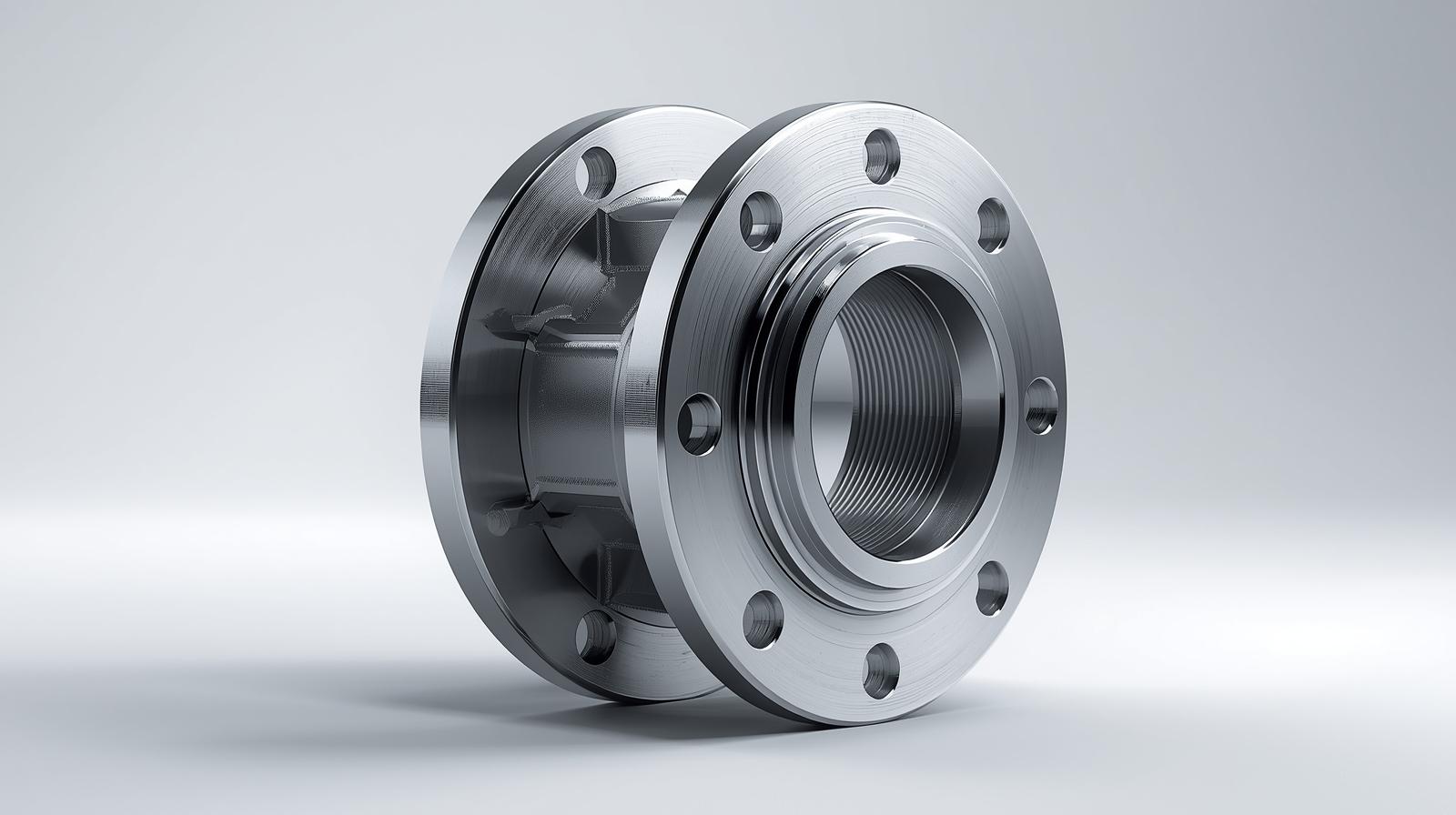
Unlike flexible couplings, a flange coupling provides rigid and secure torque transfer between two shafts.
Each flange is machined with precise bolt patterns, allowing torque to pass through uniform compression instead of surface friction.
At Dingjian, production follows strict CNC machining and FEA validation to achieve:
-
0.01 mm concentric accuracy
-
Optimized bolt preload for balanced torque flow
-
Heat-treated alloy construction for fatigue resistance
-
Anti-vibration balancing to protect bearings and shafts
This structural discipline ensures that torque is transmitted efficiently, without wear or energy loss — even after years of operation.
Comparing Standard Couplings and Heavy-Duty Industrial Models
| Feature | General Coupling | Dingjian Industrial Flange Coupling |
|---|---|---|
| Material | Carbon steel | 42CrMo alloy or stainless steel |
| Torque Range | ≤2000 Nm | ≥10,000 Nm |
| Alignment Tolerance | Moderate | High-precision axial control |
| Heat Resistance | Up to 100°C | Up to 180°C continuous load |
| Maintenance Cycle | 3–6 months | 12+ months stable |
| Ideal Use | Light machinery | Industrial drives & turbines |
By upgrading from a standard coupling to Dingjian’s heavy-duty design, operators gain improved torque transmission efficiency and longer lifecycle stability.
Engineering Solutions: Built for Torque, Stability, and Longevity
Dingjian’s flange couplings are engineered through a combination of analytical modeling and precision manufacturing.
Core engineering solutions include:
-
FEA torque simulation to predict stress distribution.
-
Reinforced flange interfaces to handle sudden torque peaks.
-
Dynamic balancing to eliminate vibration in rotating drives.
-
Anti-corrosion coatings for outdoor or marine installations.
-
Maintenance-friendly bolt layout for rapid assembly or disassembly.
Each unit is built to maintain torque reliability under harsh, continuous-duty environments, minimizing both vibration and energy loss.
Heavy Industries That Rely on Stability
Industrial flange couplings are mission-critical in applications demanding absolute reliability:
-
Steel rolling lines – where torque surges during compression cycles.
-
Cement rotary kilns – requiring high heat resistance and precise shaft alignment.
-
Mining conveyors – transmitting heavy loads continuously.
-
Turbine and generator drives – maintaining concentric balance at high speed.
-
Marine propulsion shafts – combating corrosion in saline conditions.
Each project benefits from Dingjian’s design-to-application customization, ensuring that every flange coupling meets its exact torque and load profile.
Choosing the Right Flange Coupling
| Criterion | Consideration | Recommended Option |
|---|---|---|
| Torque Requirement | Max + 20% margin | High-strength alloy flange |
| Operating Temperature | Continuous vs. peak | Nitrided or stainless surface |
| Installation Space | Axial limitation | Compact two-piece flange |
| Maintenance Access | Limited or frequent | Split-flange design |
| Vibration Risk | High-speed rotation | Dynamically balanced coupling |
Selecting the right configuration ensures both energy efficiency and mechanical durability, especially in rotating drives exceeding 3000 RPM.
Common Technical Queries
Q1: How does flange material affect performance?
High-grade alloy or stainless steel ensures torque stability and corrosion resistance under load.
Q2: Can these couplings be customized for vertical shafts?
Yes, Dingjian offers pilot-fit models for vertical torque alignment.
Q3: What maintenance schedule is ideal?
Bolt inspection every 12 months; full torque check every 24 months for high-speed systems.
Q4: Are these couplings suitable for outdoor or marine setups?
Yes — anti-corrosion coatings extend lifespan under moisture, salt, and temperature fluctuation.
Driving Industrial Reliability, One Connection at a Time
A properly designed flange coupling is more than a connector — it’s a torque stabilizer that defines machine reliability.
Through advanced materials and verified torque testing, Dingjian helps industries maintain stable operations with reduced downtime and maintenance costs.
For custom design consultation or product inquiries, please visit the official homepage or connect via the contact page.