
High Torque Elastic Coupling Factory: Powering Heavy Loads with Precision and Flexibility
In modern heavy industry, where every rotation drives tons of mechanical force, high torque elastic couplings serve as the crucial bridge between power and control.
Whether in steel mills, hoisting cranes, or mining conveyors, these couplings absorb vibration, handle extreme torque, and prevent catastrophic transmission failure.
As a professional high torque elastic coupling factory, Dingjian combines metallurgical-grade materials with advanced engineering to produce couplings built for strength, endurance, and adaptability.
The Engineering Principle Behind High Torque Flexibility
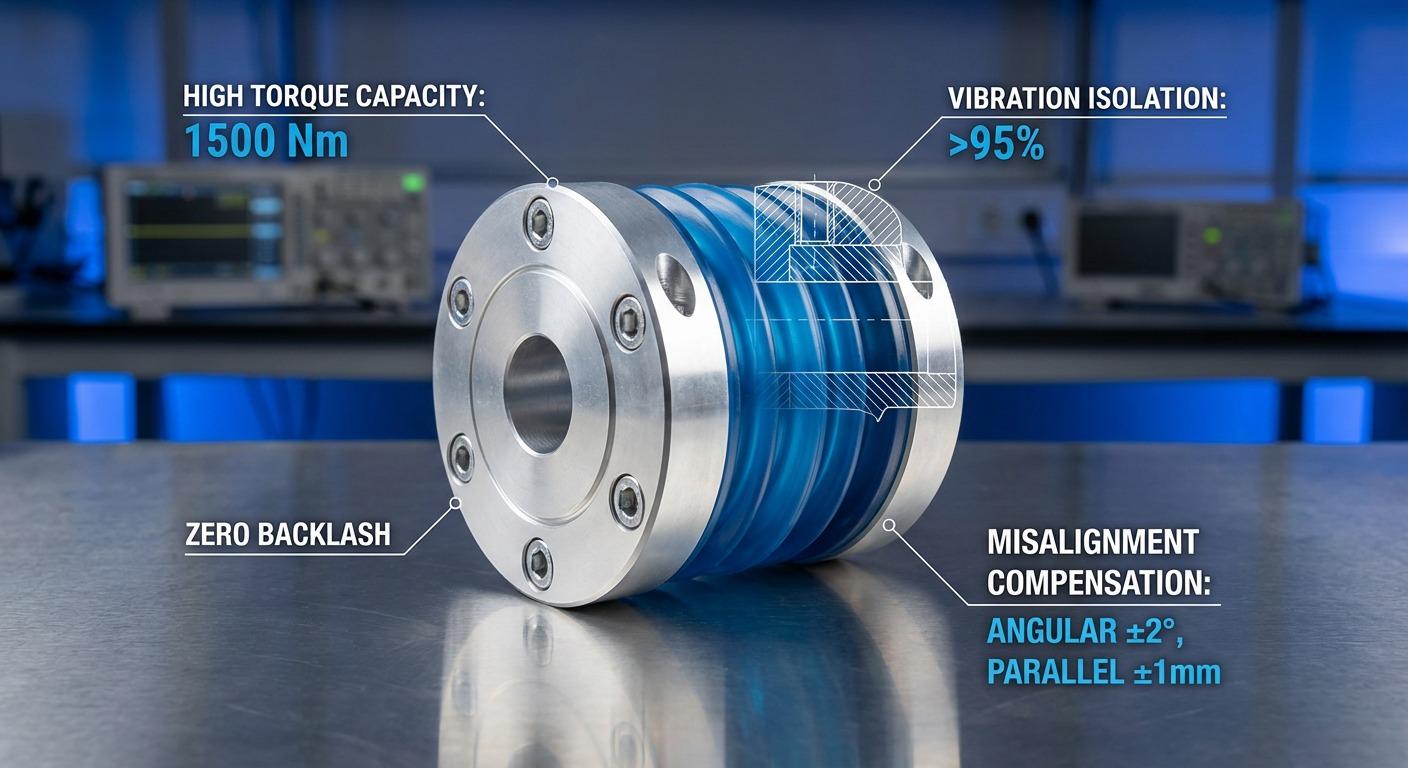
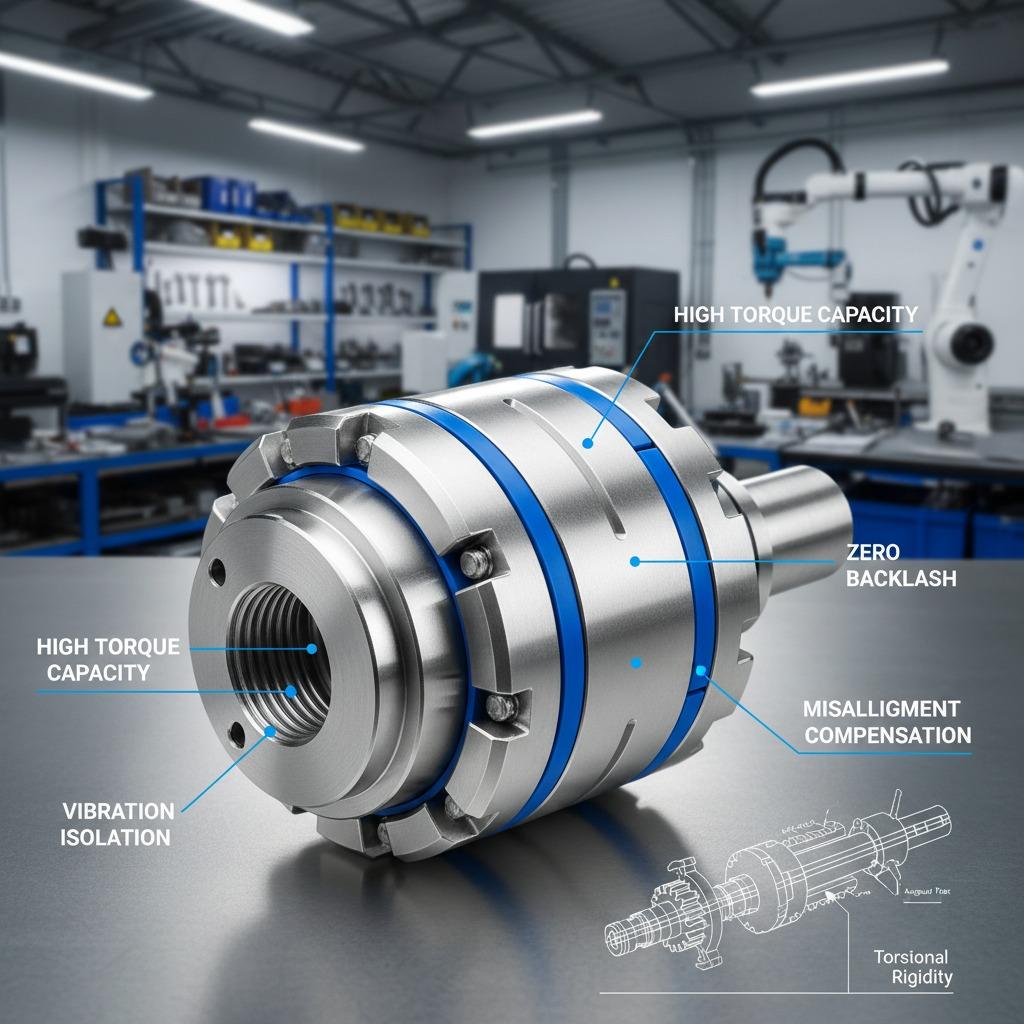
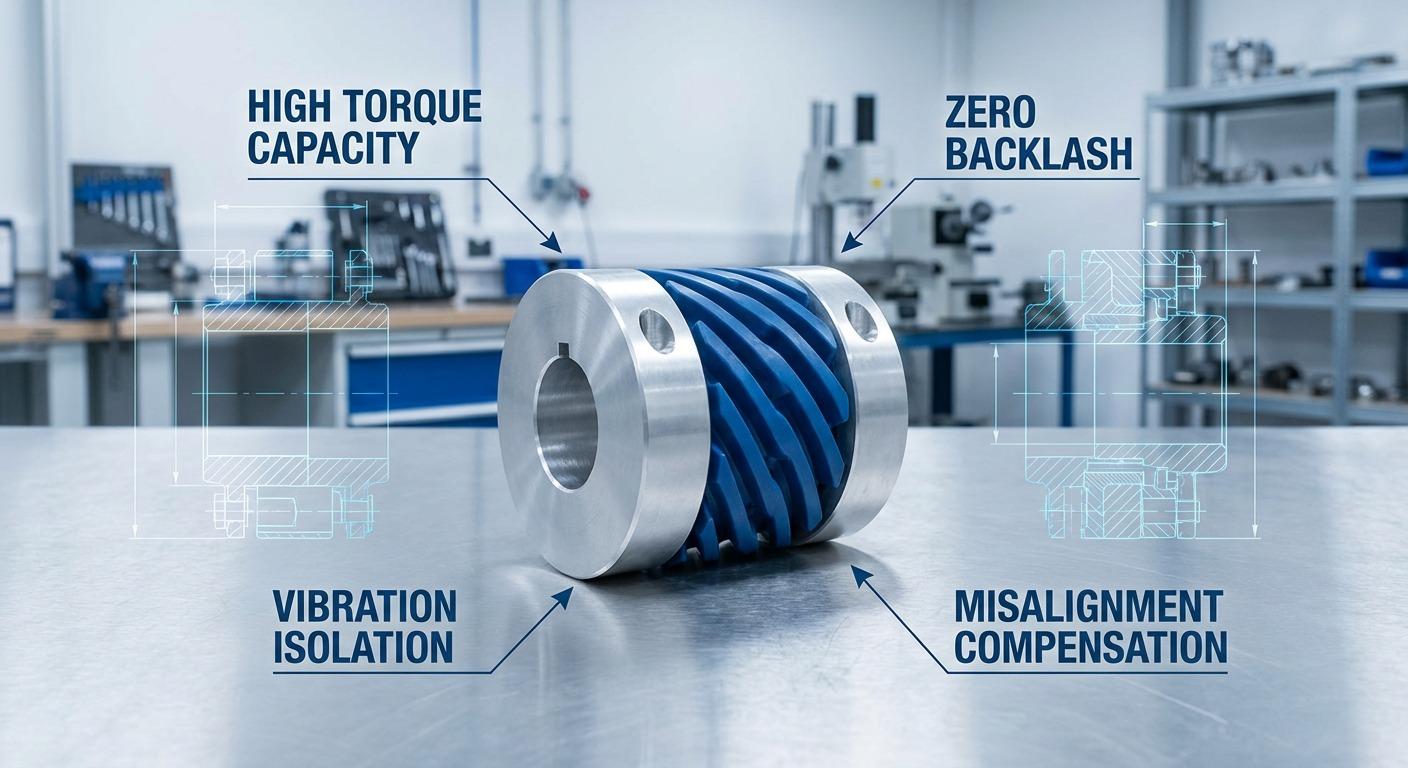
Elastic couplings work by combining metal hubs with elastomeric inserts that deform under torque. This controlled elasticity absorbs shock and compensates for shaft misalignment, protecting connected equipment from fatigue.
Core technical mechanisms:
-
Elastic deformation: buffers torque spikes and sudden starts
-
Torsional vibration control: reduces energy loss under cyclic loads
-
Misalignment compensation: maintains shaft balance under load shifts
-
Load absorption: prevents gearbox and motor overload
In heavy-duty machines, this design ensures a balance between rigidity for torque transfer and flexibility for vibration damping—critical in continuous-duty operations.
Traditional Couplings vs. High Torque Elastic Solutions
| Feature | Conventional Flexible Coupling | High Torque Elastic Coupling (Dingjian) |
|---|---|---|
| Torque Capacity | Medium | Up to 30000 Nm and above |
| Elastic Element | Basic rubber | Reinforced composite elastomer |
| Heat Resistance | <80°C | Up to 150°C continuous |
| Shock Absorption | Moderate | Dynamic multi-directional damping |
| Maintenance | Frequent | Long-life, modular insert replacement |
This structural advancement makes Dingjian’s couplings suitable for steel rolling lines, mining crushers, and shipboard drives, where torque fluctuation and shock load are part of daily operation.
Engineering Solutions That Redefine Torque Management
To overcome the limitations of conventional flexible couplings, Dingjian’s engineering team integrates advanced simulation, material innovation, and modular design principles.
Core technical solutions include:
-
Finite Element Analysis (FEA): simulates torsional stress and ensures consistent torque delivery under variable loads.
-
Reinforced Elastomer Technology: uses fiber or steel mesh–reinforced inserts that resist deformation even under high cyclic torque.
-
Thermal Stabilization Design: maintains elasticity and damping efficiency at temperatures exceeding 150°C, ideal for steel and cement plants.
-
Modular Insert Replacement: enables quick maintenance without full disassembly, reducing downtime in mining and lifting equipment.
-
Dynamic Balancing: guarantees smooth operation for high-speed machinery and large transmission shafts.
These combined features ensure that Dingjian’s high torque elastic couplings not only transmit power efficiently but also shield the entire drivetrain—protecting motors, gearboxes, and shafts from fatigue, vibration, and overload.
Why High Torque Elastic Couplings Excel in Heavy Industries
For Metallurgy and Steel Plants
In rolling mills and continuous casting systems, torque surges during startup can exceed standard coupling limits. Dingjian’s reinforced elastomer elements disperse these shocks, ensuring stable operation and extended equipment lifespan.
For Mining and Quarry Equipment
Heavy crushers, conveyors, and bucket elevators generate unpredictable load variations. High torque couplings deliver vibration damping and minimize shaft fatigue, keeping production continuous and safe.
For Hoisting and Transport Machinery
Cranes and lifting systems require both precision and safety under intermittent load conditions. The elastic hub absorbs braking and reversing torque, reducing mechanical stress on motors and gearboxes.
For Cement and Material Handling Systems
Rotary kilns and mixers operate under constant vibration. Dingjian’s high torque models provide consistent torque transfer and minimize alignment losses, extending system reliability.
Choosing the Right Coupling by Application
| Working Condition | Recommended Design | Key Benefit |
|---|---|---|
| Frequent Start/Stop or Reversing Load | High damping composite elastomer type | Smooth torque transition |
| High Ambient Temperature (Steel Mills) | Heat-resistant rubber compound | Stable elasticity above 120°C |
| High Load and Shock Environment (Mining) | Reinforced metal-hub coupling | Prevents torque breakage |
| Tight Space Installation (Cranes) | Compact short-hub type | Easy alignment and replacement |
Selecting by load type, temperature, and duty cycle ensures the coupling works as both a torque transfer and protection mechanism.
Q&A: Practical Engineering Considerations
Q1: What defines a “high torque” elastic coupling?
A1: A design capable of transmitting torque above 10,000 Nm while maintaining torsional flexibility and misalignment compensation.
Q2: How does Dingjian ensure product consistency?
A2: Every coupling undergoes CNC machining, torque simulation, and fatigue testing to confirm deformation tolerance and dynamic balance.
Q3: Can couplings be customized for OEM machinery?
A3: Yes, customization includes torque rating, insert hardness, bore diameter, and surface coating for specific equipment.
Q4: How often should the elastomer element be replaced?
A4: Generally every 2–3 years depending on torque fluctuation, operating temperature, and lubrication conditions.
Built for Torque, Designed for Longevity
Heavy industries demand components that don’t just transmit power—they protect entire systems from damage.
By combining precision machining, elastomer innovation, and heavy-duty torque control, Dingjian delivers couplings that sustain mechanical reliability in the toughest industrial conditions.
For OEM cooperation or technical consultation, visit the official homepage or reach out via the contact page.