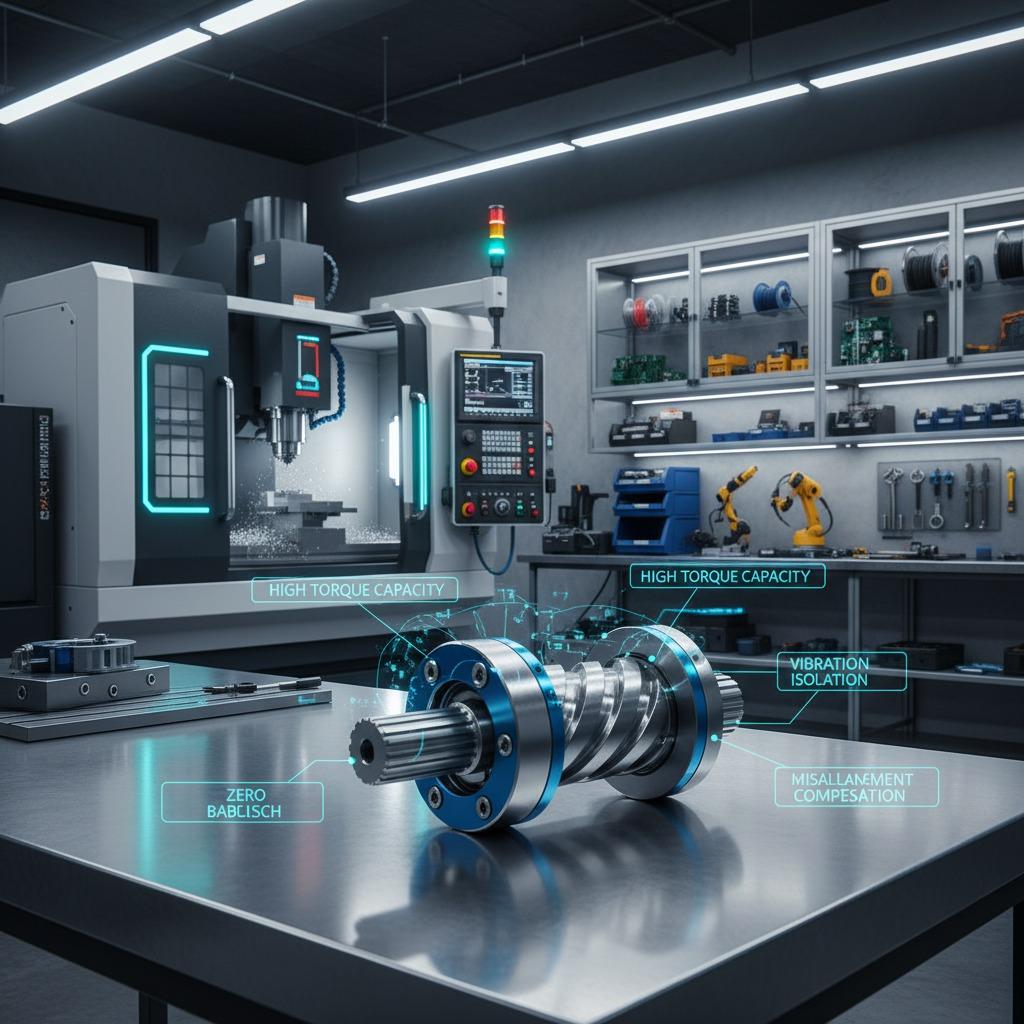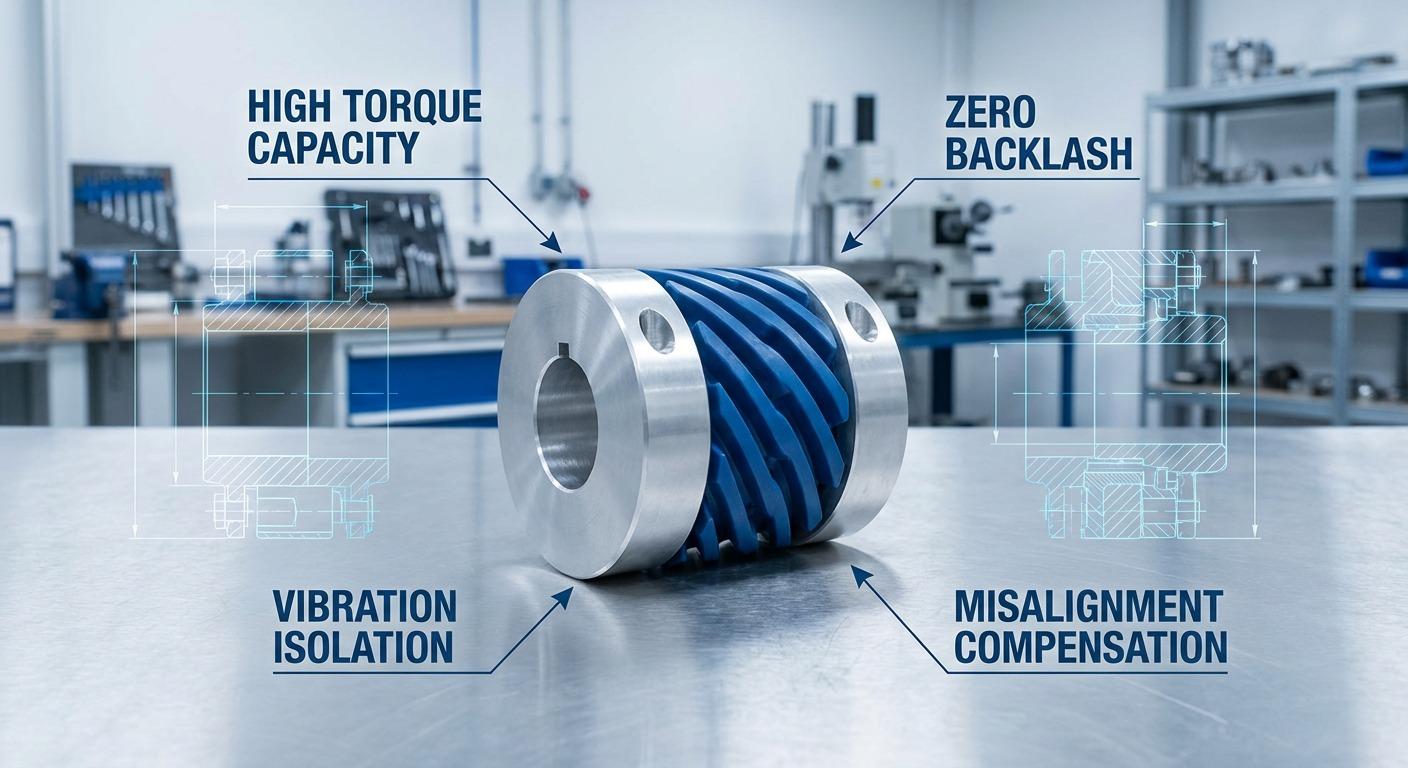

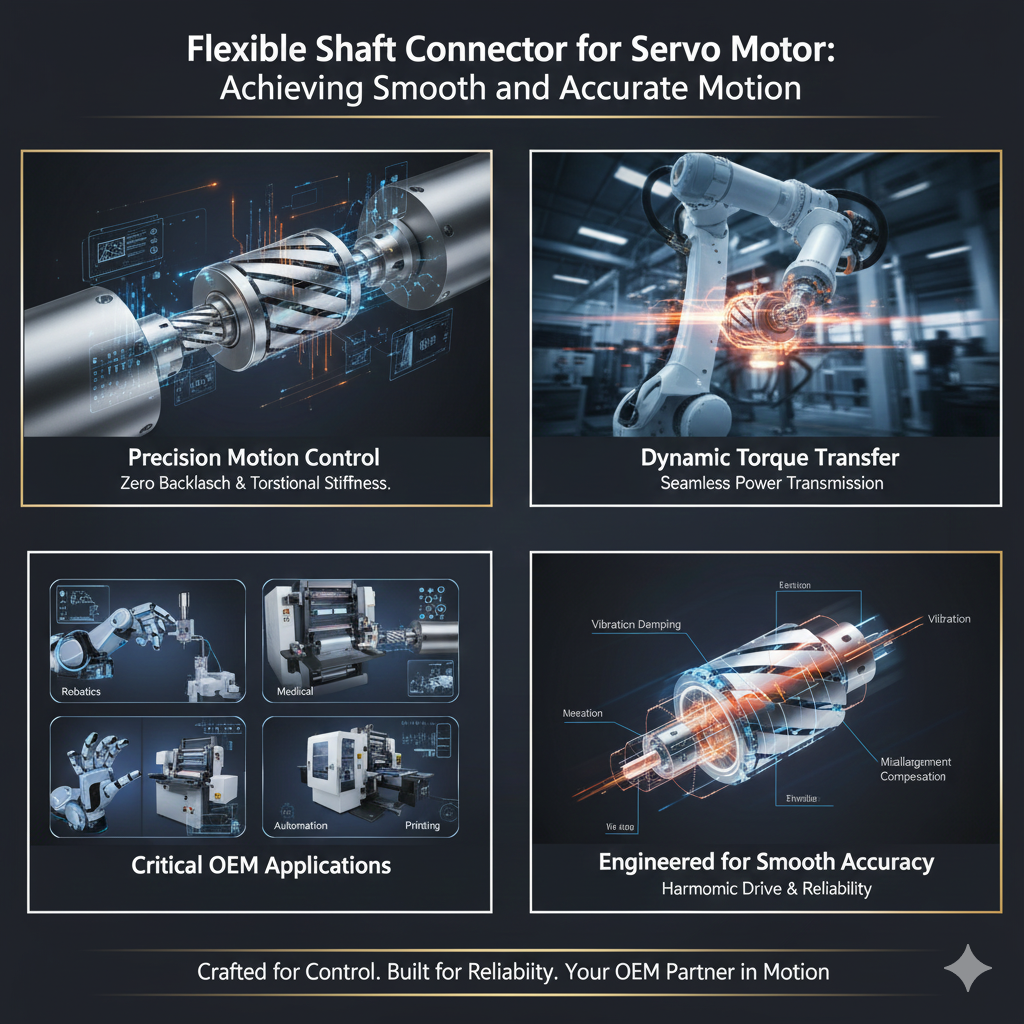
Flexible Shaft Connector for Servo Motor: Achieving Smooth and Accurate Motion
After mastering backlash-free coupling technology, the next stage in servo motion refinement is precision shaft connection — where flexibility meets control accuracy.
A flexible shaft connector is not just a mechanical link; it is the silent enabler of responsive torque, vibration damping, and positional repeatability across servo-driven systems.
As automation and robotics advance, every micron of mechanical clearance matters. Dingjian’s servo motor connectors are engineered to eliminate backlash, absorb shock, and synchronize torque flow with millisecond precision.
How It Works: Flexibility Without Motion Loss
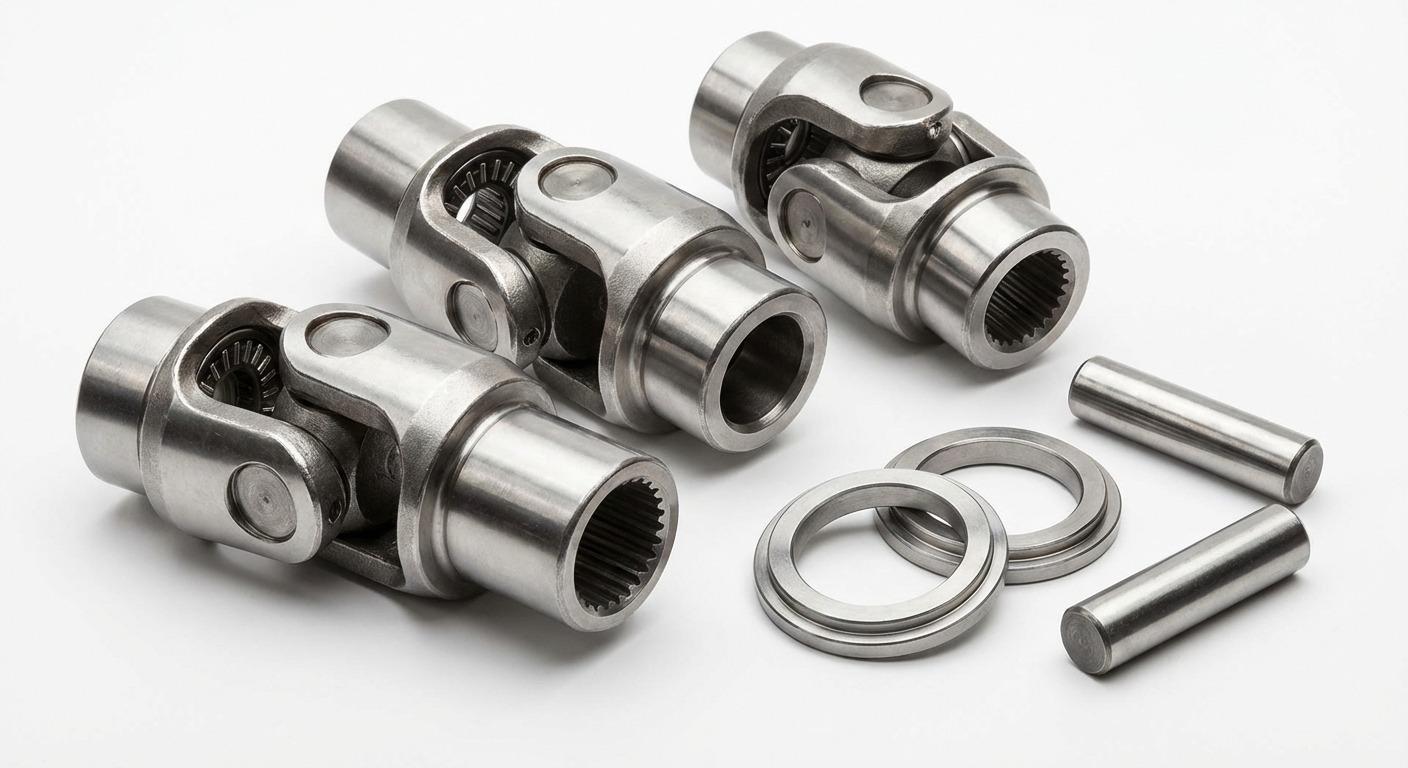
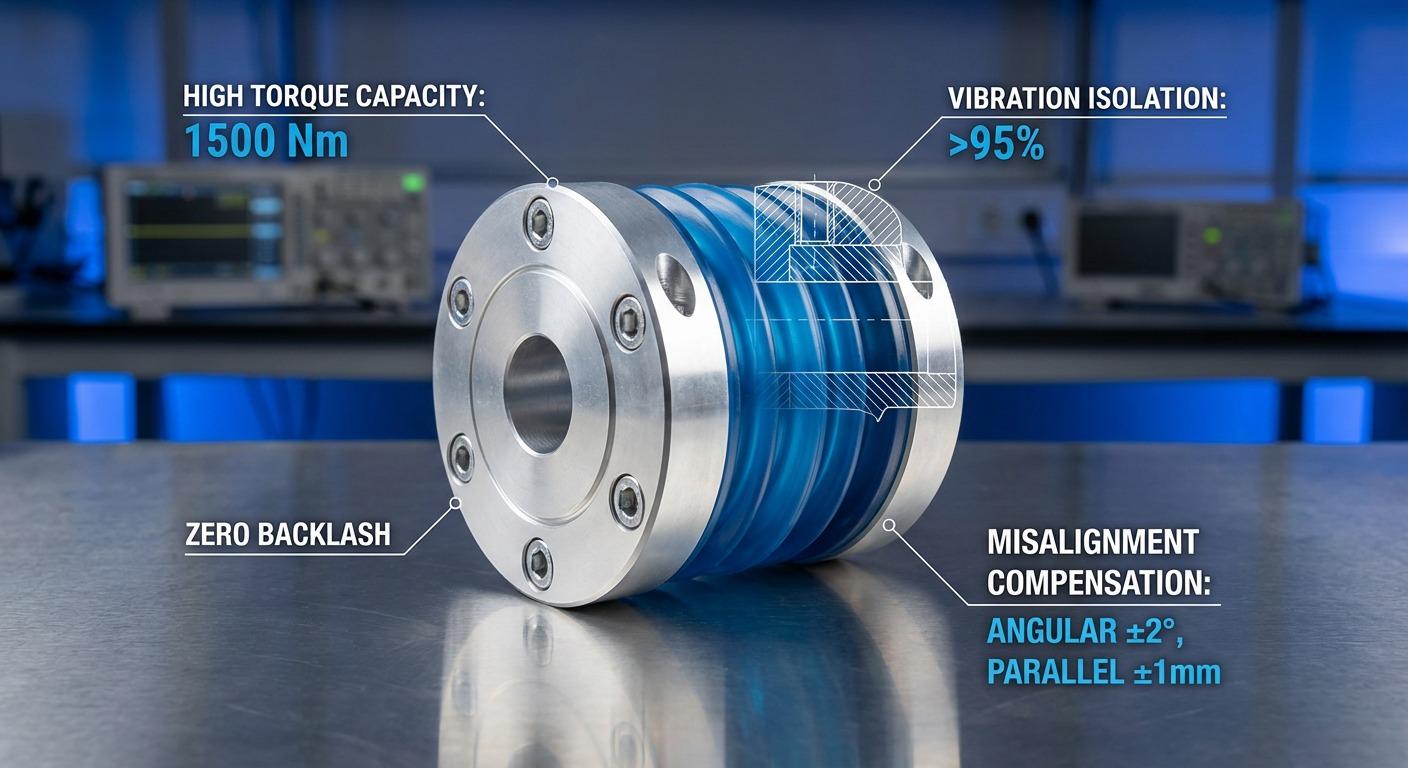
The flexible shaft connector transmits torque while compensating for small angular, axial, and parallel misalignments.
Its structure typically combines metal hubs with a flexible polymer or spring-steel element, allowing it to flex slightly under misalignment but remain torsionally stiff enough for accurate power delivery.
Core Mechanisms at Work:
-
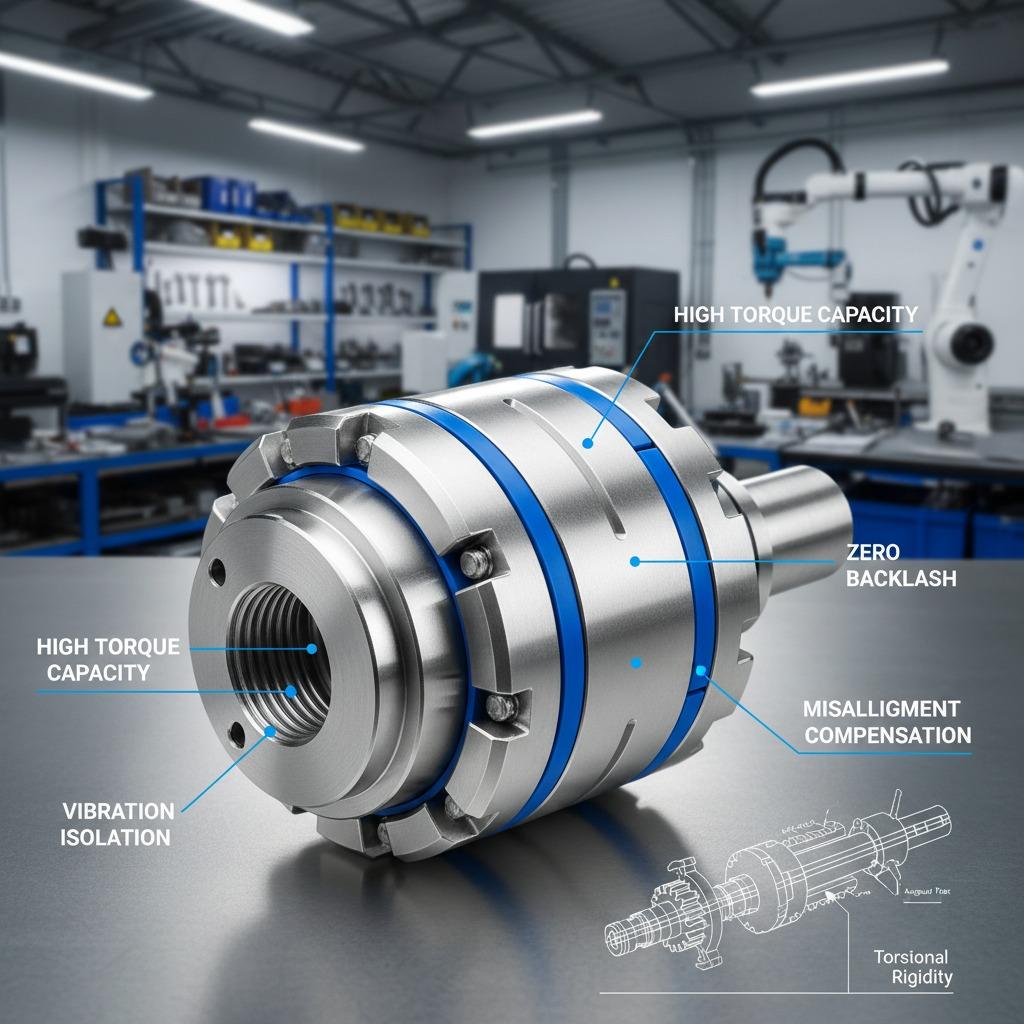
Elastic Deformation: Absorbs micro misalignment without causing torque ripple.
-
Torsional Stiffness: Maintains accurate servo feedback response.
-
Damping Layer: Reduces vibration and shock during acceleration.
-
Fail-Safe Contact: Prevents slip even under high dynamic torque.
By integrating both rigidity and flexibility, Dingjian’s designs ensure that servo systems move as intended — fast, smooth, and precise.
Comparison: Why Servo Systems Demand Specialized Connectors
| Feature | Standard Flexible Coupling | Servo-Specific Shaft Connector |
|---|---|---|
| Torque Accuracy | ±0.2° angular shift | ±0.03° precision |
| Backlash | Minor under load | Zero backlash (preloaded) |
| Damping | Moderate | High (engineered polymer interface) |
| Frequency Response | <100 Hz | >400 Hz dynamic control |
| Maintenance | Low | Maintenance-free |
| Typical Application | Pumps, conveyors | Robotics, CNC, servo axes |
Servo systems operate under rapid load reversals and precise feedback loops, which is why Dingjian’s connectors are fine-tuned to maintain phase accuracy and torque linearity across cycles — even at thousands of rpm.
Dingjian’s Design Philosophy: Stability Through Smart Flexibility
Each Dingjian flexible shaft connector combines advanced metallurgy, polymer science, and servo calibration knowledge.
The manufacturing process integrates multiple disciplines to achieve repeatable precision in every assembly:
-
High-Tolerance CNC Machining (≤0.01 mm)
-
Guarantees perfect concentricity between servo shaft and load.
-
-
Dynamic Balance & Stress Simulation
-
Finite Element Analysis (FEA) ensures stability under 6000 rpm continuous load.
-
-
Customized Elastomer Inserts
-
Polyurethane or thermoplastic inserts optimized for torque-frequency response.
-
-
Preload Calibration
-
Controlled pre-stressing eliminates backlash while preserving damping capacity.
-
-
Surface Hardening & Anti-Corrosion Coating
-
Extends operational life in high-humidity or continuous-duty environments.
-
Through this holistic engineering, Dingjian ensures each connector becomes a precision tool, not just a component.
Industrial Applications: Where Servo Flexibility Matters Most
-
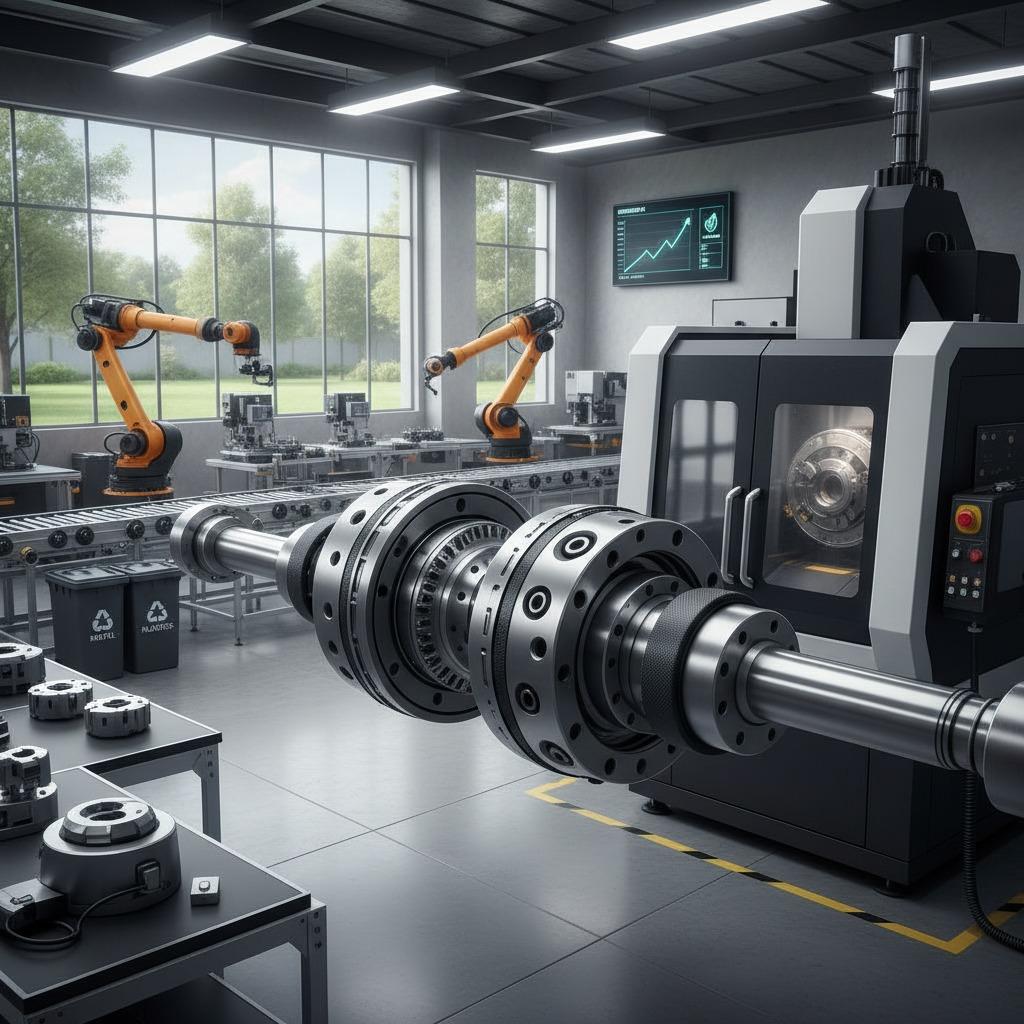
CNC Machining Centers: Keeps spindle motion synchronized with servo drives.
-
Robotic Arms: Enables smooth rotation in multi-axis joints.
-
Pick-and-Place Machines: Reduces vibration, enhancing placement accuracy.
-
Printing Equipment: Maintains line registration during high-speed operation.
-
Automated Inspection Systems: Ensures micro-movement repeatability.
These applications share one truth: the connector determines the servo’s performance consistency, influencing accuracy, sound, and lifespan.
Design Selection Guide: Matching Connector Type to Servo Requirements
| Factor | Effect on System | Dingjian Recommendation |
|---|---|---|
| Torque Load | Defines stiffness | Choose 80A hardness for standard, 98A for heavy load |
| Speed Range | Affects vibration | Dynamic balance ISO G6.3 for 8000 rpm |
| Misalignment | Impacts stress | Select flexible grid type for combined misalignments |
| Installation Space | Determines hub geometry | Compact clamp type for tight assemblies |
| System Responsiveness | Relates to frequency accuracy | Stiffer inserts for >400 Hz servo feedback |
💡 Expert Tip:
In high-speed servo setups, connector stiffness should align with servo loop frequency — too soft leads to delay, too stiff amplifies vibration. Dingjian engineers use motion analysis to define the optimal stiffness ratio for each OEM system.
Common Questions About Servo Connectors
Q1: Are flexible shaft connectors suitable for high-precision servo motors?
Yes, Dingjian’s preloaded designs maintain zero backlash and consistent torque delivery even in high-response environments.
Q2: What’s the main benefit compared to rigid couplings?
They reduce resonance and mechanical stress during servo reversals, extending motor and bearing life.
Q3: Can Dingjian provide custom connectors for OEM projects?
Absolutely. Shaft bore, insert hardness, and geometry can all be tailored to your servo model.
Q4: What materials are used for the flexible insert?
Dingjian uses polyurethane, NBR, or thermoplastic compounds tested for torsional fatigue and temperature resistance.
Q5: What standards do these products comply with?
All connectors adhere to ISO 14691 and DIN 740 mechanical coupling standards.
The Future of Servo Precision Starts with Smarter Connections
From backlash-free couplings to servo-grade flexible connectors, Dingjian’s innovations continue to push industrial motion toward higher synchronization and quieter operation.
Every connector produced is not just a link — it’s a precision assurance system, ensuring that automation moves exactly as designed.
To explore flexible connectors engineered for your servo applications, visit our homepage or connect with our engineering team via the contact page.