
Diaphragm Coupling Manufacturer: Precision Torque Transfer for Dynamic Industrial Systems
In heavy-duty drive systems, where torque must remain consistent even under thermal expansion or vibration, membrane-style or diaphragm couplings stand apart.
They deliver flexibility without backlash, maintaining alignment while transmitting high torque at extreme rotational speeds.
For industries like turbines, compressors, and automation drives, this small but vital component determines whether the entire machine runs in harmony or falls into imbalance.
That’s why Dingjian, as a professional diaphragm coupling manufacturer, places precision, material strength, and fatigue control at the heart of its engineering process.
How Diaphragm Couplings Transmit Torque
A diaphragm coupling works through a metallic flexible element—a thin, circular disc designed to bend radially and axially without losing structural integrity.
This disc connects the driving and driven shafts, transmitting torque while compensating for angular, axial, and parallel misalignments.
When torque increases, the diaphragm slightly deforms, balancing both shafts while maintaining rotational synchronization.
This allows high-speed machinery to run smoothly without introducing vibration or wear.
Key technical benefits include:
-
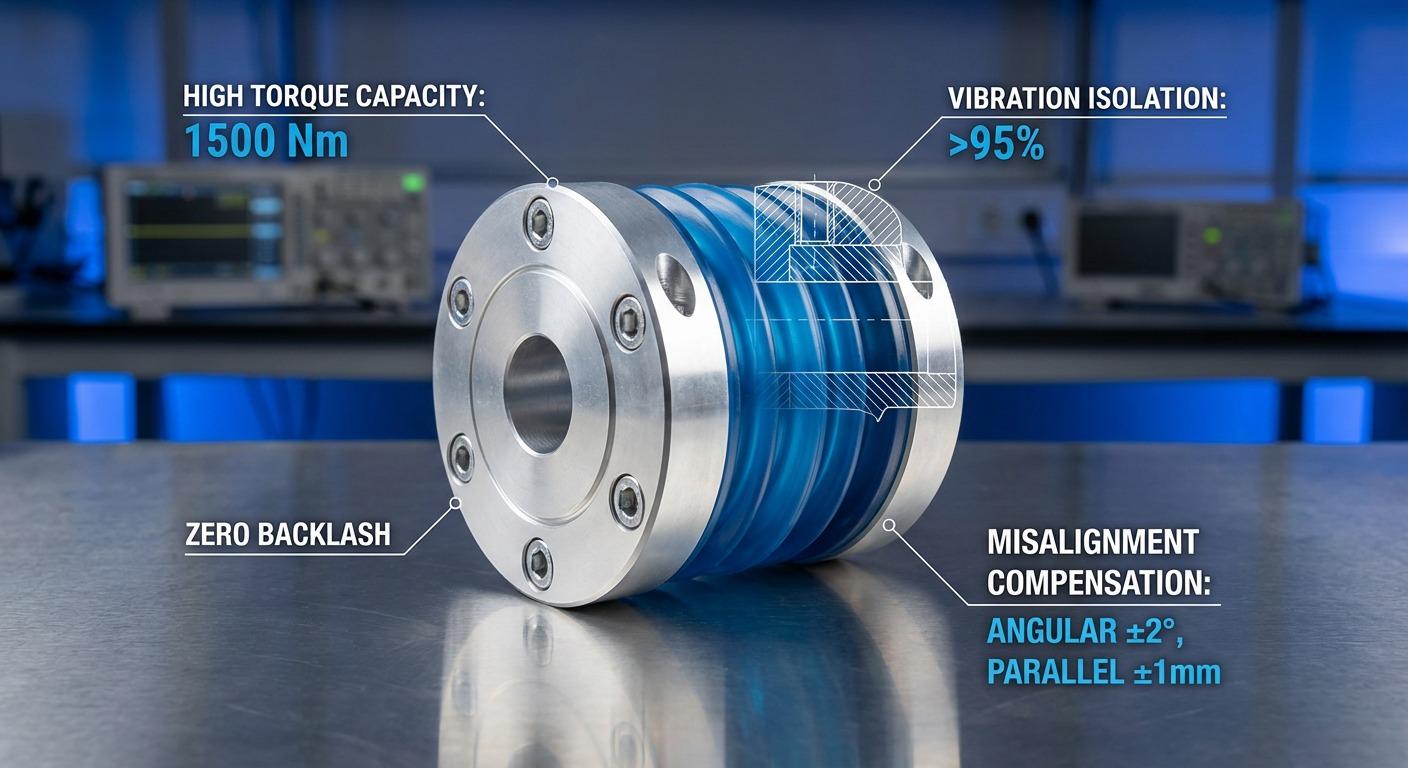
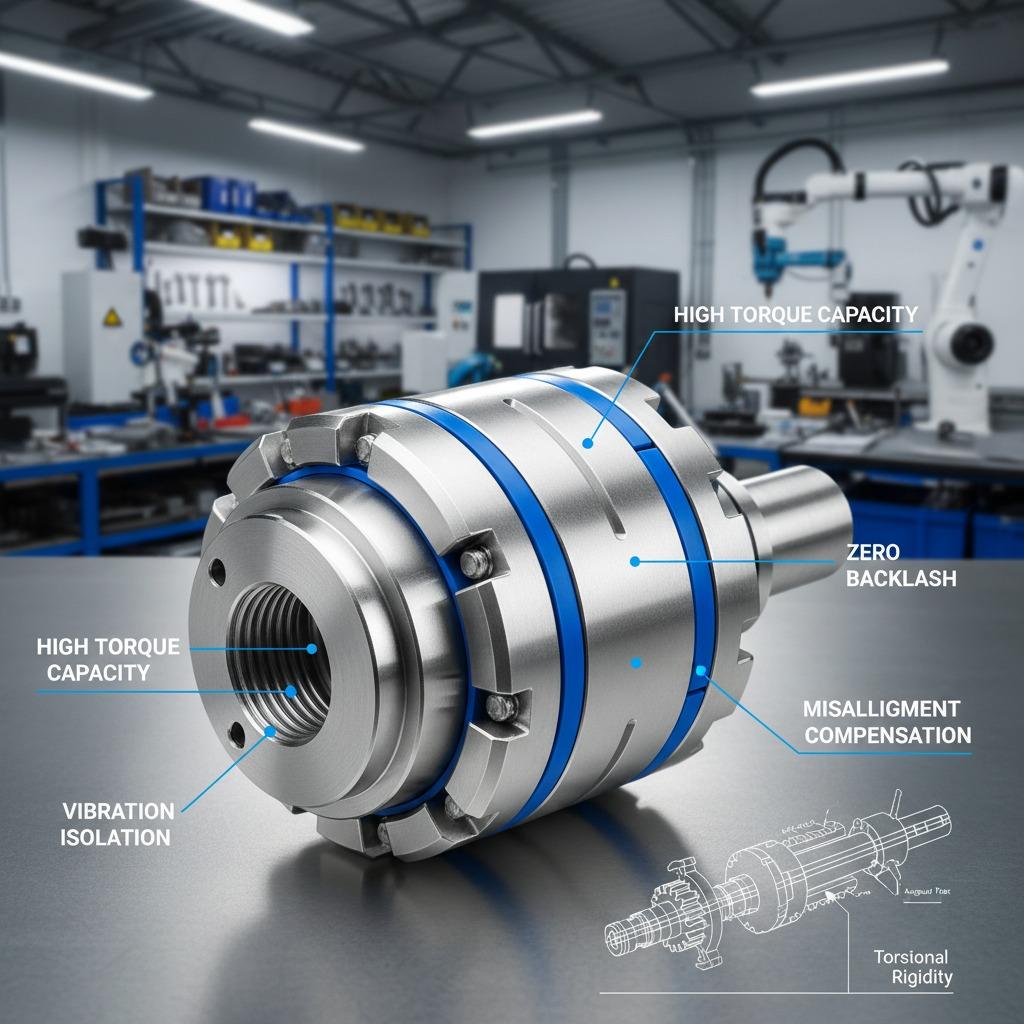
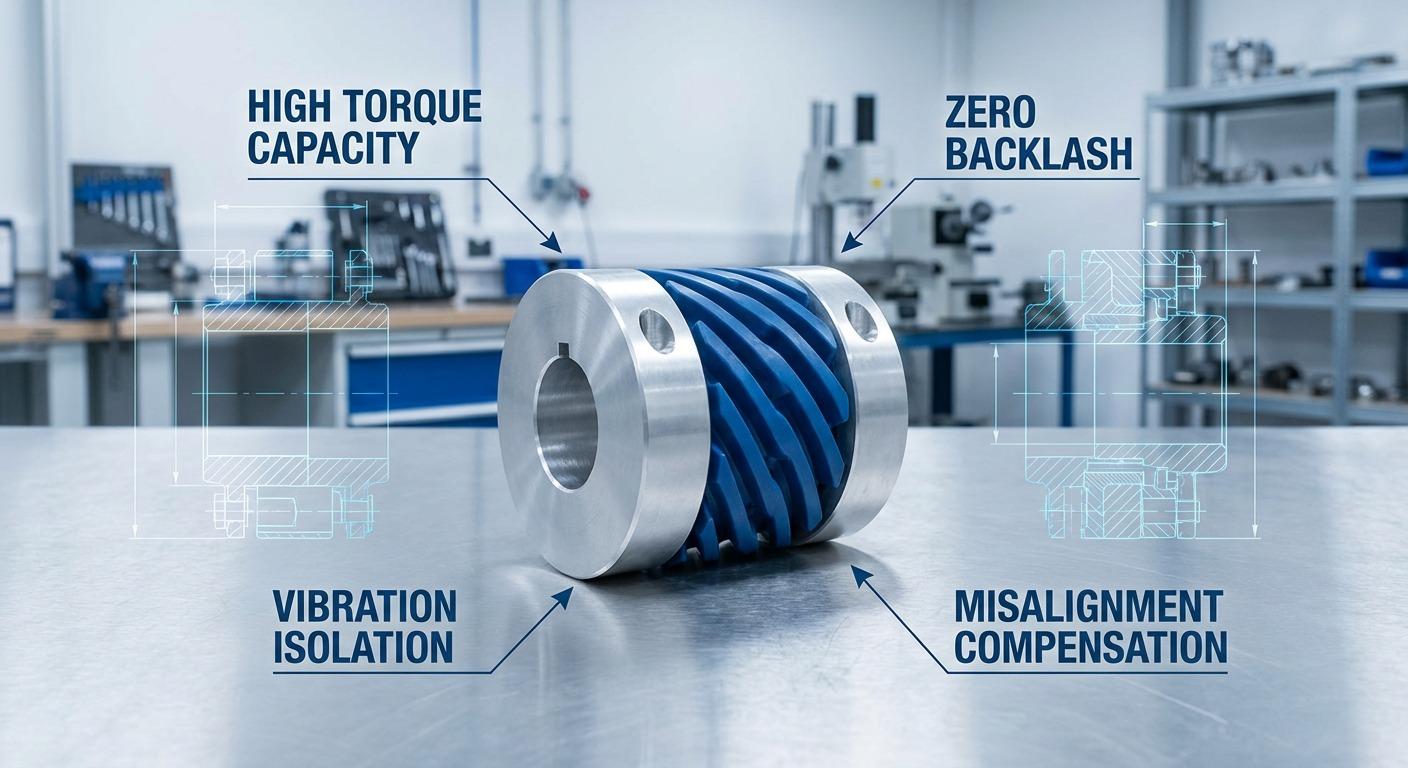
Zero backlash and high torsional stiffness
-
Maintenance-free operation with no lubrication required
-
Long fatigue life due to controlled diaphragm flexure
-
Ideal balance between rigidity and flexibility for precision systems
Comparing Diaphragm and Conventional Flexible Couplings
| Feature | Conventional Flexible Coupling | Dingjian Diaphragm Coupling |
|---|---|---|
| Torque Transmission | Moderate | High torque, high-speed stable |
| Flexibility | Elastomer or gear-based | Metallic disc flexure |
| Alignment Compensation | Limited | Axial + angular + parallel |
| Maintenance | Lubrication required | Maintenance-free |
| Operating Temperature | ≤100°C | Up to 250°C |
| Lifespan | 1–2 years | 5–10 years continuous duty |
This combination of metallic flexibility and torque rigidity makes diaphragm couplings ideal for precision motion control systems where both speed and stability matter.
Engineering Solutions That Drive Reliability
Every diaphragm coupling by Dingjian begins as a piece of high-strength stainless steel or 42CrMo alloy, meticulously machined using CNC turning, grinding, and laser cutting.
The process is not just about shaping metal — it’s about designing resilience into every micrometer of motion.
Core engineering practices include:
-
Finite Element Simulation (FEA): Predicts stress concentration during cyclic torque.
-
Laser-Cut Diaphragm Discs: Guarantee uniform thickness and repeatable flexure characteristics.
-
Dynamic Balancing: Maintains operational stability at speeds beyond 12,000 RPM.
-
Surface Hardening Treatments: Improve fatigue strength and corrosion resistance.
-
Multi-Stage Assembly Calibration: Ensures shaft concentricity and pre-load uniformity.
The result? A coupling capable of handling continuous torque flow while absorbing misalignment and vibration, extending both motor and bearing life.
Real-World Industrial Applications
Dingjian diaphragm couplings operate at the intersection of speed, accuracy, and endurance, making them essential in:
-
Gas and steam turbines – absorbing axial expansion under heat
-
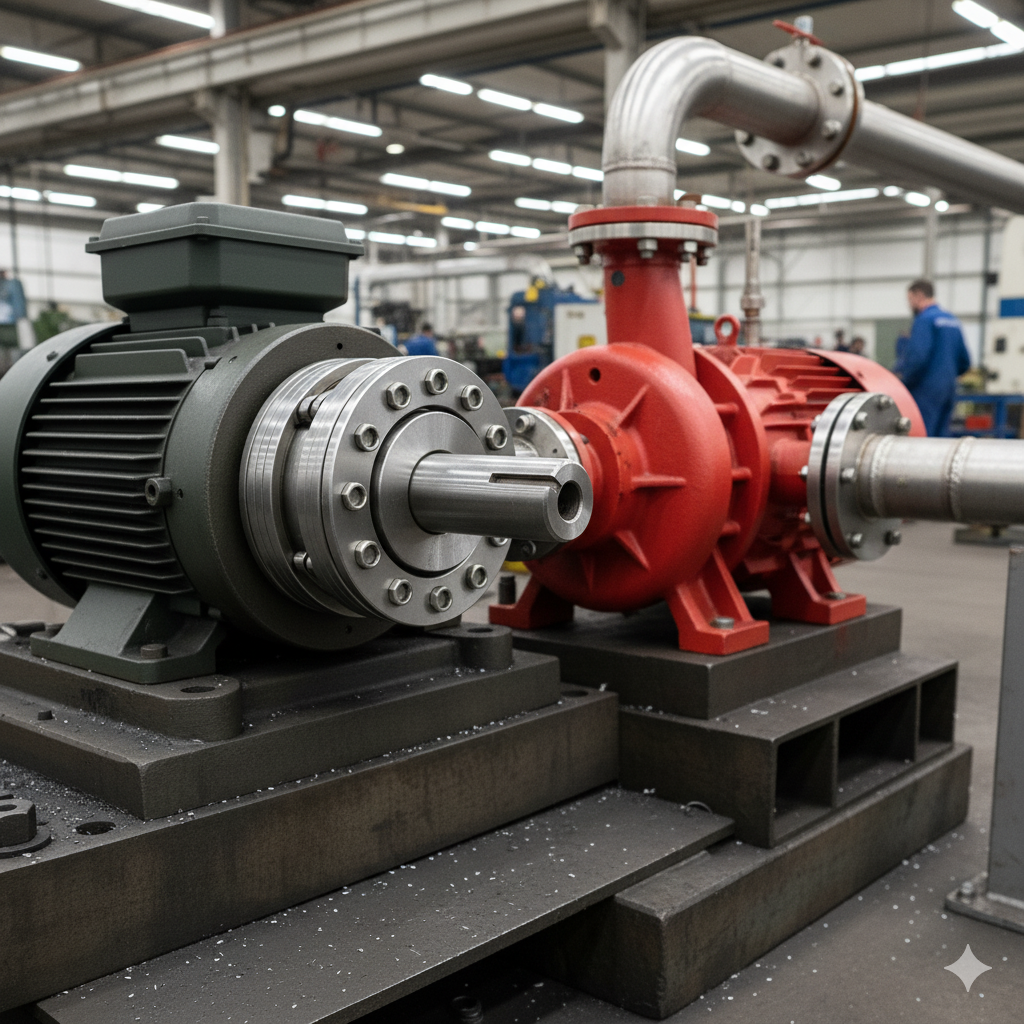
Pumps and compressors – maintaining torque under pressure changes
-
Automation and servo drives – precise motion synchronization
-
Generator systems – stable alignment for power output
-
Aerospace testing equipment – high rotational accuracy at ultra speeds
These applications prove how diaphragm couplings can act as both a mechanical buffer and a precision torque link in modern power systems.
Selection Guide: Matching Design to Industrial Needs
| Criterion | Importance | Recommended Dingjian Option |
|---|---|---|
| Torque & Speed | High torque, variable RPM | Multi-disc diaphragm structure |
| Misalignment Type | Angular or axial deviation | Double-diaphragm configuration |
| Environment | High temperature or corrosive | Stainless steel or coated alloy |
| Maintenance Access | Tight installation space | Compact one-piece coupling |
| Application | Turbine, compressor, servo | Custom bore and hub design |
Tip: Always specify maximum torque, misalignment tolerance, and operating temperature before selection — diaphragm stiffness directly affects lifespan.
Common Questions About Diaphragm Couplings
Q1: How long do diaphragm couplings last?
Typically 20,000–40,000 operational hours, depending on load cycles and alignment precision.
Q2: Do they require regular lubrication or maintenance?
No. Their dry-metal flexure design eliminates lubrication needs entirely.
Q3: Can they replace gear or grid couplings directly?
Yes, in most cases — they provide higher precision and less maintenance.
Q4: How does Dingjian ensure product balance?
Every unit undergoes dynamic balance testing to ISO G2.5 standards.
Precision Flexibility That Defines Modern Machinery
A diaphragm coupling may seem small, but it represents the harmony between strength and flexibility — a balance that modern industry depends on.
Through advanced simulation, material innovation, and strict machining accuracy, Dingjian delivers coupling systems that perform flawlessly in motion-critical environments.
To request a quote or discuss your project’s torque requirements, please visit the official homepage or contact us via the contact page.