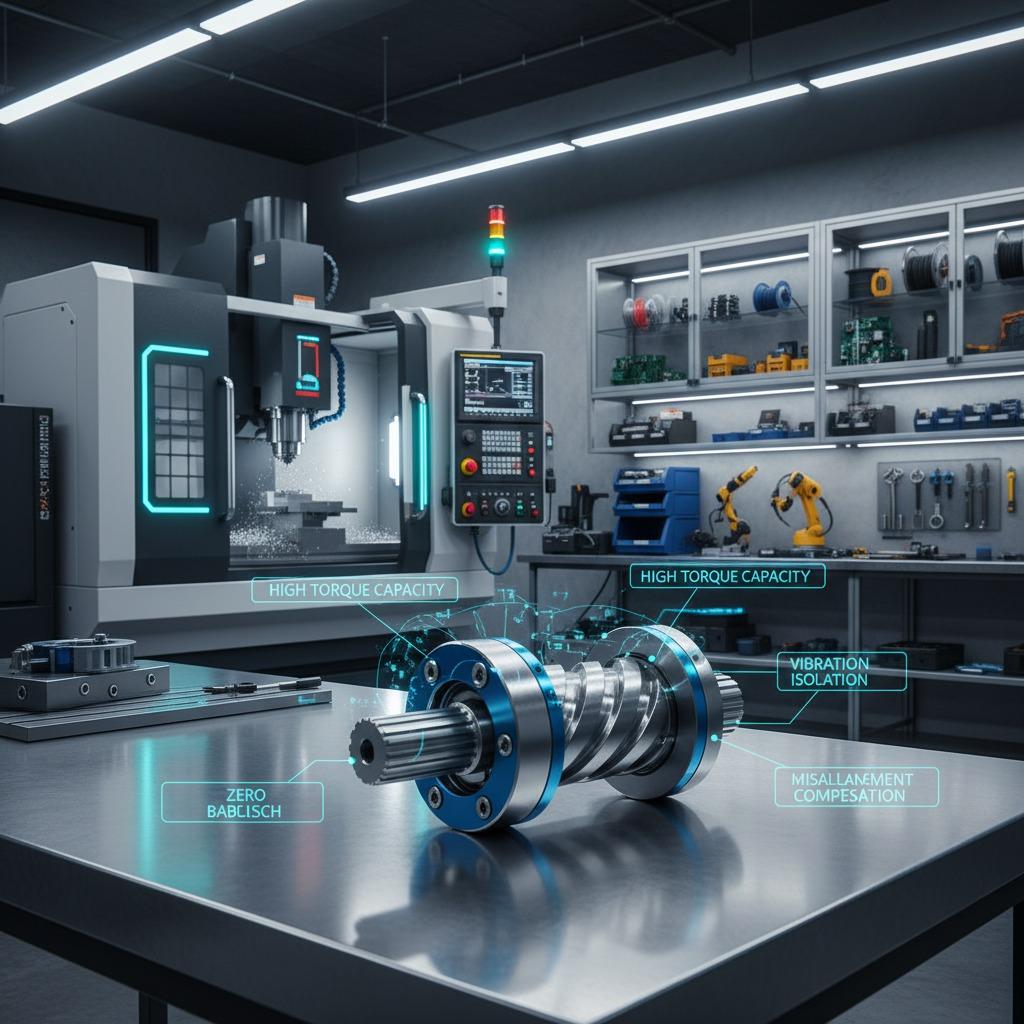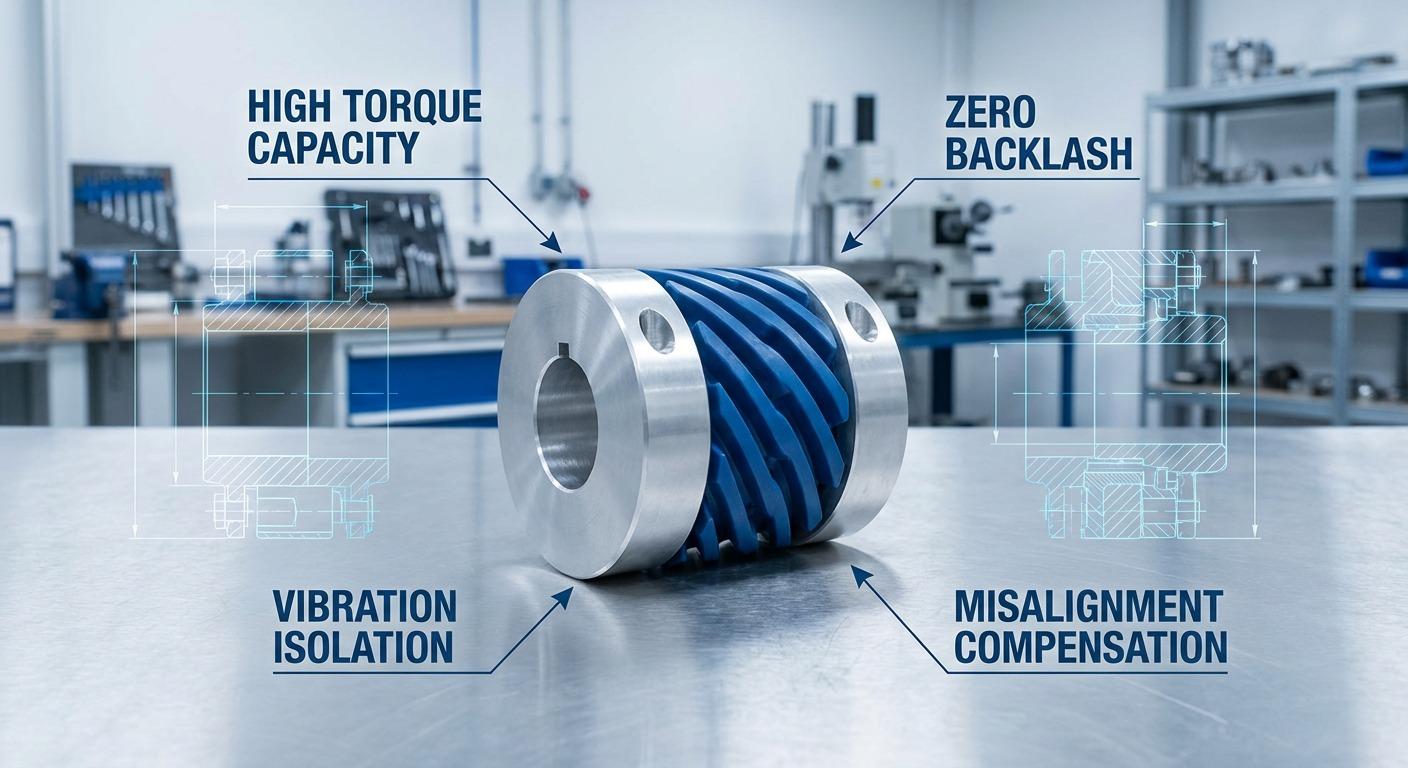

In the complex world of industrial machinery, the seamless transfer of power between rotating shafts is fundamental to operational success. While many components facilitate this connection, the Diaphragm Coupling stands out as a pinnacle of engineering for high-performance systems. As a specialized type of Flexible Couplings, it is designed to transmit torque while accommodating misalignment between shafts, ensuring equipment runs smoothly, efficiently, and with exceptional reliability. This technology is not merely a connector but a crucial element that protects expensive machinery from the stresses of vibration and misalignment.
The ingenuity of this component lies in its unique Diaphragm Coupling Design. Unlike other Mechanical Couplings that may use elastomers or lubricated gears, a diaphragm coupling utilizes one or more thin, metallic discs or diaphragms. These diaphragms are bolted together in a pack and are rigid in the torsional direction but flexible in the axial and angular directions. This construction allows them to bend and flex to compensate for shaft misalignments without inducing significant reactionary loads on the connected equipment. The use of robust materials, typically high-strength stainless steel, ensures longevity and eliminates the need for lubrication, making it a maintenance-free solution that can operate in harsh environmental conditions.
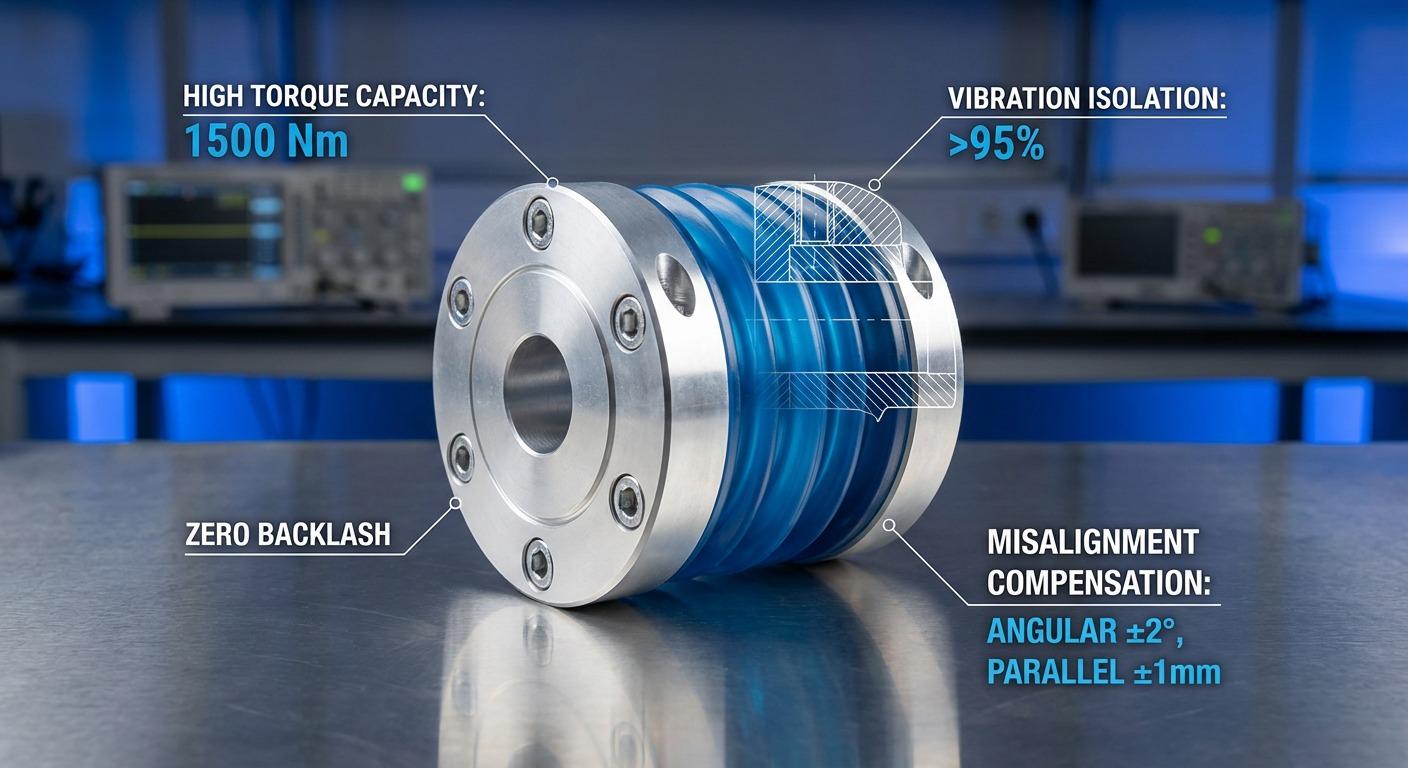
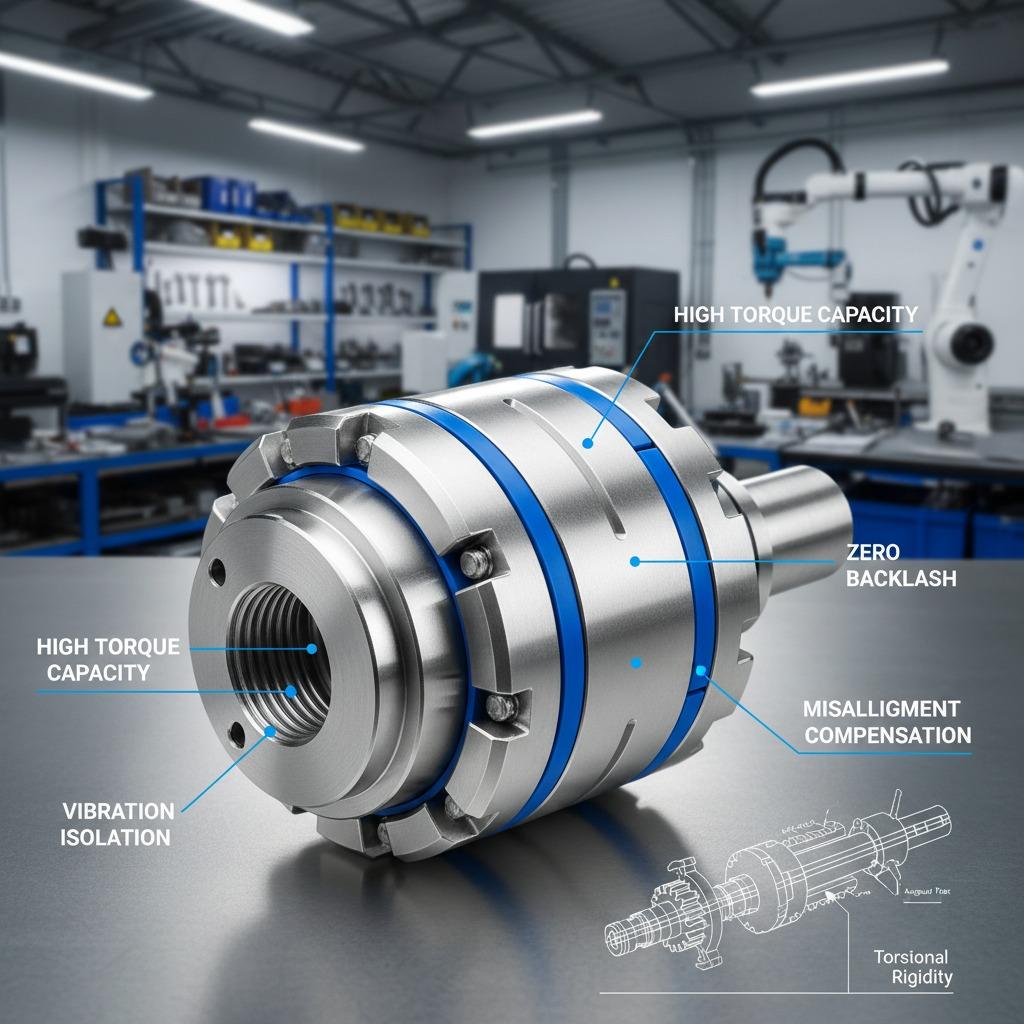
One of the most critical functions of any coupling is effective Torque Transmission. The Diaphragm Coupling excels in this area by providing a torsionally stiff connection. The diaphragms are designed to handle high torque loads without backlash or rotational slop, which is vital for applications requiring precise positioning and motion control. The key connection mechanism ensures a secure fit onto the shafts, guaranteeing that power is relayed from the driver to the driven equipment with minimal loss. This high-fidelity Torque Transmission preserves the integrity of the mechanical system and enhances overall operational efficiency, making it an ideal choice for sensitive and high-speed machinery.
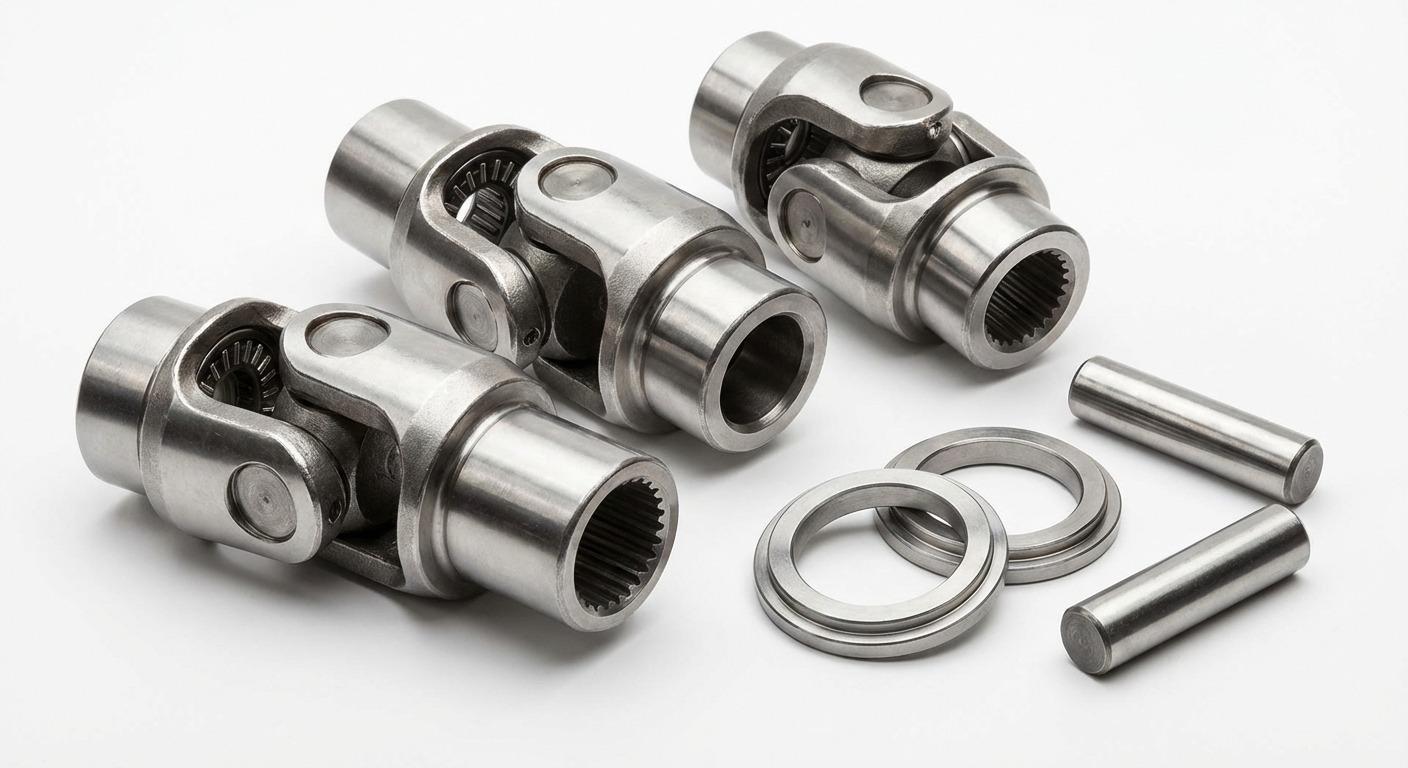
Understanding the individual Coupling Components reveals how this advanced device functions. A typical assembly consists of two hubs, which mount onto the equipment shafts, and at least one diaphragm pack that connects the hubs. In a single-diaphragm design, the unit can accommodate angular and axial misalignment. A double-diaphragm configuration, which includes a spacer between two diaphragm packs, offers the additional benefit of accommodating parallel misalignment. This double-type structure provides enhanced stability and greater misalignment capability, making the design incredibly versatile. Each of these Coupling Components is precision-engineered to work in harmony, delivering smooth and consistent performance.
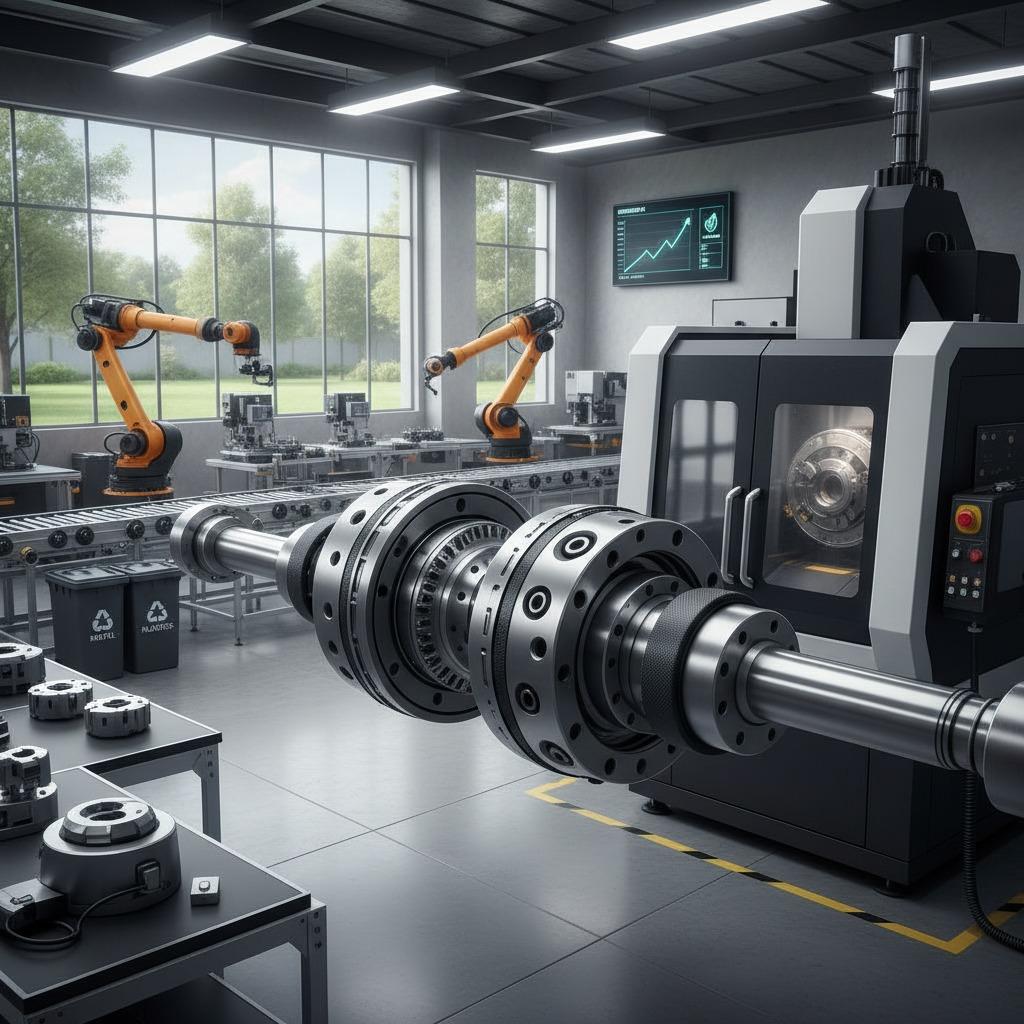
Given its high-performance characteristics, the range of Coupling Applications for this technology is extensive and demanding. They are frequently found in industries where reliability is non-negotiable, such as in power generation for connecting turbines and generators, in the oil and gas sector for pumps and compressors, and in manufacturing for high-speed machine tools and printing presses. The combination of high torque capacity, misalignment compensation, and maintenance-free operation makes the diaphragm coupling a quintessential solution for businesses aiming to elevate their operational standards. These varied Coupling Applications demonstrate the versatility and engineering excellence embodied in the product, making it a gateway to improved precision and longevity for critical equipment.
The Core of Diaphragm Coupling Design
The ingenuity of this component lies in its unique Diaphragm Coupling Design. Unlike other Mechanical Couplings that may use elastomers or lubricated gears, a diaphragm coupling utilizes one or more thin, metallic discs or diaphragms. These diaphragms are bolted together in a pack and are rigid in the torsional direction but flexible in the axial and angular directions. This construction allows them to bend and flex to compensate for shaft misalignments without inducing significant reactionary loads on the connected equipment. The use of robust materials, typically high-strength stainless steel, ensures longevity and eliminates the need for lubrication, making it a maintenance-free solution that can operate in harsh environmental conditions.
Achieving Superior Torque Transmission
One of the most critical functions of any coupling is effective Torque Transmission. The Diaphragm Coupling excels in this area by providing a torsionally stiff connection. The diaphragms are designed to handle high torque loads without backlash or rotational slop, which is vital for applications requiring precise positioning and motion control. The key connection mechanism ensures a secure fit onto the shafts, guaranteeing that power is relayed from the driver to the driven equipment with minimal loss. This high-fidelity Torque Transmission preserves the integrity of the mechanical system and enhances overall operational efficiency, making it an ideal choice for sensitive and high-speed machinery.
Breaking Down the Coupling Components
Understanding the individual Coupling Components reveals how this advanced device functions. A typical assembly consists of two hubs, which mount onto the equipment shafts, and at least one diaphragm pack that connects the hubs. In a single-diaphragm design, the unit can accommodate angular and axial misalignment. A double-diaphragm configuration, which includes a spacer between two diaphragm packs, offers the additional benefit of accommodating parallel misalignment. This double-type structure provides enhanced stability and greater misalignment capability, making the design incredibly versatile. Each of these Coupling Components is precision-engineered to work in harmony, delivering smooth and consistent performance.
Diverse Coupling Applications
Given its high-performance characteristics, the range of Coupling Applications for this technology is extensive and demanding. They are frequently found in industries where reliability is non-negotiable, such as in power generation for connecting turbines and generators, in the oil and gas sector for pumps and compressors, and in manufacturing for high-speed machine tools and printing presses. The combination of high torque capacity, misalignment compensation, and maintenance-free operation makes the diaphragm coupling a quintessential solution for businesses aiming to elevate their operational standards. These varied Coupling Applications demonstrate the versatility and engineering excellence embodied in the product, making it a gateway to improved precision and longevity for critical equipment.